

Skip $40–$100 Replating: White vs Yellow Gold for Real Wear
Choose yellow gold if you want a warm, low-maintenance metal that never needs replating. Choose white gold if you want a cool, silvery finish that makes diamonds pop, and you’re willing to pay $40 to $100 every couple of years to keep it that way. Karat matters too: 14K wears harder in both colors, while 18K delivers richer color at a softer, pricier tradeoff. The right pick usually comes down to how you live in your jewelry, not just how it looks in the case.
TL;DR:
- White gold’s bright finish relies on rhodium plating that typically needs reapplication every 1 to 3 years, costing around $40 to $100 per service.
- The main difference in durability favors 14K gold, which offers about 58.3% pure gold and is more resistant to scratches and daily damage than 18K gold.
- Yellow gold’s warm tone remains permanent and requires no replating, making it a lower-maintenance choice over the long term.
- At the same karat, white and yellow gold contain similar amounts of pure gold, so their initial costs are generally comparable, but white gold incurs ongoing replating expenses.
- Skin reactions from white gold occur mainly with nickel alloys, so palladium-based white gold presents a hypoallergenic alternative despite higher upfront costs.
Table of Contents
- White vs Yellow Gold: Why They Look So Different
- 14K vs 18K Gold: How Karat Changes Color and Wear
- How White Gold Gets Its Shine: Rhodium Plating Explained
- How White and Yellow Gold Age Over Years of Wear
- What White Gold and Yellow Gold Actually Cost Over Time
- Which Metal Flatters Your Skin Tone and Gemstone Choice
- Matching Metal to Jewelry Type: Rings, Earrings, Necklaces, Bracelets
- Antonio’s Buying Checklist Before You Choose a Metal
- The Real Question Isn’t Which Metal Is Better
- Featured Yellow Gold Pieces From the Signature Collection
- Sources
- FAQ
White vs Yellow Gold: Why They Look So Different
Pure gold is yellow. It stays that way when jewelers alloy it with copper and zinc to make yellow gold, which is why the color runs straight through the metal instead of sitting on top of it. White gold works differently. Jewelers mix pure gold with white metals like palladium or nickel, and even then the alloy comes out a dull gray, not the bright white you see in stores. That bright finish comes from a rhodium plating layer added after the piece is cast.
That plating does more than brighten the metal. It changes how the piece reads next to a stone. Retailers note that white gold tends to make diamonds look more colorless, because the cool tone doesn’t compete with any warmth in the stone. Yellow gold does the opposite: it can mask a diamond with a slight yellow tint, which works in your favor if you’re buying a lower color grade to save money.
A few things worth checking before you buy either one:
- View the piece in daylight, not just store lighting, since warm bulbs flatter yellow gold and cool LEDs flatter white gold.
- Bring a piece of jewelry you already wear so you can compare tones side by side.
- Ask to see the stone against both metals if you’re undecided, since the difference often becomes obvious once you see it in person.
14K vs 18K Gold: How Karat Changes Color and Wear
Karat measures purity, and that number changes more than the price tag. 14K gold is about 58.3% pure gold, while 18K runs 75%. The remaining alloy in 14K, roughly 42%, is what gives it extra hardness. That same math applies whether you’re comparing 14K vs 18K color in yellow gold or checking 14K vs 18K color in white gold.
Here’s how that plays out in daily wear:
- 14K holds up better against scratches and knocks, which is why many jewelers recommend it for rings and other daily-wear pieces.
- 18K shows a deeper, warmer yellow because it contains more pure gold, but it’s softer and roughly 25% more expensive by weight at the same design.
- In white gold, the karat difference is subtler visually since rhodium plating covers both, but 18K white gold still dents more easily under daily stress.
If you’re torn on 14k or 18k gold for an engagement ring, most people are better served by 14K for the ring that gets bumped against countertops and gym bags, and 18K for pieces that stay closer to special occasions. Antonio Guzzo Fine Jewelry’s guide to choosing between 14K and 18K breaks this down piece by piece if you want more detail before committing.
How White Gold Gets Its Shine: Rhodium Plating Explained
Rhodium is a platinum-group metal, and it’s dramatically harder than gold.
Pro Tip: Ask your jeweler for the alloy breakdown before you buy white gold. Nickel alloys plate up bright and cost less, but they’re the more common trigger for skin reactions once the rhodium wears thin.
Rhodium plating on daily-wear white gold typically needs replacing every 1 to 3 years, at a cost of $40 to $100 per service.
That’s not optional maintenance if you want the piece to keep looking white. Once the plating thins, the grayish alloy underneath starts to show through, and if that alloy contains nickel, it raises the odds of irritation for anyone with sensitive skin. Palladium-based white gold costs more upfront but sidesteps that allergy risk entirely.
How White and Yellow Gold Age Over Years of Wear
Rhodium plating gives white gold a hard, bright shell for the first year or two, then that shell wears down unevenly depending on how much the piece rubs against skin, clothing, or other jewelry. Yellow gold ages differently. Instead of revealing an undercolor, it slowly develops a soft patina, a gentle mellowing of surface shine that many owners actually prefer on rings and bracelets worn for decades.
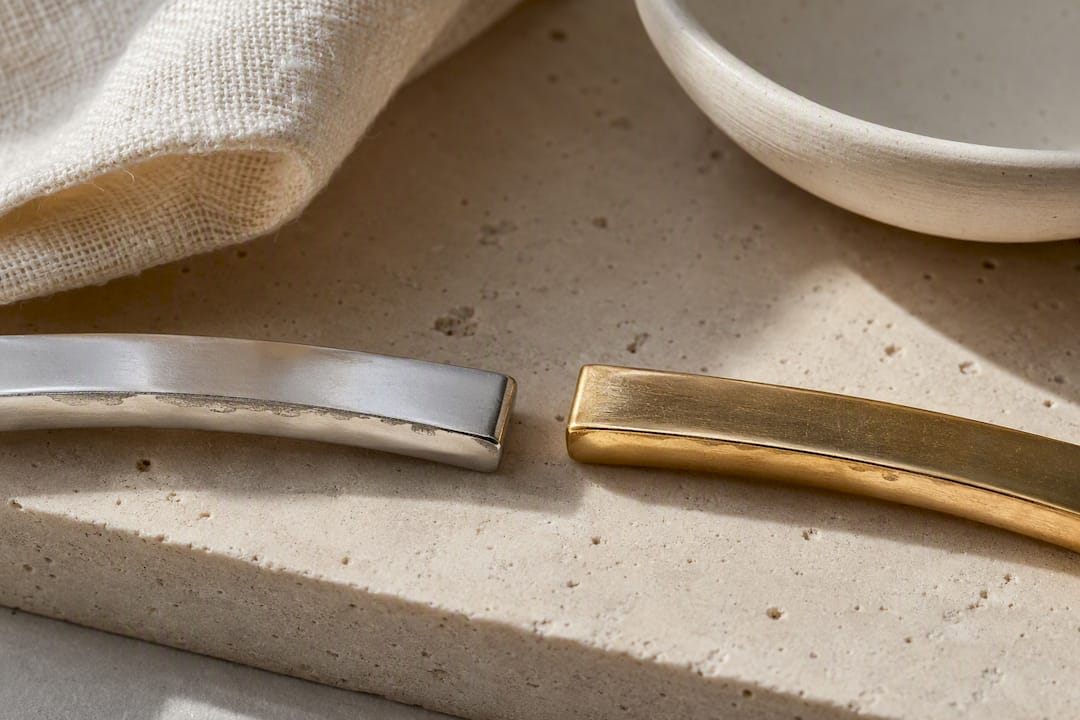
Nickel exposure is worth flagging again here, since an estimated 10% to 20% of people react to it, and that risk climbs as plating thins.
A simple care routine keeps either metal looking its best:
- Rinse with warm water and mild soap weekly, then dry with a soft cloth.
- Avoid chlorine and abrasive cleaners, which dull both rhodium and raw gold surfaces.
- Get white gold professionally checked and replated every 1 to 3 years for daily-wear pieces.
- Have yellow gold polished occasionally to restore shine without removing metal.
Antonio Guzzo Fine Jewelry’s guide to cleaning gold and silver jewelry walks through safe products for pieces set with real stones, which matters more than people expect since some cleaners can loosen prongs over time.
What White Gold and Yellow Gold Actually Cost Over Time
At the same karat, white and yellow gold contain the same percentage of pure gold, so sticker prices land close together on comparable designs. The gap opens later.
- 14K white gold and 14K yellow gold rings typically cost about the same at purchase.
- Over 10 to 25 years, replating white gold every couple of years adds up, often several hundred dollars across the piece’s lifetime.
- Yellow gold needs no plating at all, so its maintenance cost over that same span is close to zero.
- Resale buyers tend to favor yellow gold’s stable, unchanging color, which can work slightly in its favor at appraisal time.
If you’re weighing 14K vs 18K for long-term value, the math favors 14K on upfront cost and durability either way. For more on how gold holds value across decades, see Antonio Guzzo Fine Jewelry’s piece on gold jewelry as an investment.
Which Metal Flatters Your Skin Tone and Gemstone Choice
Warm undertones (think olive or golden skin) generally look richer next to yellow gold, while cool undertones (pink or blue-toned skin) tend to pair more naturally with white gold’s silvery cast. Neutral undertones can wear either comfortably, which is really the deciding factor most people are looking for anyway.
Gemstone choice matters just as much:
- Colorless diamonds (D to G grade) look their coolest and most colorless set in white gold.
- Diamonds with a faint tint (H to K grade) often look whiter when set in yellow gold, since the warm metal masks the tint.
- Emeralds and other colored stones read warmer and more saturated against yellow gold, cooler and more contained against white.
Pro Tip: If you genuinely can’t choose, two-tone settings let you wear both metals in one piece. Just confirm with your jeweler that future repairs and resizing won’t disturb the plating on the white gold sections.
Matching Metal to Jewelry Type: Rings, Earrings, Necklaces, Bracelets
Rings take the most daily abuse, which makes 14K the safer default for both engagement and wedding bands. If you want a white gold vs yellow gold engagement ring decision that also considers diamond color, remember white gold favors high color grades while yellow gold forgives lower ones.
- Rings: 14K for daily wear; white gold if you want a colorless-diamond look, yellow gold if you want zero plating upkeep.
- Earrings and necklaces: These see less friction, so 18K yellow gold is a strong choice when you want richer color without the wear concerns of a ring.
- Bracelets and active-wear pieces: Favor 14K or harder alloys, since wrists knock against surfaces constantly and softer 18K metal shows it fast.
Antonio’s Buying Checklist Before You Choose a Metal
Some jewelers build their pieces with Italian artisan techniques and ethically sourced gemstones, including natural Colombian emeralds, and may offer collections designed around pieces meant to carry a personal story for decades.
Before you buy, run through this: verify the karat hallmark stamped on the piece, ask for alloy disclosure (nickel or palladium), confirm whether rhodium plating is included on white gold, check for nickel if you have sensitive skin, photograph the finish for future comparison and ask about repair or replating service. If you’re weighing 14K or 18K gold for a custom piece, jewelers can help you land on the right karat and finish for how you’ll actually wear it.
The Real Question Isn’t Which Metal Is Better
Most advice on this topic treats white gold and yellow gold like a style quiz. It isn’t. The honest comparison is a maintenance decision wearing the disguise of an aesthetic one. White gold’s cool, diamond-forward look is genuinely striking, but that look is on loan from a rhodium coating that thins every year you wear it. Skip the replating and you’re wearing a gray alloy, not the bright white you paid for.
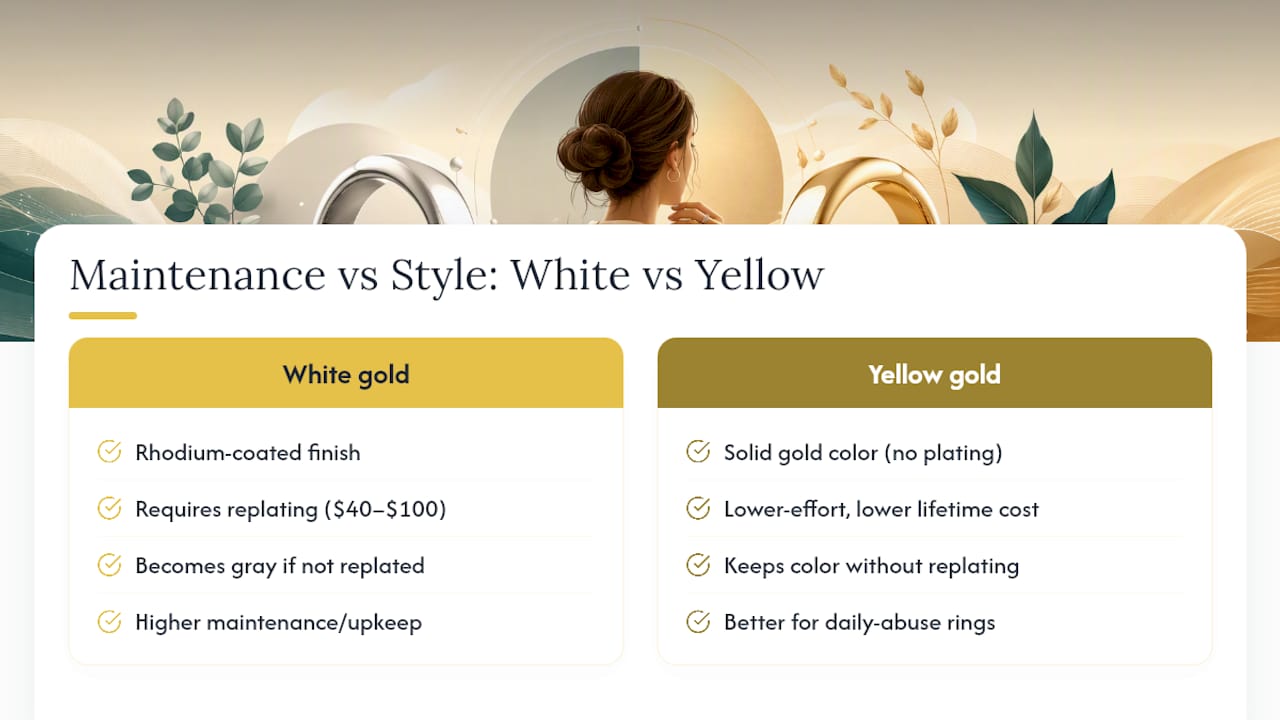
Yellow gold gets dismissed as old-fashioned when it’s actually the lower-effort, lower-lifetime-cost option for most buyers, especially for rings that take daily abuse. The karat question deserves more attention than it gets too: 14K’s extra hardness matters more for a ring you’ll wear every day than the marginally richer color 18K offers.
Prioritize how you’ll wear the piece first. Color preference is real, but it’s the second question, not the first.
— Antonio
Featured Yellow Gold Pieces From the Signature Collection
If the maintenance math above pushed you toward yellow gold, a few Signature Collection pieces make the case well. The 14K Yellow Gold Classic Polished Hoop Earrings deliver everyday shine with zero plating upkeep, ever.
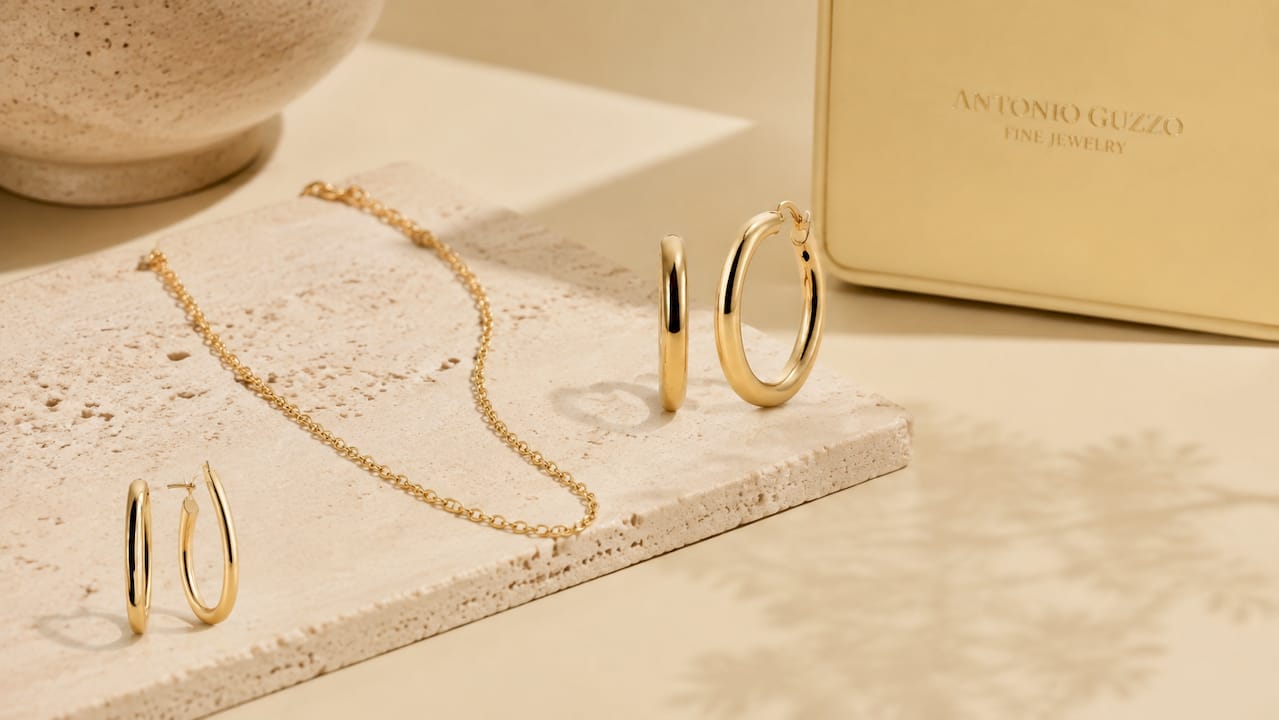
For a staple you’ll reach for constantly, the 14K Solid Yellow Gold Classic Chain Necklace offers the same low-maintenance advantage in a piece that layers easily with anything else you own. And for buyers who want the Italian artisan detail up close, the 14K Italian Yellow Gold Classic Polished Hoop Earrings bring that craftsmanship into a piece you can wear daily without a second thought about replating.
Every order ships free, and every gemstone across the collection is ethically sourced, including the natural Colombian emeralds Antonio Guzzo Fine Jewelry is known for. Browse the current Signature Collection or reach out directly if you want a custom piece built around your preferred karat and finish.
Sources
- 14k vs 18k gold: what is the difference? | Gem Society
- White gold vs yellow gold: colour, care and daily wear compared — Vertu
- Yellow Gold vs White Gold: Key Differences — James Allen
- 14k vs 18k gold: what to know — The Knot
FAQ
Which is better, yellow gold or white gold?
Neither is objectively better. Yellow gold suits buyers who want a warm, permanent color with no upkeep, while white gold suits buyers who want a cool, diamond-enhancing look and don’t mind replating it every 1 to 3 years.
What are the disadvantages of white gold?
White gold’s main downside is that its bright finish comes from rhodium plating, which wears down and needs replacement roughly every 1 to 3 years at $40 to $100 per service. Nickel-based white gold can also trigger skin reactions once the plating thins.
Why is white gold worth more than yellow gold?
At the same karat, white and yellow gold have similar purchase prices since they contain the same amount of pure gold. Any perceived premium usually comes from added rhodium plating costs or the design itself, not the raw metal.
What is the difference between 14K white gold and 14K yellow gold?
Both contain 58.3% pure gold, but yellow gold gets its color from copper and zinc alloys with no plating needed, while white gold is alloyed with nickel or palladium and then rhodium plated for its bright white finish.
Is 14K or 18K gold better for an engagement ring?
14K is generally the better choice for an engagement ring because its higher alloy content makes it harder and more scratch-resistant for daily wear, while 18K offers richer color at a softer, more delicate finish.