

Measure Necklace Lengths in 2 Minutes: Stylist Approved Chart & Fit
Most women’s necklaces fall into five standard lengths: 14 to 16 inches (choker), 18 inches (princess), 20 to 22 inches (matinee), 24 inches (opera-adjacent), and 28 to 36 inches (opera or rope). The one-line rule: shorter lengths draw attention to the neck and collarbone, mid lengths like 18 inches work with almost any neckline, and anything past 24 inches makes a statement or anchors a layered look. Pendants pull that math downward, and measuring your own preference takes two minutes with a piece of string.
TL;DR:
- Choosing a longer chain and adding an extender provides more flexibility if you’re unsure of your preferred necklace length.
- Necklaces for open necklines or off-shoulder tops should be 14 to 16 inches to draw attention to the neck or collarbone.
- Longer lengths like 20 inches and above are ideal for layering, statement pieces, or balancing longer torsos or taller frames.
- Necklaces in the 16 to 18 inch range are the most versatile for everyday wear and complement most neckline styles.
- Adjustable necklaces are practical for gift-giving or differing outfits but may have a slight aesthetic or durability tradeoff.
Table of Contents
- Necklace Length Chart: Where Each Size Sits and What It’s For
- How Do You Measure Necklace Length at Home?
- Which Necklace Length Works With Your Neckline, Body, and Occasion?
- Layering Rules: How to Stack Lengths Without Tangling
- Why Chain Quality Changes How Length Actually Wears
- Do Men and Women Choose Different Necklace Lengths?
- Are Adjustable Necklaces Worth Buying?
- Why We Design Around 16 to 18 Inches First
- Find Your Length: Necklaces Built to Fit and Last
- Sources
Necklace Length Chart: Where Each Size Sits and What It’s For
A necklace length chart only earns its keep if you can picture the result on your own body before you buy. Here’s how the standard categories translate to actual placement, based on the sizing conventions most fine jewelry brands and retailers use.
- 14 to 16 inches (choker): Sits directly at the base of the neck, right at or slightly above the collarbone. Best for open necklines, turtlenecks, and off-shoulder tops where you want the eye drawn upward.
- 16 inches: The classic collarbone length. It’s the shortest size that still reads as an everyday piece rather than a statement choker.
- 18 inches (princess): Falls just below the collarbone, roughly at or just above the top of the sternum. Retail charts consistently point to 18 inches as the most versatile length because it clears most necklines without disappearing into a shirt collar.
- 20 to 22 inches (matinee): Lands at or just above the bust line. This is the workhorse length for crew necks, blouses, and office wear where you want a piece that reads as polished but not flashy.
- 24 inches: Sits at the top of the bust, one step past matinee. A natural pick for dressier tops or as a mid-layer in a stacked look.
- 28 to 36 inches (opera and rope): Falls anywhere from lower bust to mid-torso. These read as statement pieces on their own, or they become the anchor length in a three-piece layered stack.
Retailers commonly map these same ranges to specific body landmarks: 14 to 18 inches around the collarbone and neck, 20 to 22 inches at the upper chest, 24 inches at the top of the bust, and 28 to 36 inches from lower bust to mid-torso. Chain thickness changes how a given length reads, too. A delicate 1mm cable chain at 18 inches looks understated; a bold curb or paperclip link at the same length reads heavier and more architectural. Men’s chains typically run longer by default to sit outside a shirt collar rather than hug the collarbone. Nothing stops a woman from wearing a 22 inch chain meant for a men’s collection, or a man from choosing an 18 inch princess length for a subtler look. The chart is a starting point, not a rulebook.
How Do You Measure Necklace Length at Home?
Getting this right before checkout takes less effort than returning a chain that sits wrong. Two methods work, depending on whether you’re measuring a preference or an existing piece.
- Measure your preferred sit point. Take a soft measuring tape or a piece of string and loop it loosely around your neck at the spot where you want the necklace to fall. Mark the point where the loop closes, then lay it flat and measure end to end. This string-and-tape method is the most reliable way to preview fit without trying anything on.
- Measure an existing chain. Lay a necklace you already own flat on a table and measure from clasp to clasp, including the clasp hardware itself. That total is the “as worn” length manufacturers reference in product listings.
- Account for pendant drop. If your target necklace carries a pendant, add its length to the chain measurement. A 1 to 2 inch pendant can shift the visual end point noticeably lower than the chain length alone suggests.
Pro Tip: Cut an actual piece of string to your target length and wear it around the house for an afternoon. It sounds low-tech, but it’s the fastest way to catch a length that looks right in the mirror but feels wrong against a collar.
If you land between two standard sizes, choosing the longer option and adding a short extender chain gives you more flexibility than buying a shorter piece and hoping it works.
Which Necklace Length Works With Your Neckline, Body, and Occasion?
The right necklace length depends less on trend and more on the shape of the neckline it’s sitting against, plus your own proportions.
By neckline:
- Crew necks and high collars pair best with 18 to 20 inch chains, since anything shorter can look cramped against the fabric line.
- V-necks were practically designed for pendants at 16 to 18 inches. The V and the chain create a matching downward line.
- Scoop necks handle a wider range, from 16 inch chokers to 24 inch layered pieces, since the open neckline gives a chain room to breathe.
- Boat necks and off-shoulder tops favor shorter lengths, 14 to 16 inches, so the necklace doesn’t compete with the wide horizontal line of the neckline; for style inspiration on pairing necklaces with casual necklines and tees, see Graphic Tee Outfit Ideas.
By body proportion: If you have a longer torso, lengths in the 20 to 24 inch range keep the necklace from getting visually lost. Shorter or petite frames often look more balanced with 16 to 18 inch pieces that sit closer to the face rather than stretching down the chest. Taller frames can carry longer opera lengths, 28 inches and up, without the necklace reading as oversized.
By face shape: Round faces tend to benefit from longer chains (20 inches plus) that create a visual line downward. Square and heart-shaped faces often look more balanced with shorter, rounder styles like a 16 inch choker that softens angles near the jaw.
By occasion: Everyday wear leans toward 16 to 18 inches for comfort under clothing layers. Office settings favor the same range or matinee lengths for a polished look that doesn’t swing when you move. Evening and bridal occasions open the door to longer, more dramatic lengths, especially when paired with an open or plunging neckline where a 24 to 28 inch chain has room to make an entrance.
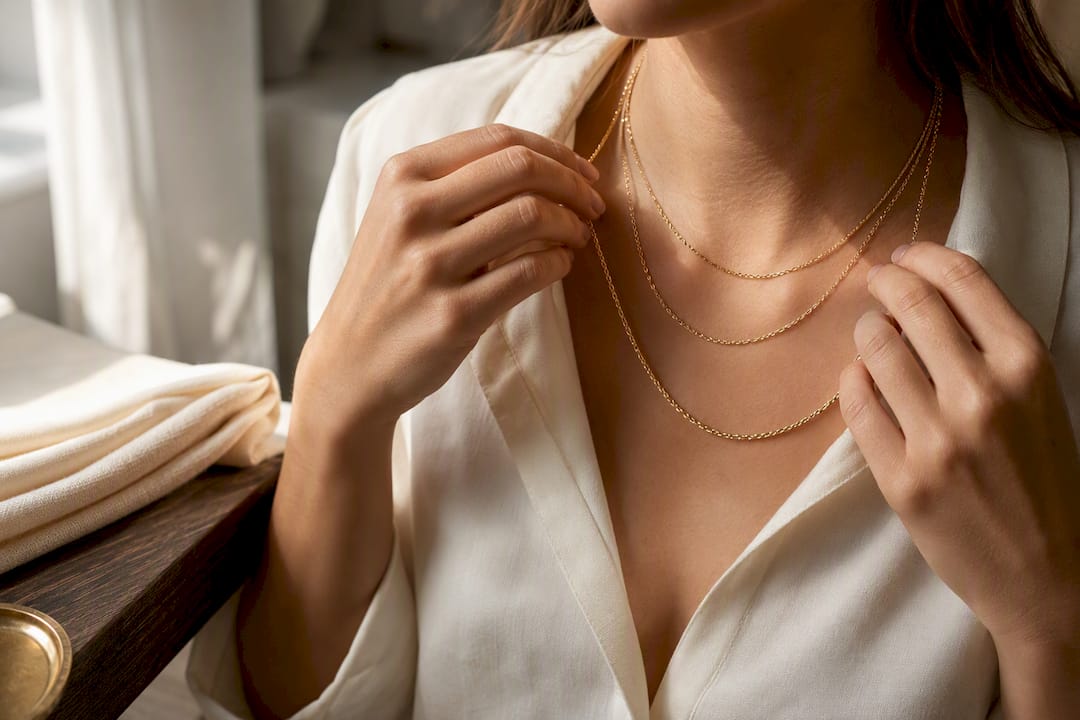
Layering Rules: How to Stack Lengths Without Tangling
Layering works when the eye can tell each piece apart. Stack three chains of similar length and they’ll knot within an hour and read as one messy pile.
- Pick two to three distinct lengths with real separation. Stylists generally recommend leaving 2 to 4 inches between each layer so the pieces hang independently instead of overlapping.
- Go thin to thick as you move down. The shortest chain at the top should be your most delicate piece; the longest at the bottom can carry more visual weight, a chunkier link or a pendant.
- Adjust for pendant weight. A heavy pendant pulls its chain down beyond its stated length, so if you’re adding a pendant piece to a stack, size it slightly shorter than you’d otherwise choose to keep the spacing intact.
Pro Tip: A reliable everyday stack is a 16 inch choker, an 18 inch princess pendant, and a 22 inch matinee chain. For the office, drop the pendant and pair two plain chains at 16 and 20 inches. For evening, go bold: an 18 inch chain, a 24 inch chain, and a 30-inch opera length for real visual drama.
Layering only looks intentional when each piece visibly differs in both length and weight. Matching three similar chains defeats the purpose.
Why Chain Quality Changes How Length Actually Wears
A length chart tells you where a chain sits in theory. Metal weight, link style, and clasp quality determine whether it sits that way in practice. A thin, low-gauge chain drapes closer to the body and can ride up on some necks, while a heavier curb or paperclip link holds its shape and sits exactly where it’s supposed to. Solid 14K gold behaves differently under its own weight than 18K, and both differ from a plated chain that thins out and stretches over time.
Antonio Guzzo Fine Jewelry builds each piece around that reality, combining Italian craftsmanship with ethically sourced materials, including natural Colombian emeralds, so a chain’s stated length holds true well past the first year of wear. The Signature Collection extends that thinking into personalization, letting a length and finish carry a specific story rather than a generic size. Antonioguzzofinejewelry backs every order with free shipping and publishes its own jewelry selection guide for shoppers who want more context before choosing a piece.
A chain is only as reliable as its weakest link, literally. Clasp strength and link gauge matter more to long-term fit than the inch measurement on the tag.
A quick wipe with a soft cloth after wear and periodic clasp checks keep any solid gold chain sitting at its intended length for years rather than months.
Do Men and Women Choose Different Necklace Lengths?
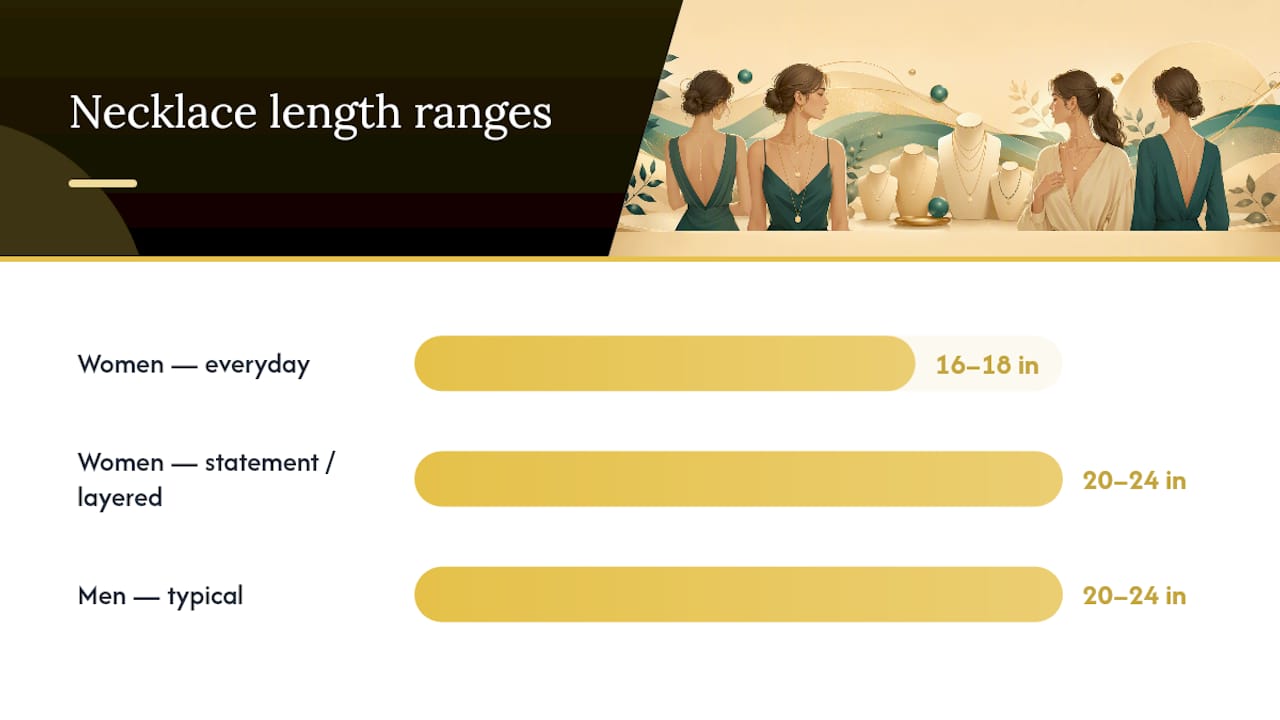
Length preference splits fairly clearly along gender lines, though the gap is shrinking. Women’s fine jewelry collections cluster around 16 to 18 inches for everyday pieces, with 20 to 24 inches reserved for statement or layered looks. Men’s chains skew longer across the board, typically starting at 20 inches and running to 24 inches, because they’re built to clear a shirt collar rather than sit against bare skin at the collarbone.
Age plays a role too, though less rigidly than style guides once suggested. Younger shoppers have driven a lot of the current interest in layering multiple shorter chains, a look that barely existed as a mainstream trend a decade ago. Older buyers more often gravitate toward a single well-made piece at a classic length, something built to last and pass down, rather than a rotating stack of thinner chains.
None of this is prescriptive. A 22 inch chain reads as a bold, modern choice on a woman just as easily as it reads as standard on a man, and a delicate 16 inch choker works regardless of who’s wearing it. The categories exist to help you shop with more precision, not to box you into a single length because of demographic convention. If anything, the biggest shift in recent buying patterns is how often those old lines get crossed on purpose.
Are Adjustable Necklaces Worth Buying?
An adjustable necklace, usually built with a sliding clasp or a set of jump rings at intervals along the chain, solves the single biggest problem in online jewelry shopping: you can’t try it on before it arrives. That flexibility makes adjustable pieces a smart default when you’re buying a gift and don’t know the recipient’s exact preference, or when you personally like to shift a pendant between choker and princess length depending on the neckline you’re wearing that day.
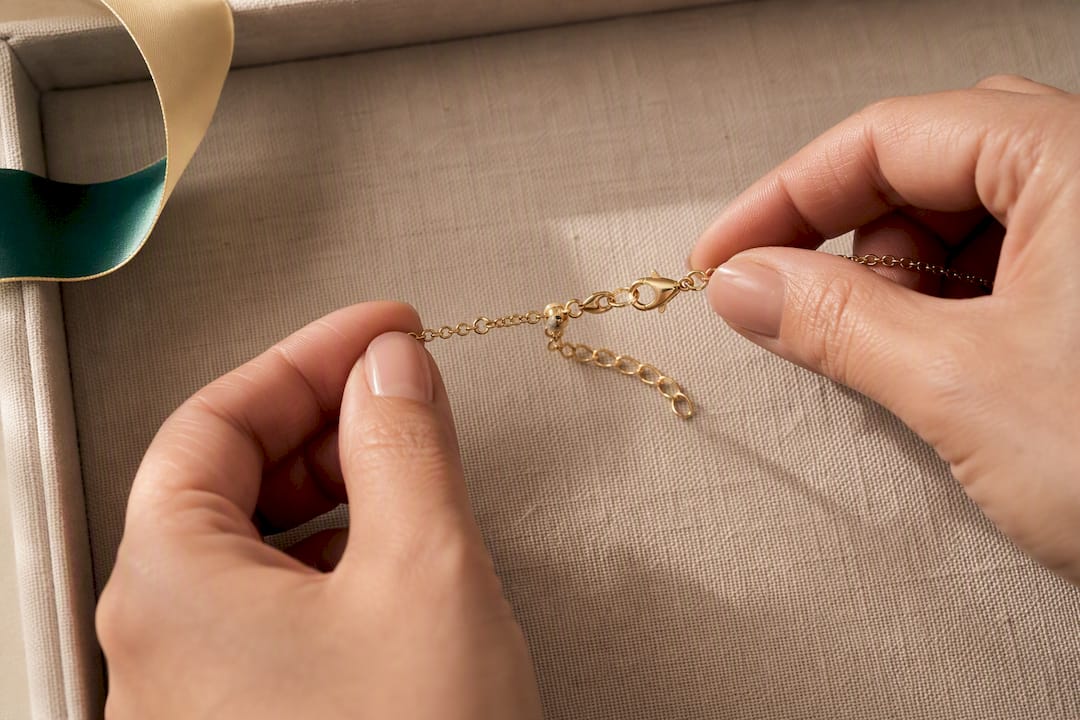
The tradeoff is mostly aesthetic. Sliding hardware or visible adjustment rings add a small amount of bulk near the clasp that a fixed-length chain doesn’t have, and on very delicate designs that extra hardware can look slightly out of place. Adjustable mechanisms also introduce one more moving part that can wear down faster than a simple soldered clasp, particularly with daily wear.
The best use case is a piece you expect to style multiple ways: a pendant necklace you’ll wear at 16 inches with a scoop neck one day and 20 inches with a crew neck the next. For a piece meant to sit at exactly one length forever, like a fixed heirloom chain, a fixed length with a well-made clasp is usually the sturdier long-term choice.
Why We Design Around 16 to 18 Inches First
Most of our Signature Collection pieces start life at 16 to 18 inches, because that range clears the widest variety of necklines and still sits close enough to the face to matter as an heirloom detail. It’s the length people wear daily for years, which is exactly the standard we build to. Customization options exist so a length can shift to match a specific story rather than a generic size chart. That’s the whole point of letting a chain carry something personal.
— Angelo
Find Your Length: Necklaces Built to Fit and Last
Now that you know your target length, matching it to the right piece is straightforward. For a statement or layering anchor, the Gold Link Chain Necklace in 18K holds its shape at longer lengths without losing structure. For everyday wear in that reliable 16 to 18 inch princess range, the 14K Solid Yellow Gold Classic Chain Necklace is built for exactly this use case. If you’re layering and want texture rather than a plain link, the 18K Gold Paperclip Chain adds visual weight at the lower end of a stack.
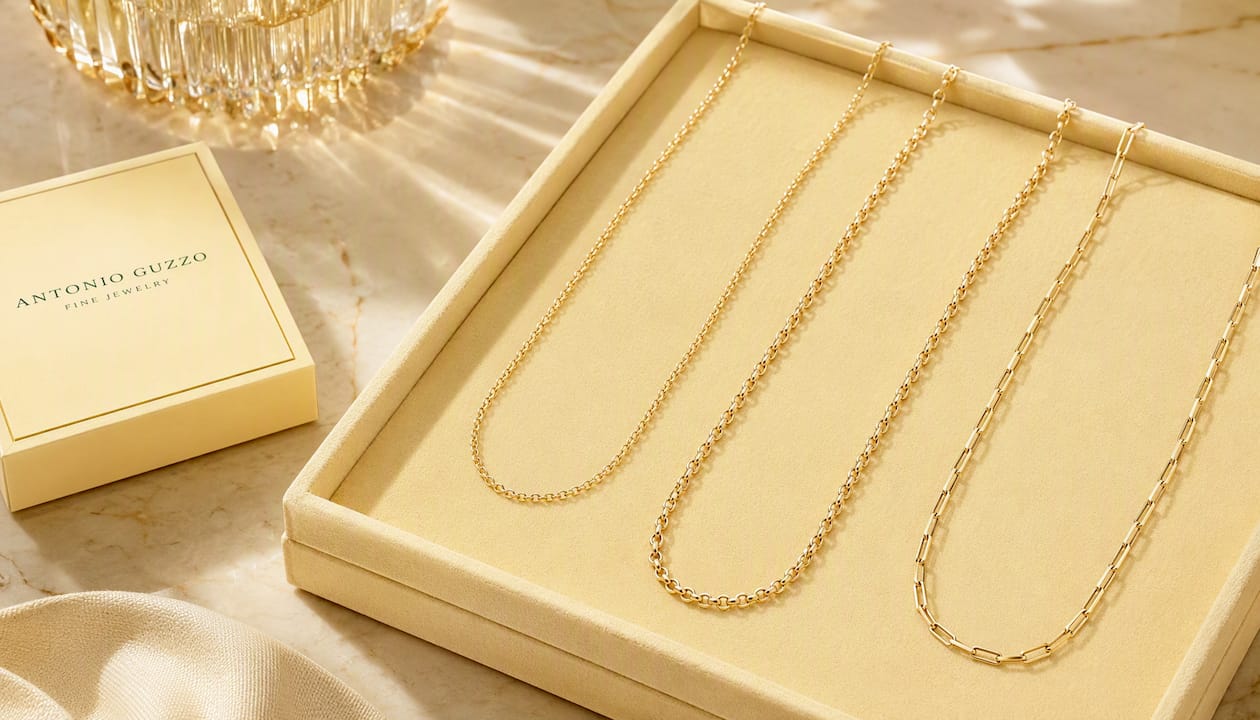
Every piece ships free, and Antonioguzzofinejewelry’s customization options mean a chain length can be adjusted to fit your exact measurement rather than the nearest standard size. Browse the full necklace collection and use the measuring method above to confirm your number before you check out.