

Necklace Chain Types That Hold Pendants Match Gauge to Weight
For everyday pendant wear, choose a soldered cable, box, or wheat chain. For heavier or statement pieces, go with rope, curb, or thick Figaro. Avoid herringbone or snake chains for heavier pendants, as these styles are prone to kinking or stretching. The real deciding factor isn’t the chain’s name. It’s construction: soldered links, correct gauge in millimeters, and a clasp built for the weight it’s carrying.
TL;DR:
- Chains with soldered links and the correct gauge (0.5mm to 1.2mm depending on pendant weight) are essential for durability and safety.
- Light pendants under 5 grams should be paired with 0.5 to 0.8mm cable or box chains for longevity and easy repair.
- Heavier pendants over 15 grams require thick rope, curb, or Cuban link chains at 1.2mm or more to prevent stretching or breakage.
- Avoid delicate chains like snake or herringbone styles for substantial pendants, as they are prone to kinking or stretching.
- Select a secure clasp, such as a lobster, and ensure the chain’s karat matches the pendant’s to maintain color consistency and wear over time.
Table of Contents
- Necklace Chain Types Explained: Everyday, Bold, Modern, and Flat Styles
- Which Chain Is Best for Your Pendant Weight?
- How to Choose a Necklace Chain, Step by Step
- How to Care for and Store Your Chain So It Lasts
- Why Antonio Guzzo Fine Jewelry Chains Are Built Differently
- What Most Buying Guides Get Wrong About Chains
- Featured Chain Picks for Every Style of Wear
- Sources
- FAQ
Necklace Chain Types Explained: Everyday, Bold, Modern, and Flat Styles
Every chain style falls into a rough category based on how it behaves once it’s on your neck. Some hangs stiff and structured. Some drape like fabric. Some are built to carry weight, and some exist purely for the way light hits them. Knowing which bucket a chain sits in tells you more than its name ever will.
Everyday, pendant-friendly chains
Cable chain. Simple oval links, each one twisted through the last. It’s the workhorse of the chain world, usually found in the 1 to 2.5mm range for pendant wear, and it repairs easily because a jeweler can solder a single link without redoing the whole piece.
Rolo (belcher) chain. Round, uniform links, slightly heavier looking than cable. It has a bit more visual presence but the same practical strength, which makes it a favorite for medallions and small pendants.
Box chain. Square links folded from flat wire, giving it real structural strength without adding bulk. Box chains resist tangling and kinking better than almost any other style, which is why so many jewelers default to them for pendant necklaces that see daily wear.
Wheat (spiga) chain. Twisted, rope-like segments that catch light from every angle. It’s sturdy, flexible, and a strong pick for medium pendants that need a chain with a little more texture than plain cable.
- Cable: 1 to 2.5mm for pendants, easiest to repair
- Rolo: slightly bolder look, same reliability as cable
- Box: best tangle resistance, ideal for daily wear
- Wheat: textured surface, good middle ground for weight
Bold and statement chains
Rope chain. Tightly twisted links that mimic actual rope, built for weight and durability. Thicker rope chains (4mm and up) can stand alone as statement pieces or anchor a heavy pendant without stretching.
Curb chain (including Cuban link). Flattened, interlocking oval links that lie smooth against the skin. Curb chains, especially the wider Cuban variation, are some of the most durable chains made, and they’re a natural pairing for larger pendants or standalone wear.
Figaro chain. A pattern mix of one long link followed by several shorter ones, a signature of Italian gold chain styles. It sits between cable and curb in both weight and formality, giving it enough presence for statement wear without the bulk of a full Cuban link.
Byzantine chain. Densely woven, almost basket-like links that move like liquid gold. Gorgeous, but the intricate construction makes repairs more time-consuming if a link fails.
Franco chain. Triangular, tightly woven links that create a faceted, diamond-cut look. It’s lighter than it appears and holds up well as an everyday statement piece.
Modern and layering chains
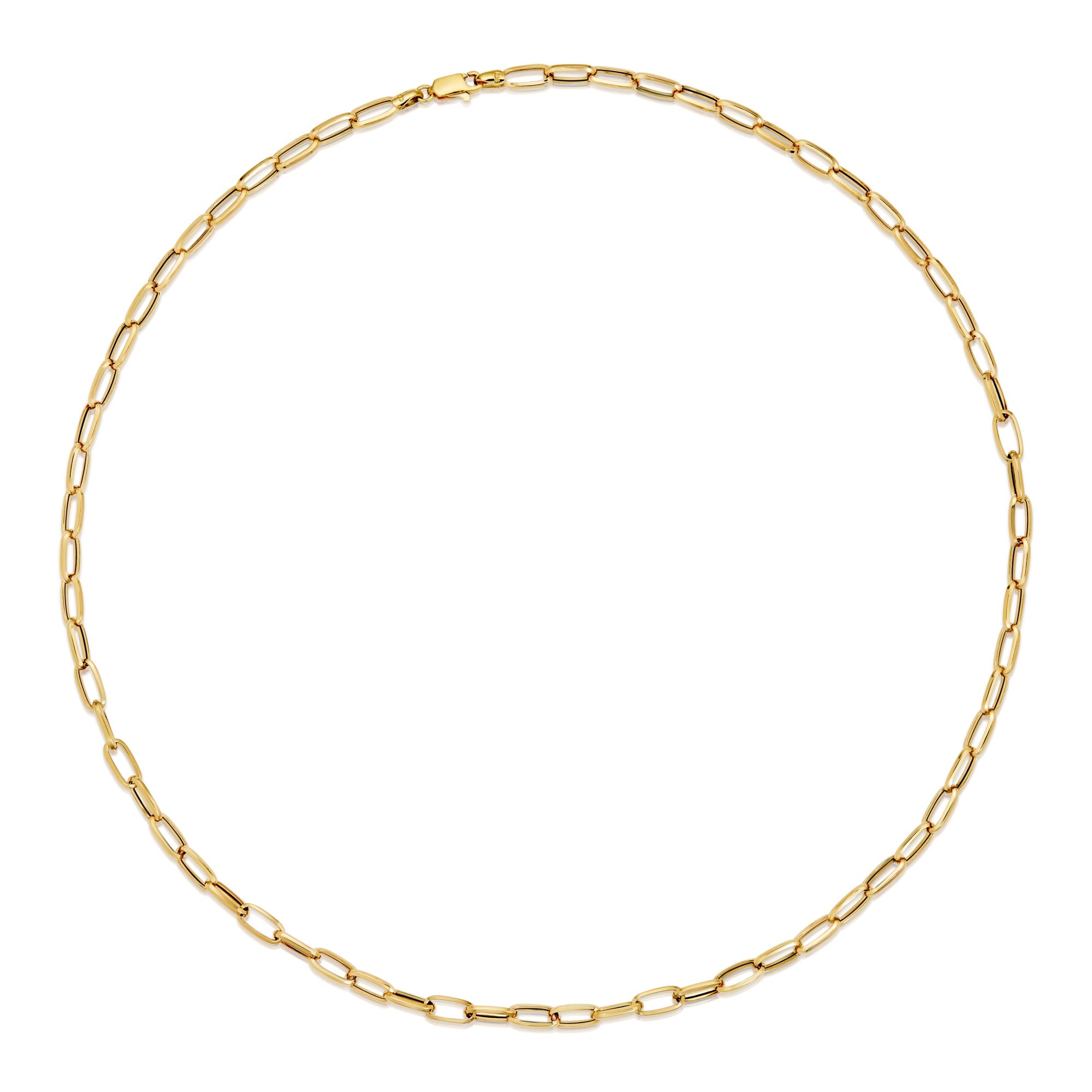
Paperclip chain. Elongated, flattened oval links resembling actual paper clips. It’s become one of the most requested Italian chain types in the last few years because it photographs beautifully and layers easily with thinner styles.
Singapore chain. A twisted, rope-like weave that catches light in a diamond pattern. Delicate and shimmery, best suited to thin necklaces worn alone or layered rather than loaded with a pendant.
Mariner (anchor) chain. Oval links with a bar across the center, based on nautical hardware. It’s sturdy and increasingly popular in unisex and men’s designs.
Bead (ball) chain. Small spheres connected by thin wire segments. Playful and casual, it works for lightweight pendants but isn’t built for anything with real heft.
Flat and specialty chains
Herringbone chain. Wide, flat, densely packed links that create a smooth, ribbon-like surface. Herringbone chains are visually bold but highly prone to kinking, and once kinked, they’re notoriously difficult to fully restore.
Snake chain. Tightly joined metal plates forming a smooth, tubular surface. It’s flexible and elegant, but more delicate than link-based chains and not a good match for heavier pendants.
Omega chain. A semi-rigid, curved version of the snake chain, often wider and stiffer. It holds its shape well but shares the same vulnerability to bending damage if handled roughly.
Bismarck (San Marco) chain. A dense, woven pattern that looks similar to Byzantine but flatter and more structured. Heavy, ornate, and typically reserved for statement pieces rather than daily rotation.
Which Chain Is Best for Your Pendant Weight?
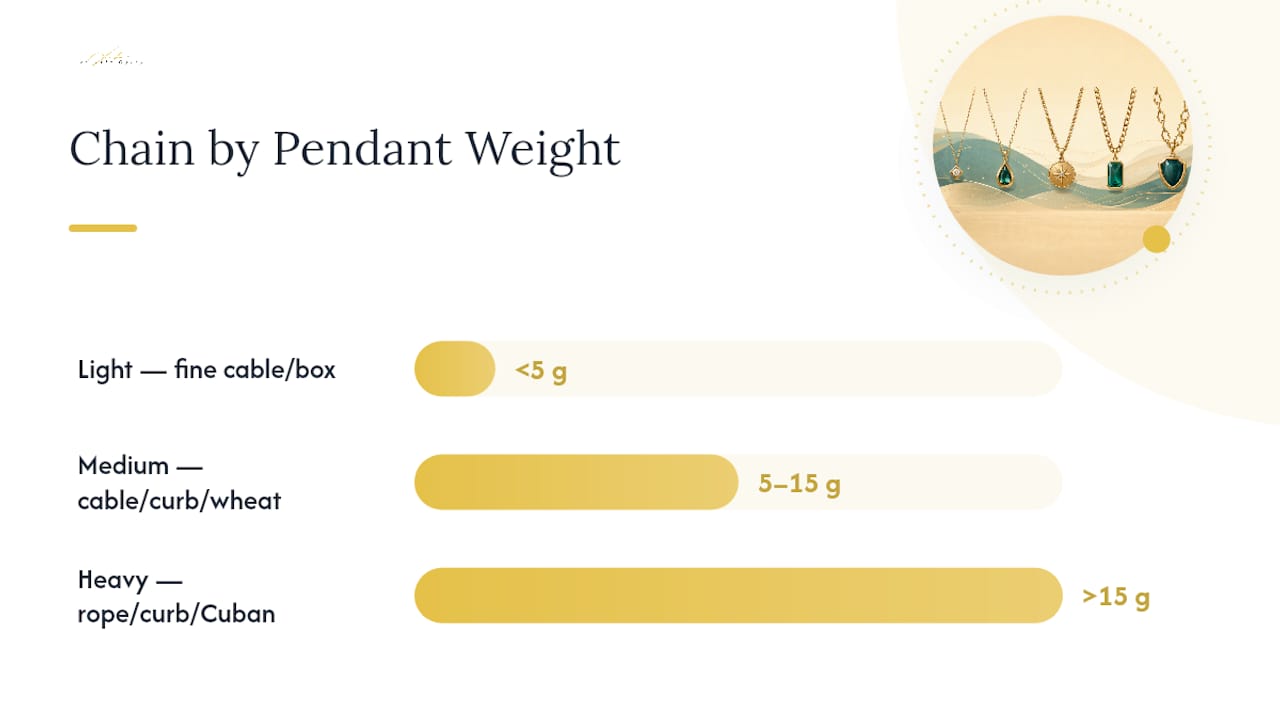
Pendant weight should drive your chain choice more than style preference does. A gorgeous herringbone chain will not survive years of holding a chunky gemstone pendant. Neither will a delicate Singapore chain. Matching gauge to weight is the single most overlooked step in buying a chain, and it’s the one that determines whether your necklace lasts a decade or snaps in a year.
Under 5 grams (light pendants): fine cable or box chain in the 0.5 to 0.8mm range. Low kink risk, easy repair if a link ever gives out.
5 to 15 grams (medium pendants): medium cable, box, curb, or wheat in the 0.8 to 1.2mm range. This band covers most everyday gemstone pendants and religious medals.
Over 15 grams (heavy pendants): rope, thick curb or Cuban link, or heavy box at 1.2mm or above. Rope and box chains are frequently recommended for heirloom-weight pendants precisely because their construction spreads the load across many links instead of concentrating stress on a few.
Pro Tip: If you’re between two gauges, size up. A chain that’s slightly heavier than strictly necessary will outlast one that’s cutting it close, and the visual difference between 0.8mm and 1.0mm is smaller than the difference in how long the chain survives.
Before buying, run through a short checklist:
- Confirm the links are soldered shut, not simply pinched closed
- Match the chain’s karat to the pendant’s karat for consistent color over time
- Check that the bail on your pendant actually fits the chain’s link width
- Choose a lobster clasp for anything carrying real weight; spring rings work fine for lighter chains
How to Choose a Necklace Chain, Step by Step
Step 1: Define how you’ll actually wear it. Daily wear, occasional dress-up, or a statement piece worn alone? A pendant you’ll wear five days a week needs a different chain than one saved for special occasions. Weigh or estimate your pendant’s mass and check the bail’s inner width before you shop.
Step 2: Pick the chain family for the job, then the gauge. Cable, box, or wheat for daily pendant duty. Rope or curb for anything heavy or worn solo. Match the gauge to the weight bands above, rounding up when in doubt.
Step 3: Choose construction and clasp. A lobster clasp handles weight and daily fastening better than a spring ring. Confirm every link is soldered rather than open. Decide between solid and hollow gold. Solid costs more but resists dents and lasts longer, especially for a chain that will see years of wear. Match the chain’s karat to your pendant. Mixing a 14K chain with an 18K pendant creates a subtle color mismatch over time, since the two alloys wear and oxidize at different rates.
Step 4: Settle on length, then test it. Shorter chains (16 to 18 inches) sit at the collarbone and suit single pendants. Longer chains (20 to 24 inches) work better for layering or larger statement pieces. If you’re buying in person, put the chain on before deciding. How it drapes on your specific neck and chest shape matters more than any spec sheet.
Pro Tip: If you’re planning to layer chains, buy them in slightly different lengths, at least two inches apart, so the links don’t tangle every time you move.
How to Care for and Store Your Chain So It Lasts
Storage matters as much as the chain itself. Flat chains like herringbone should be laid flat in a lined box, never bunched in a pouch where they can fold and kink. Heavier chains like rope or curb do better hung on a stand, which keeps links from pressing against each other and scratching.
For daily habits: take chains off before sleeping, showering, or exercising, since sweat and friction accelerate wear. Keep them away from chlorine, perfume, and lotion, which dull gold’s shine over time. A soft cloth after each wear handles most upkeep, and for a deeper clean, a dedicated jewelry cleaner designed for fine metals is safer than dish soap or ammonia-based products.
Small tangles usually loosen with patience and a needle, working from the outside in. But a kinked herringbone or a snapped solder joint needs a jeweler. Forcing a kink flat yourself often creates a visible crease that never fully disappears.
- Store flat chains lying flat; hang heavier chains on a stand
- Remove chains before sleep, exercise, and exposure to chemicals
- Take bent links or broken clasps to a jeweler rather than DIY repairs
Pro Tip: A kinked herringbone chain almost never comes back looking perfect. If you love the style, treat it as a special-occasion piece rather than a daily one.
Why Antonio Guzzo Fine Jewelry Chains Are Built Differently
Some fine jewelry chains are built using solid 14K and 18K gold with soldered construction and skilled craftsmanship rather than shortcuts that lead to tangles or breaks over time. Solid gold holds its shape, resists dents, and keeps its color consistent when matched correctly to a pendant’s karat.
Every piece in the Signature Collection reflects that same construction standard. If you’re unsure which chain fits a specific pendant, the ultimate guide to choosing jewelry breaks down more occasion-specific advice, or you can reach out directly for a personalized recommendation.
What Most Buying Guides Get Wrong About Chains
Most advice on this topic ranks chains by popularity or looks, which is backward. The name of a chain tells you almost nothing about whether it will survive five years of real wear. Two “curb chains” from two different makers can behave completely differently depending on wire thickness, link closure, and whether the gold is solid or hollow.
What I’d push back on is the instinct to chase trends first and function second. Paperclip chains are everywhere right now, and they’re genuinely striking for layering. But if someone hands me a 20 gram pendant and asks whether paperclip will hold it, the honest answer is no, not comfortably or for long. The chain family has to match the job before it matches the trend.
The other overlooked detail is karat matching. Buyers agonize over chain style but happily pair an 18K pendant with whatever 14K chain was on sale. That mismatch shows up in color and wear rate within a few years, and it’s a far bigger long-term issue than picking cable over wheat. Get the construction and the karat right first. Style is the easy part after that.
— Antonio
Featured Chain Picks for Every Style of Wear
If the categories above helped you narrow down what you need, these three pieces cover the most common jobs a chain has to do.
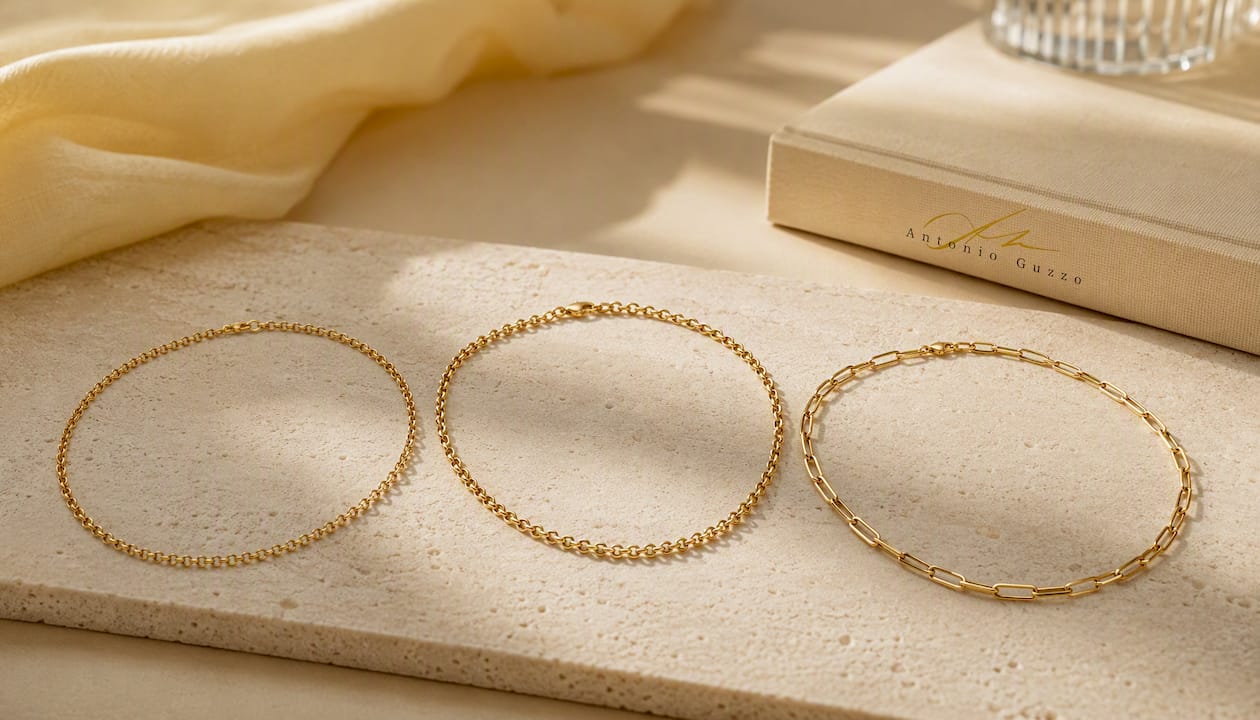
The 14K Solid Yellow Gold Classic Chain Necklace is built for exactly the daily pendant duty this guide keeps circling back to. Classic cable construction, soldered links, and a gauge suited to light and medium pendants worn every day.
The Gold Link Chain Necklace, 18K Generation steps up for anyone who wants a solid, substantial chain that can be worn alone as a statement piece or paired with a heavier pendant without stretching or sagging.
The 18K Gold Paperclip Chain fits the modern, layering-friendly look this guide covers under contemporary styles. It’s a strong choice for anyone building a stacked necklace look rather than wearing a single statement piece.
Browse the full necklace and pendant collection to compare options side by side, or check the ring collection and earring collection if you’re building out a matching set. Many pieces ship free, and the jewelry is crafted to meet soldered, solid-gold standards recommended for durability before reaching customers.
Sources
For deeper technical detail beyond this guide, SageStone’s pendant weight guidelines break down gauge recommendations further, MyGemologist’s chain type overview covers construction differences in depth, and Robbins Brothers’ chain guide explains why width changes how a chain performs.
- How to Choose the Right Chain for Your Pendant — SageStone
- Types of Necklace Chains — MyGemologist
- Our Complete Guide to Jewelry Chain Types — Robbins Brothers
FAQ
What are the different types of necklace chains?
The main families include cable, box, rope, curb, Figaro, wheat, paperclip, herringbone, snake, mariner, Byzantine, and Franco chains. Each differs in link shape, strength, and how it drapes, which is why choosing by construction matters more than choosing by name alone.
What are some common types of necklaces beyond the chain style?
Beyond chain construction, necklaces are often categorized by length and function: chokers, princess-length pendants, matinee chains, opera-length chains, and layered sets. Antonio Guzzo Fine Jewelry’s necklace collection covers several of these lengths across solid 14K and 18K gold.
Which chain is best for a pendant necklace?
For most pendants, cable, box, or wheat chains offer the best mix of strength and everyday comfort. Box chains in particular resist tangling exceptionally well, which makes them a dependable pick for daily wear.
What is the strongest type of chain for a necklace?
Rope and curb chains, especially wider Cuban link styles, are generally the most durable for carrying real weight. Box and rope chains are frequently recommended for heavier or heirloom pendants because their link structure spreads stress evenly rather than concentrating it at one point.
How do I know what gauge chain to buy?
Match the gauge to your pendant’s weight: 0.5 to 0.8mm for pendants under 5 grams, 0.8 to 1.2mm for 5 to 15 grams, and 1.2mm or thicker for anything over 15 grams. When your pendant falls near a boundary, size up rather than down.