

Karat Aware Gold Jewelry Care That Protects Treated Gemstones
The safest daily routine is simple: wipe your gold pieces with a soft cloth after each wear, clean them regularly in lukewarm water with a drop of mild dish soap, and remove them before showering, swimming, or cleaning. Have a jeweler inspect fine, stone-set pieces every 6 to 12 months, per Jewelers Mutual’s inspection guidance.
TL;DR:
- Avoid soaking plated jewelry or pieces with soft gemstones like emeralds and opals, as moisture and friction can cause irreversible damage or wear.
- For gold, use lukewarm water and soap for regular cleaning, but skip brushing or ultrasonic cleaners on 24K gold or delicate, treated stones.
- Store jewelry separately in lined pouches or compartments, and keep chains flat or hung to prevent scratches, tangles, and tarnishing.
- Have jewelry inspected by a jeweler every 6 to 12 months for loose settings, worn clasps, or structural issues to prevent loss or costly repairs.
- Prioritize identifying your gold’s karat and gemstone treatments before cleaning to avoid applying universal methods that could damage specific pieces.
Table of Contents
- Daily wear and handling: habits that prevent damage
- Home cleaning: step-by-step safe method everyone can use
- How karat, plated, and gemstones change your approach
- Storage and transport: stop scratches and tarnish before they start
- When to see a jeweler: inspections, repairs, and professional cleaning
- Quick do / don’t checklist for easy reference
- Craftsmanship changes how you should clean a piece
- The one thing most gold jewelry care advice gets backwards
- Caring for solid gold you can wear every day
- Sources
Daily wear and handling: habits that prevent damage
Gold scratches more easily than most people expect. It’s a soft metal, and karat gold gets softer as the purity climbs, so gold-on-gold contact, keys in a pocket, or a countertop bump all leave marks over time. The fix isn’t complicated. Put jewelry on last when you’re getting ready, so it never has to touch perfume, hairspray, or lotion while wet. Take it off first when you get home, before you wash dishes, hit the gym, or jump in the pool.
A few habits go a long way toward everyday gold jewelry care:
- Remove rings and bracelets before workouts, yard work, or dishwashing.
- Skip the pool and hot tub. Chlorine attacks the alloy metals in karat gold, and that damage doesn’t reverse itself.
- Apply lotion, sunscreen, and perfume before you put jewelry on, not after.
- Give each piece a quick wipe with a microfiber cloth before you put it away to help remove oils and residue.
Pro Tip: Keep a microfiber cloth in your nightstand drawer. Wiping earrings and rings for ten seconds before bed catches oils and residue before they build up into a dull film.
Home cleaning: step-by-step safe method everyone can use
Warm water and dish soap handle 90 percent of what your jewelry box needs. The Wirecutter method, tested by cleaning experts at The New York Times, recommends a short soak followed by gentle brushing. It works for gold and for many gemstone-set pieces, with a few adjustments by karat that we’ll cover next.
Here’s the routine:
- Fill a small bowl with lukewarm water and add one or two drops of mild, unscented dish soap.
- Soak solid 14K or 18K pieces briefly. Use minimal soaking time for plated jewelry.
- Use a soft baby toothbrush to loosen buildup in crevices, or work the piece gently between your fingers if it’s delicate.
- Rinse under running water with the drain closed, so nothing goes down the sink by accident.
- Pat dry with a soft cloth and buff lightly to bring back the shine.
Keep four items on hand for this: a small glass bowl, a baby toothbrush, unscented dish soap, and a microfiber cloth. That’s the entire kit.
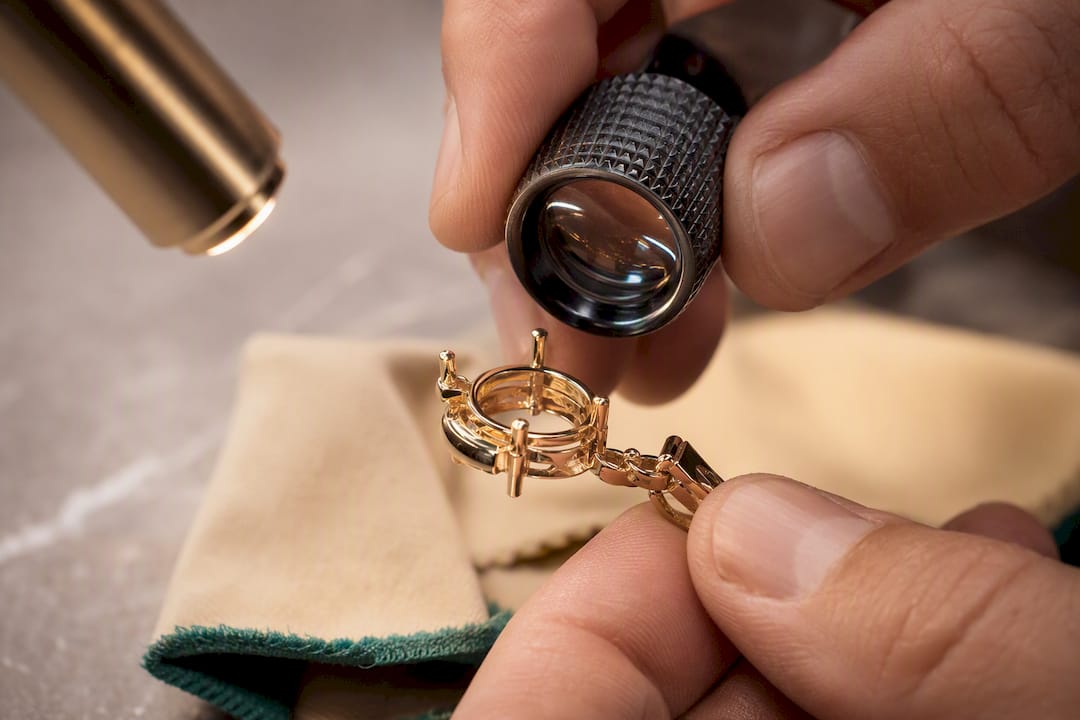
One inspection every 6 to 12 months catches most structural problems — loose prongs, thinning shanks, worn clasps — before they become expensive repairs, according to Jewelers Mutual. Home cleaning keeps gold bright; it doesn’t check the settings holding your stones in place.
How karat, plated, and gemstones change your approach
Not all gold behaves the same way, and treating an 18K emerald ring like a 14K wedding band is how damage happens. Purity changes softness, and softness changes what tools are safe.
- 24K gold is nearly pure and very soft. Skip the brush entirely; clean with fingers or a cloth only.
- 18K gold holds up to a soft toothbrush but still scratches more easily than 14K, so keep the pressure light.
- 14K and 10K gold are more durable thanks to higher alloy content, making them the most forgiving for everyday brushing.
- Gold-plated and vermeil pieces should never soak. Wipe with a dry or barely damp cloth, since moisture and friction wear away plating faster than anything else.
- Gemstones like emeralds, opals, and pearls don’t tolerate ultrasonic cleaners or steam, and many chemical cleaners etch or cloud them. Emeralds in particular are often treated with oil to fill natural fissures, so soaking or scrubbing can strip that treatment. When in doubt, hand the piece to a jeweler.
Storage and transport: stop scratches and tarnish before they start
Most of the scratches on your gold happened in a drawer, not on your wrist. Tossing rings, chains, and earrings into one jewelry box lets metal grind against metal every time you open it.
Store pieces separately, in individual fabric pouches or a box with lined compartments. Chains fare best hung or laid flat, since coiling them in a pile invites tangles and kinks. Lower-karat and plated pieces benefit from anti-tarnish strips tucked into the storage box, since some alloys oxidize slightly in humid air.
- Use soft pouches or a lined box with separate slots for each piece.
- Hang or lay chains flat instead of piling them together.
- Add anti-tarnish strips for plated or lower-karat items stored long term.
- Keep jewelry out of the bathroom, where steam and humidity settle into every corner.
Pro Tip: Toss a small silica gel packet into your travel jewelry case. It absorbs the humidity that causes tarnish, and it costs almost nothing.
When to see a jeweler: inspections, repairs, and professional cleaning
Fine jewelry, especially anything set with stones, needs a professional look every 6 to 12 months. That’s the standard Jewelers Mutual recommends, and it exists because loose settings and worn clasps rarely announce themselves until a stone is already missing.
Watch for these signs between visits:
- A stone that wiggles or catches on fabric.
- Prongs that look flattened or worn thin.
- A clasp that pops open on its own.
- Persistent dullness that soap and water won’t fix.
A jeweler’s service typically includes prong tightening, resoldering weak joints, re-plating or re-rhodium work where needed, and machine polishing. That last one matters: polishing removes a microscopic layer of metal each time, so it’s worth doing sparingly, not after every wear.
Quick do / don’t checklist for easy reference
Do: wipe after wear, store pieces separately, and clean with soap and water regularly.
Don’t: use bleach, toothpaste, baking soda, or ultrasonic cleaners on plated pieces or soft stones.
Cadence: wipe weekly, deep clean monthly, professional check every 6 to 12 months.
Craftsmanship changes how you should clean a piece
Handcrafted jewelry asks for a gentler hand than mass-produced pieces, and that’s not marketing talk, it’s physics. Fine detail work, hand-set stones, and Colombian emeralds with natural inclusions all respond differently to a soft cloth than a machine-finished chain does. A piece built with more handwork simply has more surfaces where aggressive scrubbing can dull an edge or loosen a setting.
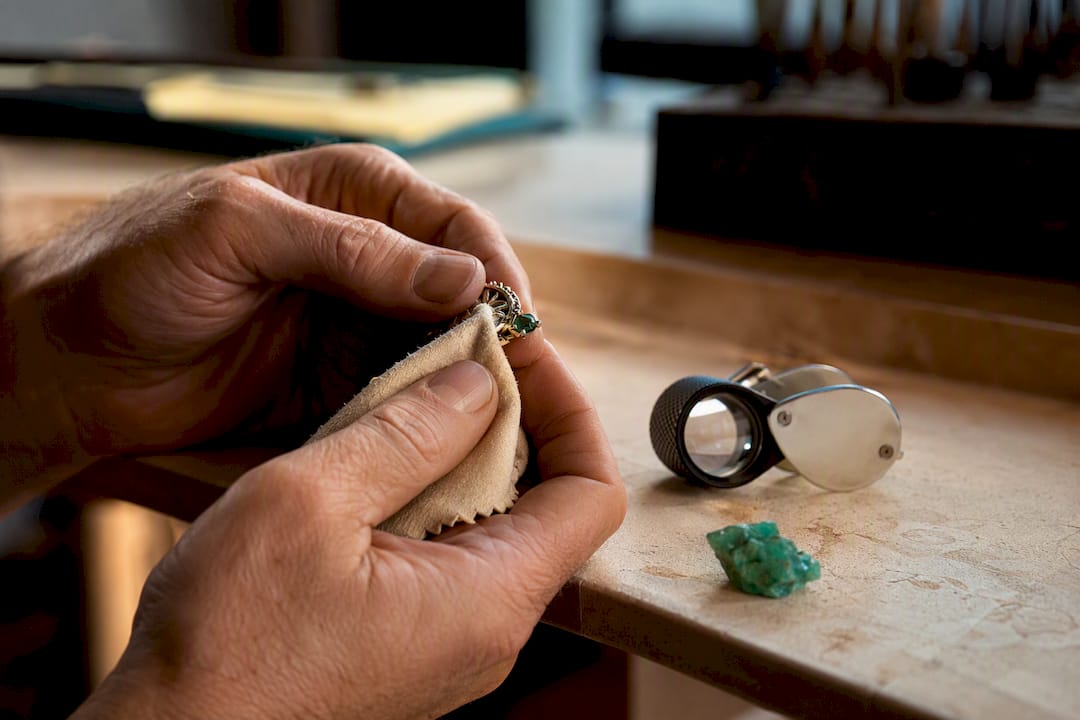
That’s part of why we put together a detailed guide to cleaning gold and silver with real stones for pieces exactly like these. If you’re caring for an emerald ring or a hand-finished bracelet, treat the stone as the priority, not the metal.
The one thing most gold jewelry care advice gets backwards
Most care guides treat every gold piece the same, as if a mass-produced 14K stud and a hand-set 18K emerald ring deserve identical treatment. They don’t. The conventional advice, soak everything, brush everything, polish everything, ignores that construction quality and stone treatment change the risk profile entirely.
Here’s what actually matters: identify what you own before you clean it. A solid 14K chain can handle a monthly soak and a soft brush without complaint. An emerald that’s been oil treated to fill natural fissures can lose that treatment in the same bowl of soapy water. The gap between those two pieces is where most at-home damage happens, not from neglect, but from applying one universal method to jewelry that was never built the same way.
If you take one thing from this, prioritize identifying your gold’s karat and any gemstone treatments before you reach for soap or a brush. Everything else, timing, tools, storage, follows from that one decision.
— Angelo
Caring for solid gold you can wear every day
Antonio Guzzo Fine Jewelry builds every piece in solid 14K or 18K gold, not plating, which means the routines above apply directly without the extra caution plated jewelry demands. The Classic Gold Huggie Hoop Earrings in 18K Gold hold up to the monthly soap soak and soft brush described earlier, since solid 18K construction tolerates gentle daily cleaning without stripping a coating.
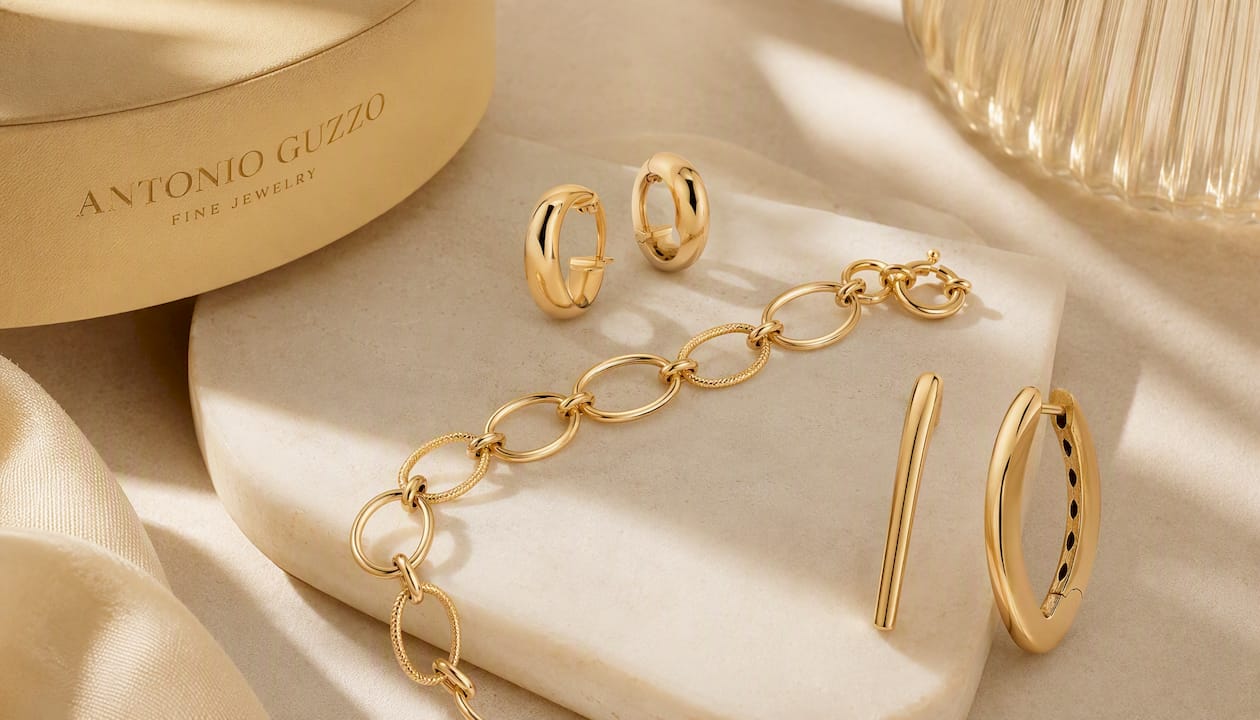
The Gold Chain Link Bracelet is designed with daily wear in mind, so laying it flat in a lined box rather than coiling it will keep the links from developing kinks over years of use. For a slightly more durable everyday option, the 14K Yellow Gold Classic Polished Hoop Earrings take a soft toothbrush well thanks to their higher alloy content.
If you’re purchasing a piece meant to last for decades, an heirloom ring or a gift with a story behind it, book a professional inspection within the first year, then every 6 to 12 months after. Browse the full jewelry collection to find a piece built for the long haul.
Sources
- Guide to Jewelry Inspections — Jewelers Mutual
- How to Clean Your Jewelry | Wirecutter (The New York Times)
Recommended
- How to Properly Clean Gold and Silver Jewelry
- Carat vs. Karat: Understand the Distinction
- Choosing between 14K or 18K Jewelry, We’re Here To Help.
- The Ultimate Guide to Choosing Jewelry for Any Occasion