

Protect Your Ring: Emerald vs Diamond and When to Choose Green
Choose a diamond if you want maximum durability, everyday wear with zero worry, and a brilliant white sparkle. Choose an emerald if rich green color, rarity, and personal symbolism matter more to you than low maintenance, and you’re willing to pair it with a protective setting. Certification and mount design decide how each stone actually performs in daily life, and later in this guide, three Antonio Guzzo Fine Jewelry emerald rings show what a well-protected, ethically sourced emerald can look like.
TL;DR:
- Rarity and intense green color make high-quality Colombian emeralds more expensive per carat than similarly sized diamonds, especially if minimally treated.
- Emeralds contain internal fractures that increase chipping risk, requiring protective settings like bezel or halo to ensure durability for daily wear.
- Diamonds are about 140 times harder than emeralds in scratch resistance, making them more suitable for tough, everyday conditions with minimal maintenance.
- Most emeralds are treated with oil or resin to improve appearance, so buyers should verify treatments through a certified lab report before purchase.
- Buyers should consider their lifestyle, budget, and symbolism needs carefully, as emeralds demand extra care but offer rich color and cultural significance.
Table of Contents
- Emerald vs Diamond Comparison: Durability, Price, and Look Side by Side
- How Hard Is an Emerald Compared to a Diamond?
- What Determines Emerald and Diamond Prices?
- Reading a Certificate: Color, Clarity, and Treatment Disclosures
- How to Choose Between an Emerald and a Diamond
- Antonio Guzzo Fine Jewelry’s Approach to Emerald Rings
- Which Stone Would Antonio Choose?
- Ready to Shop Emerald Rings?
- Sources
- FAQ
Emerald vs Diamond Comparison: Durability, Price, and Look Side by Side
The two stones sit at opposite ends of almost every practical measure a buyer cares about. Diamonds win on toughness and low maintenance. Emeralds win on rarity and color intensity, at the cost of extra care.
Here’s how they stack up across the factors that actually change a buying decision:
- Durability and daily wear: Diamonds score a 10 on the Mohs scale, the highest of any natural material, while emeralds rate 7.5 to 8. Diamonds resist scratching from nearly everything; emeralds chip more easily because most contain internal fractures known as jardin.
- Price and rarity: Diamond prices track the 4Cs, and lab-grown diamonds have pulled prices down for larger, higher-color stones. Fine emeralds, especially well-colored Colombian stones with minimal visible inclusions, can cost more per carat than a diamond of similar size.
- Appearance: A diamond’s cut determines its brilliance and fire, the white flashes of light that make it sparkle under any lighting. An emerald’s cut is chosen to protect and showcase saturated green color rather than maximize light return, so it reads as a color stone first, a sparkle stone second.
- Clarity and treatments: Diamond clarity is graded on a scale from Flawless to Included, and any treatment must be disclosed on a lab report. Nearly every natural emerald is treated with oil or resin to fill surface-reaching fractures and improve apparent clarity, a practice GIA considers standard industry procedure rather than a defect, as long as it’s disclosed.
- Best settings: Diamonds tolerate prong settings well because they resist chipping at the edges. Emeralds do better in bezel or halo settings that shield the girdle and corners from impact.
- Maintenance: Diamonds clean up with an ultrasonic cleaner and steam with no risk. Treated emeralds cannot handle either method safely, since heat and vibration can degrade the filler.
A quick statistic puts the hardness gap in perspective: diamond is estimated to be roughly 140 times harder than emerald in terms of absolute scratch resistance, not just eight tenths of a point on paper. That’s the number that should drive your setting choice more than anything else.
How Hard Is an Emerald Compared to a Diamond?
The Mohs scale looks like a simple 1 to 10 ruler, but it doesn’t measure hardness in equal steps. The jump from an 8 to a 10 represents a far bigger leap in actual scratch resistance than the jump from a 2 to a 4. It’s dramatically harder in practice, which is the whole reason diamonds became the industry standard for daily-wear rings in the first place.
Hardness only tells half the story, though. Toughness, meaning resistance to chipping and cracking under impact, matters just as much for a ring that gets knocked against countertops and car doors. Most emeralds contain jardin, the internal fracture network that gives each stone its distinctive garden-like inclusions. Those fractures create natural weak points, so emeralds chip more readily than diamonds even though the hardness gap alone might suggest otherwise.
You can offset a lot of that risk with the right mount:
- Bezel settings wrap metal fully around the stone’s edge, which is the single best defense against chipping.
- Halo settings surround the center stone with smaller accent stones that act as a buffer against side impact.
- Low-profile prongs keep the emerald closer to the finger, reducing how often it catches on fabric or hits hard surfaces.
For cleaning, stick to lukewarm water, a mild soap, and a soft brush, then air dry. Skip ultrasonic and steam cleaners entirely on treated emeralds, since GIA warns that heat and vibration can strip or degrade the fracture filler. Have a jeweler check the setting once a year, and insure any stone worth more than a few hundred dollars.
Pro Tip: Ask your jeweler to check prong or bezel tension every year, not just when a stone looks loose. Metal fatigues slowly, and catching it early costs far less than replacing a chipped emerald.
What Determines Emerald and Diamond Prices?
Origin and color saturation drive emerald prices more than size does. A one-carat Colombian emerald with deep, even green color and few visible inclusions can outprice a one-carat diamond of good but unremarkable color and clarity, because that combination of hue and origin is genuinely scarce.
Diamond pricing runs on a more standardized formula:
- Carat weight sets the baseline, since larger rough stones are rarer and prices increase disproportionately at common size thresholds.
- Cut quality determines brilliance and can swing price by a wide margin between two diamonds of the same size and color.
- Color grade (D to Z) and clarity grade (Flawless to Included) refine price within that baseline, guided by the 4Cs framework that anchors nearly every diamond appraisal.
- Lab-grown diamonds have changed the math entirely, offering the same optical and chemical properties as mined stones at a noticeably lower price point, particularly for larger carat weights.
Emeralds don’t have an equivalent lab-grown discount effect yet in mainstream retail, so a natural emerald with strong color still commands a premium that has held up over time. Ask for a certificate that names the testing lab and states any treatment before you buy anything described as a “fine” emerald. Skipping that step is how buyers end up overpaying for a stone with undisclosed fillers or a misleading origin claim.
Reading a Certificate: Color, Clarity, and Treatment Disclosures
Diamond and emerald certificates answer different questions, because the two stones are graded on different priorities.
Diamond grading focuses on optical performance. Color runs from D (colorless) to Z (noticeable yellow tint), and clarity runs from Flawless to Included, based on the size and visibility of internal features under magnification. Both numbers affect how much light bounces back as brilliance and fire.
Emerald grading centers on color quality rather than absolute clarity. Saturation, tone, and hue determine value more than the presence of jardin does, and gemological experts generally view inclusions as part of an emerald’s character rather than a flaw to be graded down harshly. What matters is whether the stone has been treated, and how.
A useful certificate should tell you:
- The grading lab’s name and credentials.
- Whether the stone has been treated, and with what (oil, resin, or none).
- Color grade or description for emeralds; color and clarity grades for diamonds.
- Country or region of origin, when it can be determined.
- Carat weight and measurements matching the physical stone.
If a seller can’t produce this information for a stone priced as “fine” quality, treat that as a reason to walk away rather than a minor gap.
How to Choose Between an Emerald and a Diamond
Start with three honest questions about your own life before you think about the stone at all.
- How rough is your daily routine? Manual work, frequent gym sessions, or a job that involves your hands means you need the scratch and chip resistance only a diamond reliably delivers.
- What’s your budget, and for what size? If you want a large center stone at a moderate price, a diamond, especially a lab-grown one, stretches your budget further than an emerald of comparable size and quality.
- Does symbolism outweigh convenience for you? Emeralds carry personal and cultural weight that many buyers find worth the extra care, tied to associations with renewal, fertility, and growth that stretch back centuries across different cultures.
Bring a short list of questions to any jeweler:
- Can I see the lab certificate, and does it disclose treatment?
- What’s your return and warranty policy if the stone chips or the setting fails?
- Will you inspect and re-tighten the setting periodically at no charge?
Watch for these red flags: no treatment disclosure on an emerald, no lab report on a stone marketed as investment-grade, and prices that seem too low for the stated quality. Any of those should end the conversation.
If you love the idea of both stones, you don’t have to choose completely. An emerald center stone with a diamond halo gives you color and extra physical protection at once. A larger lab-grown diamond can deliver size and brilliance at a lower cost than a natural stone. A green sapphire, while a different gem entirely, offers comparable color with significantly better hardness for buyers who want green without the extra care routine.
Antonio Guzzo Fine Jewelry’s Approach to Emerald Rings
The jeweler builds every piece around handcrafted Italian technique and ethically sourced Colombian emeralds, with the Signature Collection designed for pieces meant to be worn for decades and passed down. Sustainable sourcing practices run through the line, so choosing an emerald does not mean choosing between beauty and responsible sourcing.
Three rings show how thoughtful setting design addresses the durability trade-offs covered above:
- The 18K Natural Emerald Ring pairs a single natural emerald with a mount built to protect the stone’s edges, suited to a buyer who wants one clean, saturated green focal point.
- The Emerald Trilogy Ring in 18K Gold sets three natural emeralds together, a design that works well for someone drawn to symbolism, since trilogy settings are often read as past, present, and future.
- The 18K Yellow Gold Natural Emerald Trilogy Ring offers a variation on that same trilogy structure in warm yellow gold, suited for those who want the symbolism of three stones with a different metal tone. Care guidance for pieces like these lives on the jeweler’s jewelry cleaning guide.
Which Stone Would Antonio Choose?
If a client tells me they work with their hands or want a ring they never think twice about, I point them to a diamond every time. That’s not a compromise, it’s the right tool for that life.
But if someone comes in talking about their grandmother’s ring, or wanting a color that feels like theirs and no one else’s, an emerald usually wins that conversation. I’ll always pair it with a bezel or halo and tell them exactly which cleaners to avoid. Symbolism matters more when it’s honest about the maintenance it asks for in return.
— Antonio
Ready to Shop Emerald Rings?
This jeweler offers emerald buyers rings built specifically around the durability trade-offs discussed in this guide, using natural emeralds with protective settings suited to daily wear, backed by free shipping on orders.
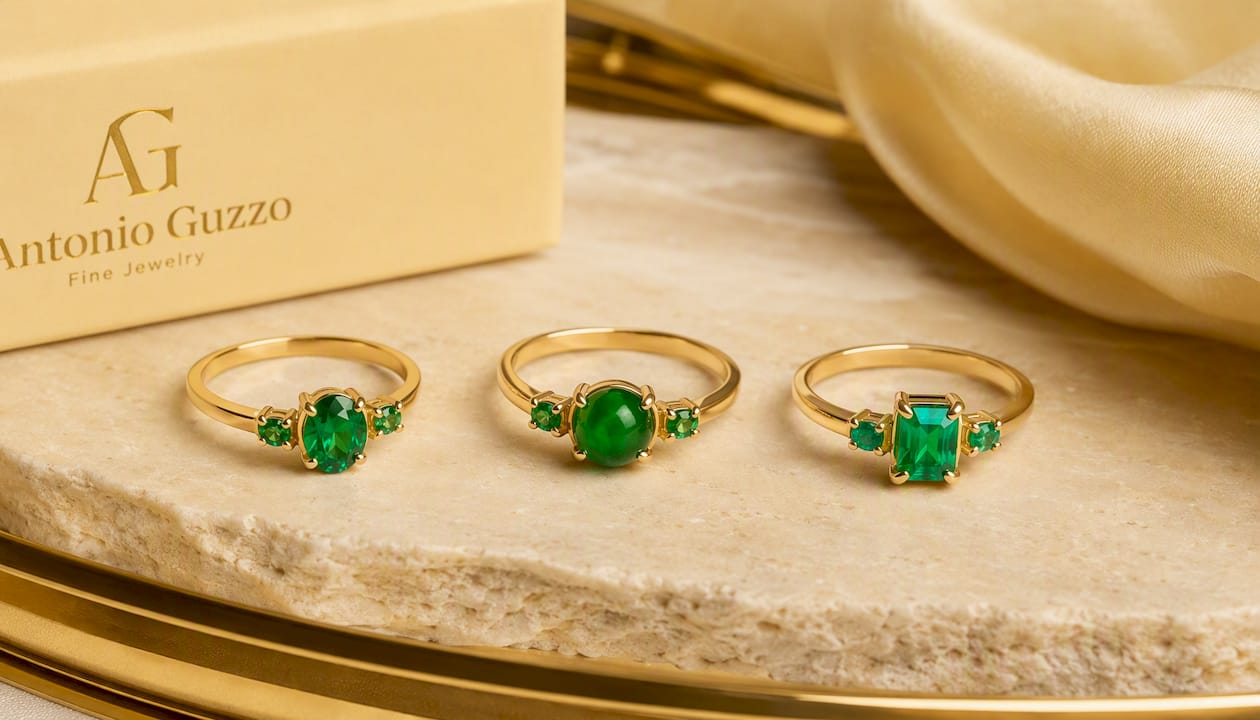
If the trilogy symbolism appeals to you, the Emerald Trilogy Ring in 18K Gold and the 18K Yellow Gold Natural Emerald Trilogy Ring offer two takes on the same three-stone design in different gold tones. For a single-stone focal piece, start with the Exquisite 18K Trilogy Emerald Ring and ask about setting details before you buy. Every listing includes sourcing and treatment information up front, so you’re never guessing what you’re paying for.
Sources
- Emerald vs. Diamond: What are the Similarities and Differences? | GIA 4Cs
- Emerald care and cleaning | GIA
- Gem treatment information | GIA
- Emerald vs Diamond Engagement Rings: Full Comparison Guide | Colonial Gemstones
FAQ
Is Emerald More Expensive Than Diamond?
It depends on quality and origin. A well-colored Colombian emerald with few visible inclusions can cost more per carat than a diamond of similar size, while lower-grade emeralds are often more affordable than comparable diamonds.
Why Can’t You Wear Emeralds Every Day?
You can wear emeralds daily with the right setting and care, but their fractures and treatments make them more prone to chipping than diamonds, so bezel or halo mounts and gentle cleaning matter more for everyday pieces.
What Is 1,000 Times Rarer Than a Diamond?
High-quality natural Colombian emeralds with strong, even color and minimal inclusions are considered far rarer than gem-quality diamonds, since diamonds are mined and cut in far greater volume worldwide.
Can a Jeweler Tell if an Emerald Is Real?
A qualified jeweler or gemological lab can identify a natural emerald and detect common treatments like oiling or resin filling through standard testing, which is why a lab certificate matters before you buy.
Which Is Better, Emerald or Diamond?
Neither stone is universally better. A diamond suits buyers who want maximum durability and low maintenance, while an emerald suits buyers who prioritize color, rarity, and symbolism and don’t mind extra care.