

Emerald Treatments: 4 Grades and the Lab Report Buyers Must Demand
Emerald treatments are clarity-enhancing processes, most commonly oiling or resin filling, applied to fractures that reach the stone’s surface. The common types are cedarwood oil, natural or synthetic resins like Opticon, and, far less acceptably, dyes. Assume any emerald you’re shopping for has been treated in some way and ask the seller for a lab report before you buy.
TL;DR:
- Nearly all emeralds on the market are treated with oil or resin to improve clarity, with oiling being reversible and resin filling more permanent.
- Lab reports from recognized gemological labs are essential for confirming treatment type, grade, and whether the stone has been re-treated over time.
- Treatment grade ranges from none to significant, affecting both the emerald’s value and how it should be cared for during wear or repairs.
- Acid cleaning, ultrasonic cleaning, and exposure to solvents can damage filled emeralds, especially those with resin, requiring careful handling and maintenance.
- Buyers should always request detailed disclosure and documentation before purchasing to avoid undisclosed treatments or composite stones.
Table of Contents
- Types of Emerald Treatments: Oil, Resin, and What to Avoid
- How Emerald Enhancement Works and How Labs Catch It
- How Treatment Grade Affects Value, Durability, and Repairs
- What a Lab Report Should Tell You About Treatment
- A Practical Checklist Before You Buy an Emerald
- How Antonio Guzzo Fine Jewelry Documents Every Emerald It Sells
- Why Treatment Grade Matters More Than the Word “Treated”
- Shop Documented Emeralds With Confidence
- Sources
- FAQ
Types of Emerald Treatments: Oil, Resin, and What to Avoid
Nearly every emerald on the market carries some form of clarity enhancement, and the International Gem Society advises consumers to assume treatment unless a credible lab report proves otherwise. Emeralds form under intense geological pressure, which leaves them riddled with tiny surface-reaching fractures. Left alone, those fractures scatter light and make the stone look hazy. Fillers solve that problem by occupying the cracks with a substance whose refractive index closely matches the emerald itself, so light passes through more evenly.
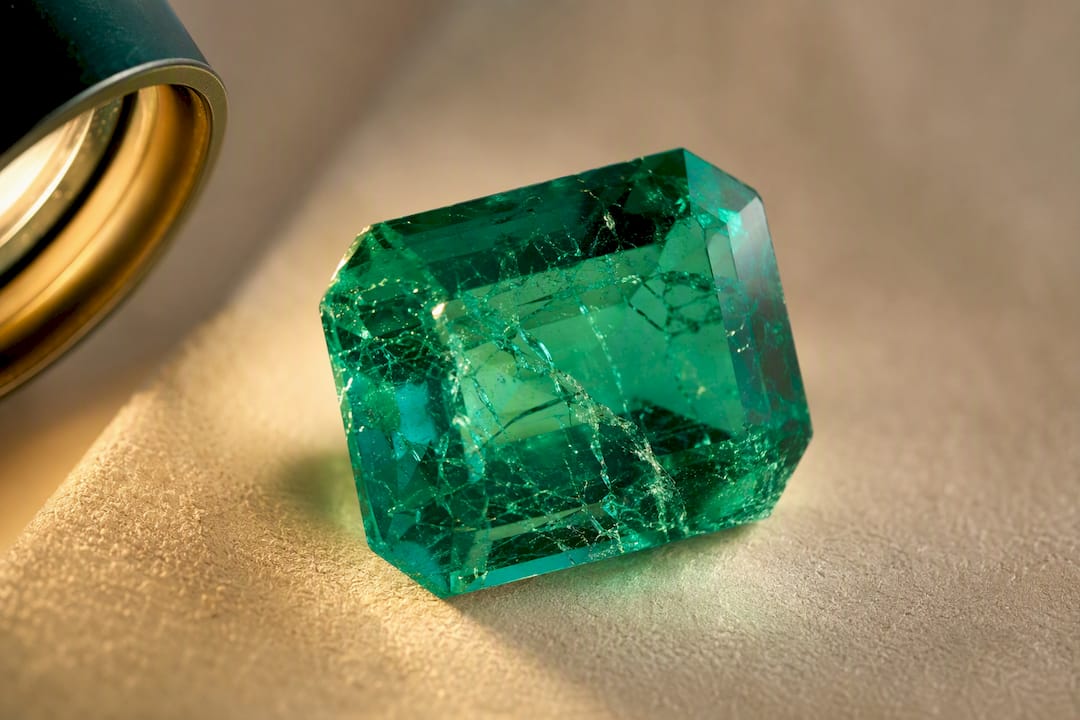
Cedarwood oil is the traditional choice, used for centuries because its optical properties suit emerald so well. It’s not permanent. Oil can seep out over years of wear, which is why re-oiling remains a normal part of emerald ownership rather than a warning sign.
Natural and synthetic resins, including the trade name Opticon, work the same way but cure into a harder, longer-lasting fill. According to GIA’s lab notes on emerald treatments, oiling is re-treatable while synthetic resins are more permanent and considerably harder to remove if something goes wrong.
A few other categories matter to know before you shop:
- Dyed or tinted oils add color rather than just clarity, deepening a pale stone artificially. The trade generally frowns on this because it misrepresents the emerald’s natural saturation.
- Assembled stones, sometimes called doublets or triplets, glue a thin emerald layer to a backing material. These are not simply treated emeralds; they’re composite objects and must be disclosed as such.
- Resin that yellows with age can occur even with Opticon, and the International Gem Society notes many dealers still apply a light oil coat over resin-filled stones for extra polish.
Oiling and resin filling are accepted trade practices when disclosed. Dyeing and undisclosed assembly are not.
How Emerald Enhancement Works and How Labs Catch It
Treating an emerald is a hands-on process, not an industrial shortcut, and it typically follows a consistent sequence:
- Cleaning first. The rough or cut stone gets washed, sometimes in a mild acid bath, to clear out dust and residue sitting in the fractures.
- Drying and inspection. Cutters examine the stone under magnification to map where the fractures reach the surface.
- Oil or resin application. For simple oiling, the stone is warmed slightly and dipped in heated cedarwood oil, letting capillary action pull it into the cracks.
- Vacuum or pressure infusion for resins. Synthetic fillers like Opticon usually require a vacuum chamber to pull air out of the fractures, followed by pressure to force resin deep into spaces oil alone might not reach.
- Curing. Resins often cure with light or gentle heat, hardening into a semi-permanent fill; oil simply settles.
Hand-dipped oiling is reversible almost by design; a jeweler can clean and reapply it. Pressure-infused resin is a different story. It bonds more aggressively and resists the solvents that would normally flush out old oil, which is exactly why it’s considered more permanent and harder to undo.
Detecting which treatment a stone received is where gemological labs earn their reputation. Common methods include:
- Magnified fracture examination, looking for the telltale flash of trapped filler or gas bubbles.
- Ultraviolet fluorescence, since some resins fluoresce differently than the surrounding emerald.
- Infrared spectroscopy, which can identify the chemical signature of a specific filler, distinguishing oil from Opticon or other synthetic resins.
- Solvent testing, cautiously applied by professionals, which can reveal whether a filler dissolves (suggesting oil) or resists (suggesting cured resin).
A GIA Colored Stone Identification Report is built specifically to answer this question and remains the most reliable way to confirm treatment status on a stone you’re considering. Oiling stays reversible for the life of the stone. Resin treatment, once cured, generally doesn’t.
How Treatment Grade Affects Value, Durability, and Repairs
The gem trade classifies emerald treatment by degree, and that degree, more than the simple fact of treatment, drives price. GemSelect’s overview of emerald treatments outlines four working categories:
- None. No detectable filler. Rare, and priced accordingly.
- Minor. Light oiling in a few small fractures, barely affecting appearance.
- Moderate. Noticeable filling that meaningfully improves clarity, the most common category in mid-range jewelry.
- Significant. Heavy fracture filling, often needed to make a heavily included stone salable at all.
Pro Tip: A moderately treated emerald with excellent color can be a smarter buy than a “none” stone with washed-out saturation. Treatment grade and color quality are separate scales, and both belong in your decision.
Fillers change how an emerald behaves in daily wear. Heat from a jeweler’s torch during resizing can boil oil right out of a fracture, leaving a visibly duller stone. Solvents in perfume, hairspray, or jewelry cleaner can strip oil entirely over months of contact. Ultrasonic cleaners are particularly risky since the vibration can crack an already-fractured stone or force filler out, and a jeweler unaware of the treatment might use one without a second thought.
Re-oiling is straightforward and inexpensive when a stone starts looking cloudy again. Re-cutting a filled emerald is a different problem. Recutting often fails to match the original fill depth, and fresh facets can expose cavities the original cut concealed, which is why many experienced cutters avoid the job on a treated stone altogether. If durability under decades of daily wear matters more to you than price, prioritize a lower treatment grade. If budget matters more and you understand the care tradeoffs, a moderately treated stone with strong color is a defensible choice.
What a Lab Report Should Tell You About Treatment
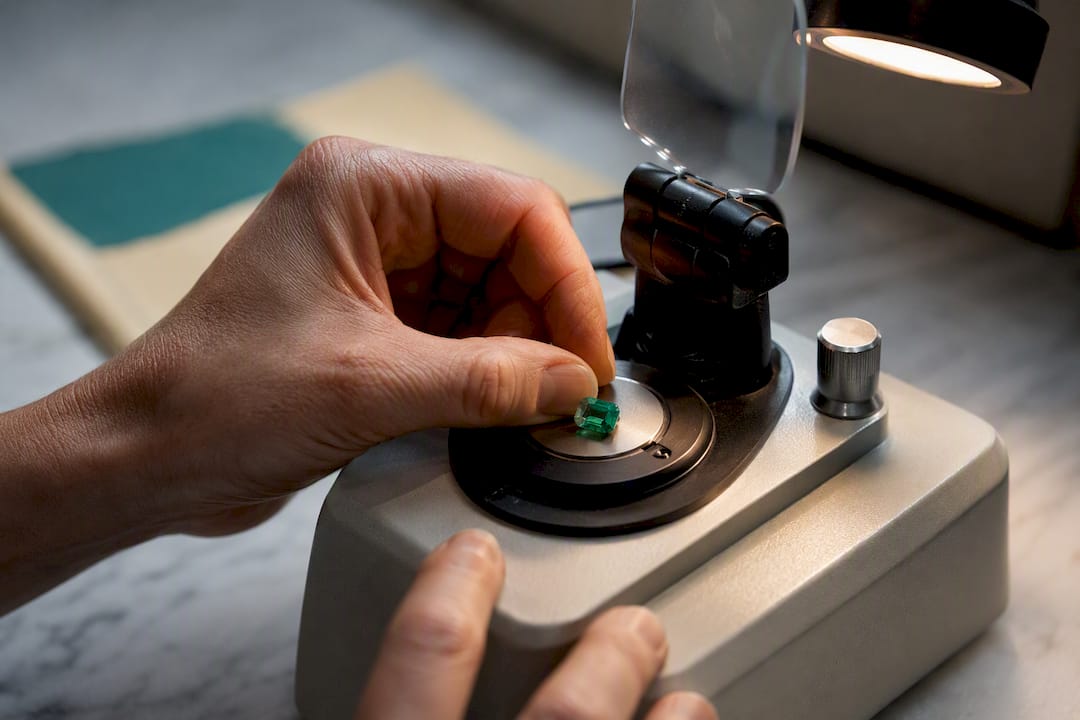
A trustworthy emerald purchase starts with paperwork, not just a loupe. The GIA’s Colored Stone Identification Report explicitly states whether a stone shows indications of clarity treatment, and that single line is the most reliable evidence you’ll get for a no-oil claim. Visual inspection alone, even by an experienced eye, can’t rule out treatment with confidence.
The FTC’s consumer guidance on gemstones makes disclosure a baseline expectation, not a courtesy. Sellers who leave out treatment information risk consumer complaints and regulatory scrutiny. The American Gem Trade Association reinforces this at the trade level, publishing its own definitions of “enhancement” and guidance on how dealers should disclose it to buyers.
On a legitimate certificate or invoice, expect wording along these lines:
- “Clarity enhanced, minor” or “moderate,” naming the degree.
- “Indications of oil in fractures” or “indications of a polymer/resin filler,” naming the substance where identifiable.
- “No indications of treatment” for the rare untreated stone, ideally paired with a full lab report rather than a seller’s word alone.
Treat vague listings as a warning sign. “Natural emerald” with no mention of treatment tells you nothing, since the word “natural” only means the stone wasn’t lab-created; it says nothing about fillers. Walk away from any high-value stone sold with no report at all, and be skeptical of language that hedges rather than states plainly what was done.
A Practical Checklist Before You Buy an Emerald
Buying an emerald well comes down to asking the right questions before money changes hands, not after.
- Ask what treatment was used and its degree. A seller who can’t answer specifically, “minor oiling” or “moderate resin,” is a seller who hasn’t checked.
- Request the lab report, not just a verbal assurance. A GIA report or equivalent from a recognized lab should accompany any stone above a modest price point.
- Ask about re-treatment history. Has the stone been re-oiled since it left the mine? Older estate emeralds often have.
- Confirm the return policy in writing. A confident seller with accurate disclosure has no reason to resist a fair return window.
- Look at the stone under magnification yourself. Cloudy zones around fractures, unusual flashes of color at the fracture edges, or a slightly greasy surface sheen can all hint at filler, even before lab results come back.
- Weigh color and clarity against treatment grade together. A vivid, saturated green with moderate treatment often beats a paler stone marketed as untreated.
Price should track treatment category as much as color and clarity. A significantly treated stone with average color has no business commanding the same price as a minor or untreated stone with the same visual grade, and if it does, that’s your cue to negotiate or walk. Insist on the report before you negotiate, not after. Once you know exactly what you’re buying, you’re negotiating from the strongest possible position.
How Antonio Guzzo Fine Jewelry Documents Every Emerald It Sells
Antonio Guzzo Fine Jewelry sources natural Colombian emeralds with ethical origin tracing built into every piece, and that documentation follows the stone all the way to your jewelry box.
- Treatment status and origin details are documented and provided at the time of sale, so you’re never guessing what you own.
- Certification accompanies each emerald piece, giving you the paper trail a serious purchase deserves.
- Care guidance is available for both treated and untreated stones, including a detailed cleaning guide that covers what to avoid with fracture-filled gems.
- Three signature pieces, the 18K Natural Emerald Ring, the 18K Yellow Gold Trilogy Ring with Natural Colombian Emeralds, and the 18K Yellow Gold Natural Emerald Trilogy Ring, ship with full product details and certification, exactly the paperwork this article recommends you demand.
Why Treatment Grade Matters More Than the Word “Treated”
Most of the anxiety around emerald treatments comes from treating the word “treated” as a red flag by itself. It isn’t. The trade-standard grading system, none, minor, moderate, significant, exists precisely because degree is the real variable, and conventional advice that stops at “ask if it’s treated” leaves buyers only half informed.
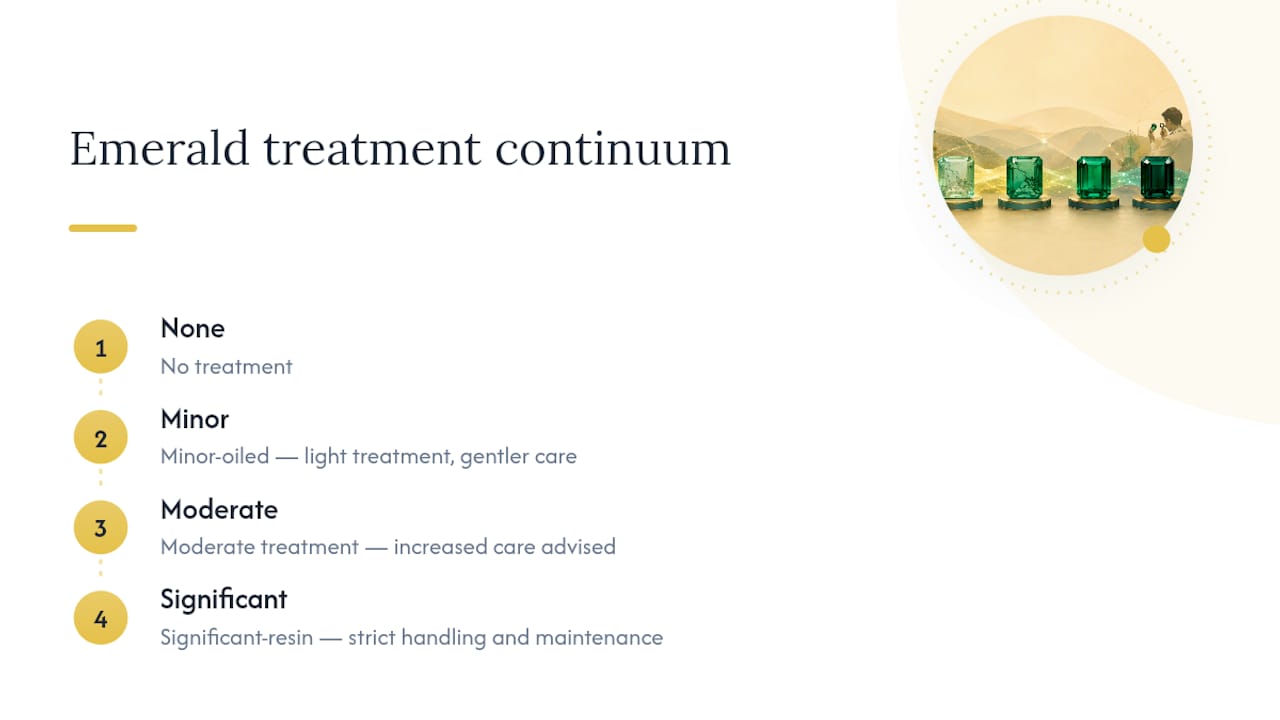
Where I think the standard guidance falls short is care instructions. Most buyers get told to avoid ultrasonic cleaners and harsh chemicals, full stop, without ever learning that a minor-oiled stone and a significant-resin stone tolerate very different handling. That distinction should shape how you clean, store, and insure a piece, not just how you shop for one.
If you take one thing from this guide, prioritize the lab report over the sales pitch. Color and clarity are what you fall in love with, but the report is what tells you whether that love affair comes with a maintenance schedule. Ask for it first, every time, and let the answer inform the price you’re willing to pay.
— Antonio
Shop Documented Emeralds With Confidence
Antonio Guzzo Fine Jewelry gives you what a generic jewelry counter often can’t: full documentation on treatment and origin before you commit to buying, plus free shipping on every order.
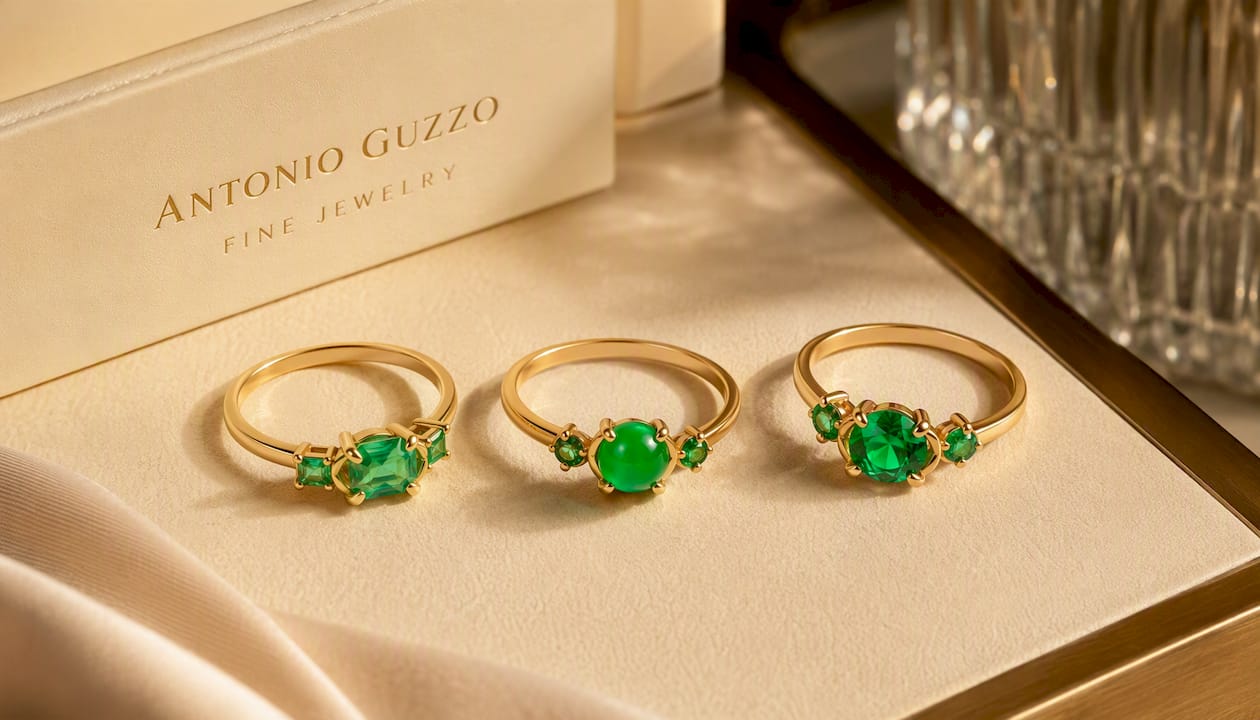
Every Colombian emerald in the Signature Collection comes with sourcing details and certification handed to you at checkout, not offered only if you ask twice. If you’re drawn to a three-stone design, the 18K Yellow Gold Natural Emerald Trilogy Ring and the Emerald Trilogy Ring in 18K Gold both pair Colombian-origin stones with documented treatment status. Prefer a single striking center stone instead? The Exquisite 18K Trilogy Emerald Ring offers that same paper trail in a different setting. Browse the collection and reach out with any certificate questions before you buy. Antonio Guzzo Fine Jewelry will walk you through exactly what’s in your stone.
Sources
FAQ
What does it mean if an emerald is treated?
It means the stone’s surface-reaching fractures were filled, usually with cedarwood oil or a synthetic resin like Opticon, to improve clarity and reduce the hazy look raw emeralds often have.
Does emerald oiling actually work?
Yes. Oiling fills fractures with a substance whose refractive index closely matches the emerald, which makes the stone look clearer and more even in color, though the effect can fade and need renewal over time.
What are the risks of a treated emerald?
The main risks are cosmetic and practical rather than dangerous: fillers can leak out under heat, harsh solvents, or ultrasonic cleaning, leaving the stone looking cloudier until it’s re-oiled or, in the case of resin, potentially damaged for good.
Why are emeralds treated with oil in the first place?
Emeralds form with natural fractures from the intense pressure of their geological origin, and oiling has been the traditional fix for centuries because cedarwood oil’s optical properties blend almost seamlessly with the stone itself.