

Emerald Price Per Carat: U.S. Ranges $500–$5,000 and Buyer's Checklist
Natural emerald prices per carat range from roughly $50 to $500 for commercial-grade material, $700 to $8,000 for fine quality, and $15,000 or more for investment-grade stones with exceptional color and no oil treatment. Color intensity, clarity, origin, and treatment level drive that spread more than carat weight alone. Colombian stones from Muzo or Chivor sit at the top of most price charts, while Zambian, Brazilian, and Ethiopian material fills the middle tiers. The breakdown below shows how those factors interact and what a fair price actually looks like.
TL;DR:
- Emerald prices vary greatly based on color saturation, origin, and treatment, with Colombian stones generally commanding a 30 to 50 percent premium.
- Market prices for jewelry-quality emeralds range from about $500 to $5,000 per carat, with exceptional stones exceeding $20,000 per carat at the top end.
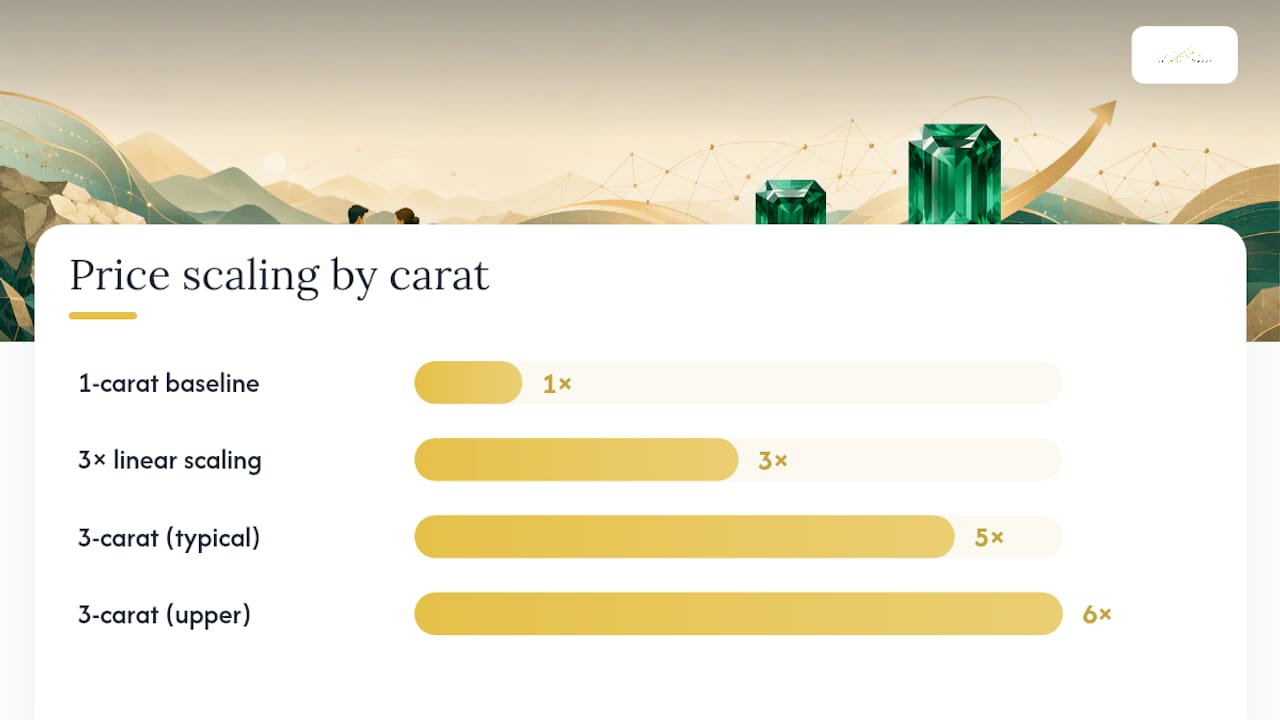
- Larger, high-quality emeralds increase rapidly in price per carat, often costing five to six times more than smaller stones of similar quality.
- Certification confirms treatment status and origin, but the most critical factor influencing price remains the stone’s vivid green color and saturation.
- Buyers should verify carat weight with lab reports and be cautious of sellers who resist breaking down per-carat prices to avoid potential misrepresentation.
Table of Contents
- What Is the Emerald Price Per Carat in 2026?
- What Determines the Price of an Emerald?
- How Does Origin Change Emerald Price Per Carat?
- How Do You Estimate an Emerald’s Value Before Buying?
- How Antonio Guzzo Fine Jewelry Prices Its Colombian Emeralds
- What the Market Actually Rewards
- Ready to See Colombian Emeralds Priced Fairly?
- Sources
- FAQ
What Is the Emerald Price Per Carat in 2026?
Per-carat pricing works differently for emeralds than for diamonds. A diamond’s value follows a fairly predictable grid based on the 4Cs. An emerald’s price per carat can swing by a factor of ten or more between two stones of identical weight, because color saturation and treatment level matter more than almost anything else.
Here’s how the market breaks down by quality tier and carat bracket, based on jewelry-quality stones sold through specialist retailers in the United States:
- Under 0.5 carat: Commercial stones run $50 to $200/ct. Fine-quality melee with good color reaches $300 to $600/ct.
- 0.5 to 1 carat: Commercial material sits around $100 to $500/ct, fine green climbs to $700 to $2,500/ct, and top vivid examples can hit $2,500 to $6,000/ct depending on treatment and origin, according to one emerald value calculator.
- 1 to 2 carats: Fine-quality stones often land between $2,000 and $6,000/ct, with exceptional color pushing past $10,000/ct.
- 2 to 3 carats: Fine tiers commonly reach $3,500 to $8,000/ct as the size premium starts compounding.
- 3 to 5 carats: Investment-grade material with minimal treatment frequently exceeds $10,000/ct, and museum-quality stones can clear $20,000/ct.
- 5 carats and up: Rare, unheated, minimally treated emeralds with documented Colombian origin can command $15,000 to $30,000+/ct at auction.
Most attractive jewelry-quality emeralds sold through specialist U.S. retailers fall between about $500 and $5,000 per carat, according to a 2026 emerald price guide, with exceptional stones rising far higher. These ranges assume typical minor-to-moderate oiling, which is the industry standard treatment for the vast majority of stones on the market. Certified stones with documented “no oil” status or verified Colombian provenance can multiply the price several times over compared to an otherwise identical, unoiled stone with no paperwork.
Pro Tip: Always ask whether a quoted per-carat price already reflects treatment status. A “$3,000/ct” emerald with heavy oil is a completely different purchase than a “$3,000/ct” stone that’s certified no-oil, even if they look similar under store lighting.
Retail-facing market trackers show these tiered baselines have moved substantially higher since 2017, with investment-grade material seeing the steepest climb as supply tightens and demand for documented, ethically sourced stones grows.
What Determines the Price of an Emerald?
Four factors decide where a stone lands within these ranges, and they don’t carry equal weight.
Color matters most. Gemologists judge emeralds on hue, tone, and saturation. The ideal is a pure, vivid green with slight blue secondary tones, medium to medium-dark tone, and strong saturation. Yellowish or grayish-green stones, or anything too dark or too pale, drop into commercial territory regardless of clarity. A vivid, evenly saturated green can command triple the price of a washed-out stone of the same size.
Clarity works differently for emeralds than for other gems. Almost every natural emerald has inclusions, often called “jardin” because the fibrous, mossy patterns resemble a garden viewed from above. Buyers aren’t looking for a flawless stone. They’re evaluating whether inclusions are eye-clean at arm’s length and whether they threaten the stone’s structural durability. A stone with heavy surface-reaching fractures loses more value than one with the same inclusion count buried deep inside.
Treatment creates one of the widest price swings in the entire market. Most emeralds on the market today carry at least minor oiling, and undisclosed treatment is a common source of price disputes between buyers and sellers. The grading generally breaks into three tiers:
- No oil: Untreated stones, the rarest and most expensive category.
- Minor oil: Standard cedar oil treatment that fills small surface-reaching fractures; the market norm.
- Moderate to significant oil or resin: Heavier treatment that fills larger fractures, often with synthetic resin, and pulls price down sharply per carat.
At fine quality, a documented “no oil” certification typically commands a multi-times premium over comparably colored, moderately oiled material, according to gemological pricing standards.
Carat weight drives price non-linearly. Large, clean, well-colored emerald crystals are geologically rare, so price per carat accelerates as size increases rather than scaling in a straight line. A 3-carat stone of a given quality won’t cost three times what a 1-carat stone of the same quality costs. It’s more likely to cost five or six times as much, because stones that size in that quality simply don’t turn up often.
Cut plays a supporting role. Cutters often sacrifice some weight retention to preserve color and minimize visible inclusions, which is why emerald cuts favor step-cut facets and rounded corners over the brilliant cuts used for diamonds. A cutter who prioritizes carat retention over color can actually produce a less valuable stone, even though it weighs more.
How Does Origin Change Emerald Price Per Carat?
Origin is where per-carat pricing gets its widest swings, and Colombian material sits at the top for a reason rooted in both geology and history.
- Colombia (Muzo, Chivor, Coscuez): Colombian stones typically command a 30 to 50 percent premium over comparable Zambian or Brazilian material at the same quality level, according to one emerald price guide for buyers. Muzo mines historically produce the deepest, most saturated green with a slight bluish undertone that collectors treat as the benchmark. Fine Colombian material regularly reaches $5,000 to $15,000/ct, and exceptional, minimally treated stones with lab-confirmed provenance go well beyond that.
- Zambia (Kagem): Zambian emeralds tend toward a cooler, slightly bluer green with excellent clarity. Fine Zambian stones often run $1,500 to $5,000/ct, a real value relative to Colombian material of similar visual quality. Kagem auction data from 2024 to 2025 showed real price volatility tied to production disruptions, which means Zambian premiums can move faster than Colombian pricing in a given year.
- Brazil: Brazilian production is large in volume but skews toward lighter, more yellowish tones, keeping most Brazilian stones in the commercial-to-mid-fine range, generally under $2,000/ct.
- Ethiopia: A newer source with some genuinely fine material emerging from the Shakiso region. Well-colored Ethiopian stones can compete with mid-tier Zambian pricing, though the market hasn’t fully matured for this origin yet.
- Panjshir (Afghanistan) and Swat (Pakistan): Small-volume sources that occasionally produce stones rivaling Colombian color. Well-documented, verified material from these regions can command surprisingly high prices, though limited supply and inconsistent certification keep them a niche category for collectors rather than a mainstream benchmark.
Origin claims only carry weight when they’re backed by lab documentation. A gemological report from a recognized laboratory that confirms geographic origin through trace-element analysis is what separates a verified premium from a seller’s unverifiable claim.
How Do You Estimate an Emerald’s Value Before Buying?
Turning a per-carat number into a fair total price takes a short sequence of checks, not guesswork.
- Confirm the exact carat weight on a certified lab report, not a seller’s estimate. Weight discrepancies between listing and paperwork are a common red flag.
- Get the treatment disclosure in writing. “Minor oil,” “moderate oil,” or “no oil” changes the multiplier applied to your base per-carat figure.
- Request a lab report from a recognized grading body such as GIA, GRS, or SSEF for any stone over roughly $1,000 per carat. Independent lab confirmation of treatment and, where claimed, origin is standard guidance for serious emerald purchases.
- Apply origin and treatment multipliers to the base per-carat range. Buyer guides commonly recommend starting from a mid-tier per-carat baseline, then adjusting upward for confirmed Colombian origin or no-oil status, following the multiplier method used in emerald value calculators.
- Check the seller’s return policy and documented guarantee. A reputable seller stands behind certification claims with a real return window.
- Watch for red flags: no treatment disclosure, vague or missing origin claims, inconsistent weight between the listing and any accompanying paperwork, and pressure to skip independent appraisal.
Pro Tip: If a listing quotes only a total price with no per-carat breakdown, ask for one directly. Sellers who won’t isolate the per-carat figure are often hiding a weak color grade behind a large total carat weight.
How Antonio Guzzo Fine Jewelry Prices Its Colombian Emeralds
A finished ring or pair of earrings never costs just the per-carat gemstone price. It reflects the stone’s value plus metal weight, labor, design complexity, and retail margin, which is why a $2,000/ct emerald doesn’t translate into a $2,000 piece of jewelry.
The Signature Collection is built around natural Colombian emeralds set in solid 18K gold, featuring artisan design work. A few examples show how per-carat value shows up in finished form:
- The Classic Colombian Emerald Stud Earrings in 18K Gold show how smaller, well-matched stones get set for everyday wear.
- The 18K Yellow Gold Colombian Emerald Stud Earrings illustrate an alternate stone cut and setting style at a comparable carat range.
- The Classic Colombian Emerald Ring in 18K Gold demonstrates how a larger center stone shifts both design and price.
Orders ship with free shipping, and there is an emphasis on sourcing documentation alongside design quality.
What the Market Actually Rewards
The conventional advice tells buyers to chase certification above everything else, and that’s not wrong, but it’s incomplete. A lab report confirms what a stone is. It doesn’t tell you whether the price you’re being quoted reflects a fair multiplier for that grade. I’ve seen buyers proudly show me a GIA report for a moderately oiled, commercial-color stone, paying fine-tier prices because the paperwork alone made them feel protected.
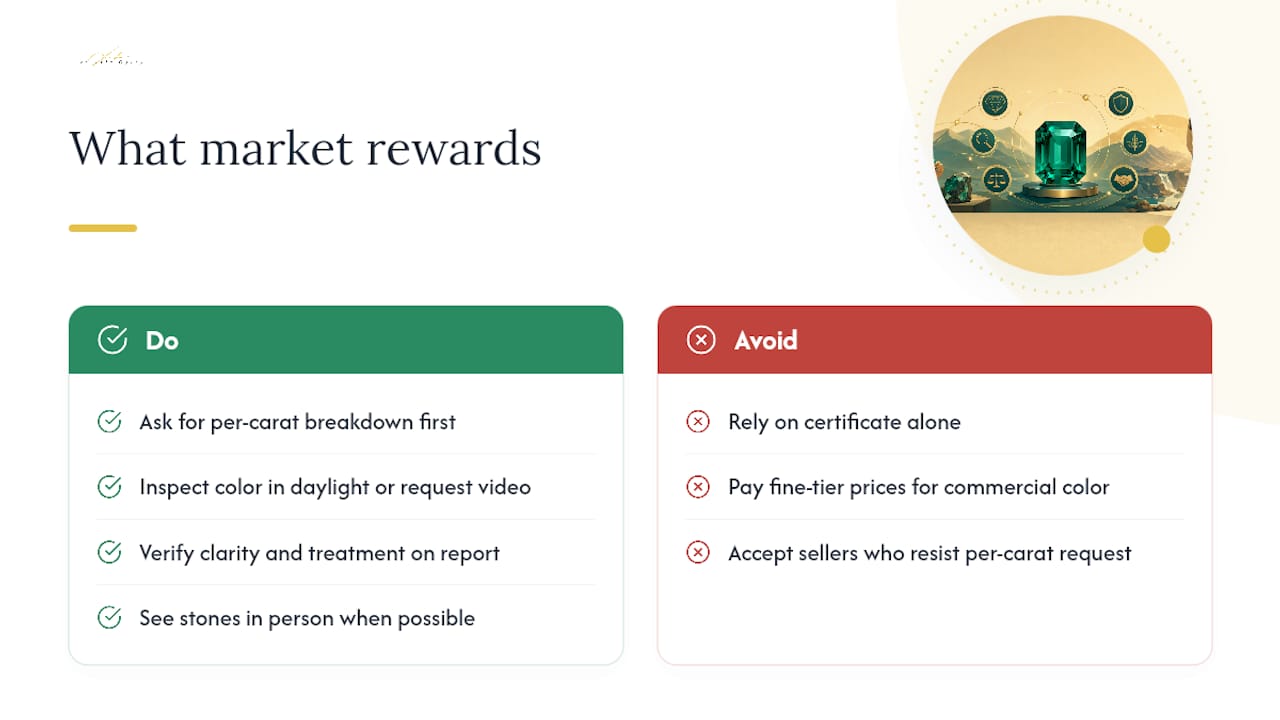
The bigger judgment call is color, and it’s the factor most guides underweight. Clarity and treatment status are binary enough to verify on paper. Color saturation is a judgment reached under consistent lighting, ideally in person or through a dealer who will send video in daylight-equivalent light. That’s where the real premium lives, and it’s the hardest thing to fake convincingly on a screen.
If you take one thing from the ranges above, take this: ask for the per-carat breakdown before you ask about the total price. A seller who resists that request is usually hiding something in the color or treatment grade, not the weight.
— Antonio
Ready to See Colombian Emeralds Priced Fairly?
Natural Colombian emeralds are sourced and treatment status is disclosed on every product page, allowing comparison of per-carat value. Pieces in the Signature Collection pair solid 18K gold with stones sourced responsibly, intended for buyers seeking documentation along with design.
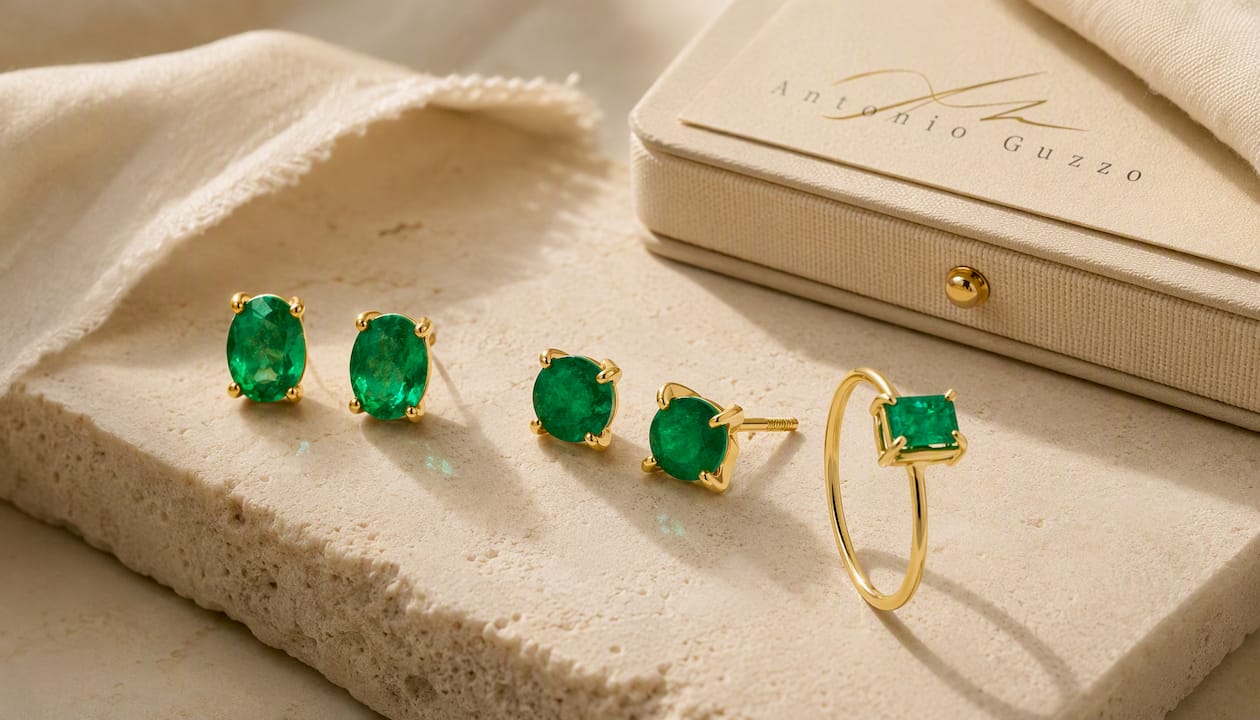
If you’re weighing a purchase against the ranges in this guide, start with the Classic Colombian Emerald Ring in 18K Gold or browse the full ring collection to compare stone sizes and settings side by side. Orders ship with free shipping, making it easy to see a piece in person before committing to a birthstone gift or heirloom purchase.
Sources
- Emerald Price Guide: Value and Cost in 2026
- Emerald Value Calculator
- An Honest Guide to Emerald Prices: Prices for Buyers
- Emerald Pricing 2017 to 2029 - Star Mountain Gems
FAQ
How Big Is a 1-Carat Emerald?
A 1-carat emerald’s dimensions vary depending on cut style and how much the cutter prioritized weight retention over proportions.
How Much Is a Carat of Muzo Emerald Worth?
Fine Muzo-origin material, known for its deep, saturated green with a bluish undertone, commonly reaches $5,000 to $15,000 per carat, with exceptional, minimally treated, lab-verified stones going well beyond that range.
How Much Would a 3-Carat Emerald Be Worth?
A 3-carat emerald’s value depends heavily on color and treatment, but fine-quality stones in that size commonly fall between $3,500 and $8,000 per carat, with investment-grade stones often exceeding that considerably.
What Is a 2-Carat Emerald Worth?
Fine-quality 2-carat emeralds often price between $2,000 and $6,000 per carat, with exceptional color pushing higher.
Does Treatment Always Lower an Emerald’s Price?
Minor oiling is standard and expected, so it doesn’t lower price on its own, but moving from “no oil” to “moderate” or “significant” oil or resin treatment does reduce per-carat value, sometimes substantially, especially at fine and investment-grade quality levels.