

3 Colombian Emerald Mines Buyers Must Know and What to Check
Most high-quality Colombian emeralds come from two Andean belts, and within them, three districts dominate the conversation: Muzo, Coscuez, and Chivor. These deposits produce the color and clarity buyers prize because of a hydrothermal-sedimentary formation found almost nowhere else on Earth, according to GIA’s Gems & Gemology research. What follows maps those locations, explains the geology behind the color, traces the history from pre-Columbian extraction through the Green Wars, and covers how mines now verify origin before a stone ever reaches a jeweler’s bench.
TL;DR:
- The most significant Colombian emerald mines are located in the Western Belt, especially Muzo, which produces the purest, most vivid green stones.
- Colombian emeralds form through a unique hydrothermal-sedimentary process in organic-rich sedimentary rocks, unlike most emeralds that form in magmatic environments.
- Post-extraction, mines are shifting from open-pit to underground mechanized operations, reducing environmental damage but environmental legacy issues persist.
- Provenance verification through fluid-inclusion and trace-element analysis is essential, as it ensures origin authenticity and helps distinguish Colombian stones from others.
- Buyers should always request official origin documentation and disclose treatments to ensure their emeralds are ethically sourced and properly authenticated.
Table of Contents
- Where Are the Colombian Emerald Mines Located?
- Why Are Colombian Emeralds Geologically Different?
- How Did Colombia’s Emerald Trade Begin, and What Were the Green Wars?
- How Has Emerald Mining Changed From Open Pits to Underground Shafts?
- How Are Rough Emeralds Graded and Verified Before Sale?
- Antonio Guzzo Fine Jewelry’s Connection to Ethically Sourced Emeralds
- What Does Emerald Mining Mean for Colombia’s Economy?
- Why Is Illegal Mining So Hard to Stop in Colombia?
- What New Technology Is Changing Colombian Emerald Mining?
- The Real Story Behind Colombia’s Green Gemstones
- Shop Colombian Emeralds With Confidence
- Sources
- FAQ
Where Are the Colombian Emerald Mines Located?
Colombia’s emerald deposits split into two geographic belts, and knowing which one a stone came from tells you a lot about what to expect from it.
The Western Belt sits in Boyacá department and includes the country’s most famous names. Muzo anchors this region and is widely regarded as the world’s most significant emerald mine, according to Wikipedia’s overview of Colombian emeralds. Nearby, Coscuez has a reputation for stones with slightly bluer undertones and heavier natural inclusions than Muzo material. Peñas Blancas produces smaller volumes but is notable for trapiche emeralds, a rare formation with a six-rayed star pattern of dark carbon inclusions. Quípama and Maripí round out the western group, both historically significant but smaller in current output.
The Eastern Belt runs through Boyacá and Cundinamarca and centers on Chivor, a deposit worked since pre-Columbian times and known for a slightly bluish, often exceptionally saturated green. Gachalá and Somondoco, both in Cundinamarca, contributed heavily to Colombia’s early colonial-era emerald trade and remain active, smaller-scale sources today.
- Muzo (Boyacá, Western Belt): the benchmark for pure, vivid green; largest and most industrialized operation
- Coscuez (Boyacá, Western Belt): bluer-green tones, more visible inclusions
- Peñas Blancas (Boyacá, Western Belt): source of rare trapiche emeralds
- Chivor (Boyacá/Cundinamarca border, Eastern Belt): bluish green. It has been historically prized since the Muzo people first worked it
- Gachalá and Somondoco (Cundinamarca, Eastern Belt): smaller colonial-era districts still in production
Terrain drives everything here. These deposits sit in steep, forested Andean valleys with limited road access, which is part of why mechanization arrived decades later than it did in other gemstone-producing countries.
Why Are Colombian Emeralds Geologically Different?
Most of the world’s emeralds form in igneous or metamorphic environments, where beryllium meets chromium deep underground over millions of years in a relatively straightforward process. Colombian emeralds form differently, and that difference is exactly what gives them their reputation.
Colombian deposits form through a hydrothermal-sedimentary process: hot basinal brines migrate through organic-rich black shales and limestones, dissolving chromium and vanadium from the host rock and depositing them alongside beryllium in calcite veins, according to GIA’s research on Colombian emerald mining. No magmatic rock is involved at all, which is unusual among the world’s major emerald sources.
The host formations matter too. Muzo-district emeralds sit primarily in what geologists call the Muzo formation, while eastern deposits like Chivor are hosted in different sedimentary sequences, including rock related to the Macanal formation. Variations in the surrounding Rosablanca-type limestones and shales influence trace-element uptake, which is part of why Muzo and Chivor stones read as subtly different shades of green to a trained eye.
- Chromium and vanadium mixing into the beryl lattice produces the saturated green color buyers associate with Colombian stones
- Organic-rich shale host rocks are rare among emerald deposits worldwide, giving Colombian material a distinct chemical signature
- Fluid inclusions trapped during crystal growth act as a geological fingerprint gemologists use to confirm origin
A key data point: recent petrochronology work dating monazite and xenotime minerals from Eastern Cordillera deposits shows the mineralization happened in multiple distinct episodes rather than one continuous event, according to research published in Mineralium Deposita. That multi-stage history helps explain why exceptional material can appear sporadically within a single mine, sometimes after years of unremarkable output.
How Did Colombia’s Emerald Trade Begin, and What Were the Green Wars?
Long before Spanish colonization, Indigenous groups including the Muzo people mined emeralds from what is now Boyacá and traded them across pre-Columbian South America. When Spanish conquistadors arrived in the 1500s, they seized control of Chivor and Muzo, shipping emeralds back to Europe and Asia along trade routes that eventually reached the Mughal courts of India.
The modern chapter is darker. The Green Wars of the 1980s and early 1990s turned emerald territory into a battleground, as armed factions fought for control over mining rights and smuggling routes.
- Cartels and local militias competed violently for control of productive veins, displacing communities and destabilizing entire mining towns.
- A negotiated peace among rival factions in the early 1990s gradually shifted control toward more formal, consolidated mining operations.
- Larger companies began investing in mechanized extraction, replacing informal digging with structured payroll and safety systems, a shift documented in NPR’s reporting from Colombia’s emerald region.
That transition from armed conflict to corporate operation didn’t happen overnight, and remnants of the informal system persist today.
How Has Emerald Mining Changed From Open Pits to Underground Shafts?
Older Colombian operations, especially through the mid-20th century, relied on open-pit terracing that stripped hillsides bare and dumped waste rock directly into nearby rivers. That era left visible scars still being addressed today.
Muzo Companies and other major operators have shifted decisively toward underground mechanized mining, according to NPR’s on-site coverage of the region. Modern shafts use ventilation systems, mechanical pumps, and structural monitoring that simply didn’t exist when informal crews dug by hand.
- Underground tunneling reduces surface disturbance compared to legacy open-pit terracing
- Mechanical ventilation and pumping systems cut the accident rates tied to older hand-dug shafts
- Documented payroll and formal safety protocols have replaced ad hoc labor arrangements at larger operations
- Reclamation efforts target river siltation and deforestation left behind by decades of open-pit waste dumping
Even with those improvements, environmental legacy issues haven’t disappeared. Rivers around Muzo still carry sediment and mining debris from decades of unregulated dumping, a problem The Guardian’s 2025 investigation found still affecting community water access today. Tension also persists between formal companies holding legal leases and guaqueros, informal miners who work tailings and abandoned sections without official permits, often on the same hillsides.
Pro Tip: If you’re researching a specific mine’s practices, look for named companies rather than district names alone. “Muzo” describes a region; “Muzo Companies” describes a specific operator with documented labor and safety practices worth checking.
How Are Rough Emeralds Graded and Verified Before Sale?
Rough emerald leaves the mine looking nothing like a finished gem. It goes through sorting by size and clarity first, then cutting to remove damaged material and maximize the finished stone’s color.
Most Colombian emeralds also receive oiling, a widely accepted stabilization treatment that fills surface-reaching fractures with oil or resin to improve apparent clarity. Grading then follows the standard four criteria: color saturation, clarity, cut quality, and carat weight, with color carrying the most weight in Colombian material specifically.
Origin verification is where Colombian stones earn their premium. Gemological labs analyze the fluid inclusions and trace-element ratios unique to Colombian hydrothermal-sedimentary formation to distinguish these stones from Zambian or Brazilian material, a method detailed in GIA’s overview of the Colombian emerald industry.
- Ask for a lab certificate identifying origin, not just species (emerald vs. beryl)
- Request explicit disclosure of oiling or resin treatment, including the type used
- Confirm carat weight and clarity grade match the certificate exactly
- Verify the seller discloses any enhancement beyond standard, industry-accepted oiling
Antonio Guzzo Fine Jewelry’s Connection to Ethically Sourced Emeralds
Antonio Guzzo Fine Jewelry offers natural Colombian emeralds sourced through channels committed to sustainable, ethical practices. Provenance and treatment disclosure aren’t afterthoughts here, they’re the foundation of every piece the brand sells.
Buyers care about this for good reason: an emerald’s story, from the mine to the setting, affects both its integrity and its value. A natural emerald ring or emerald pendant necklace built on documented sourcing gives a buyer something a mystery stone never can: confidence in what they’re actually wearing.
What Does Emerald Mining Mean for Colombia’s Economy?
Emerald mining generates meaningful export revenue and rural employment in a country where legal, high-value mineral exports are hard to come by outside coal and petroleum. Colombia produces the majority of the world’s fine emeralds, and Boyacá and Cundinamarca depend heavily on the industry for local jobs, from mine labor to cutting and trading, according to Wikipedia’s summary of the Colombian emerald trade.
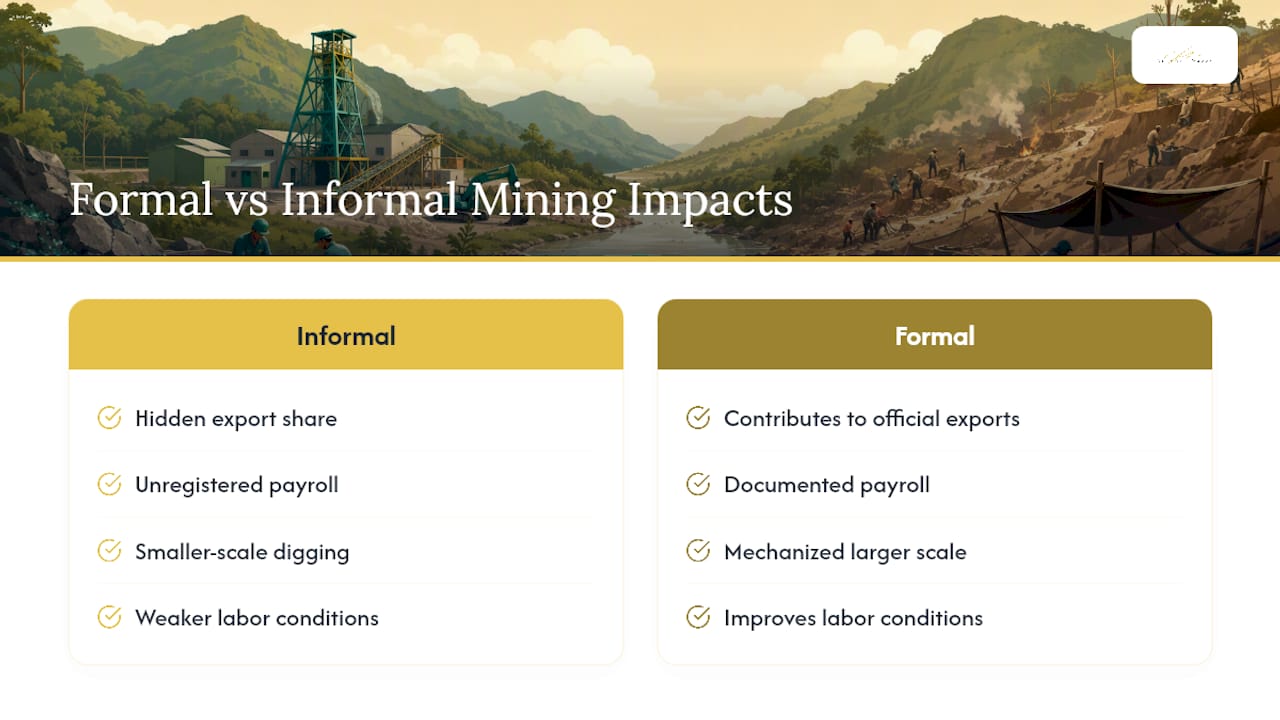
The trade supports an entire secondary economy beyond the mines themselves. Cutting houses, brokers, exporters, and gemological services all cluster around Bogotá and the mining towns, forming a supply chain that stretches from a hillside shaft to a jewelry counter overseas. That chain has historically run partly informal, which has made accurate economic accounting difficult; a meaningful share of rough material moves through channels that don’t show up in official export figures.
Formalization efforts over the past two decades have aimed to pull more of that value into the legal economy, both to increase tax revenue and to improve labor conditions. Mechanized operations with documented payroll, the kind NPR observed at Muzo Companies, represent a bet that formal, larger-scale mining can outcompete informal digging on both output and reputation. For a country trying to build a globally credible luxury export, that reputation matters as much as the raw carats coming out of the ground.
Why Is Illegal Mining So Hard to Stop in Colombia?
Illegal mining persists in Colombia’s emerald belts for reasons that have little to do with enforcement willpower and everything to do with geography and economics. The terrain itself works against oversight: steep, remote Andean valleys with limited road access make it difficult for authorities to monitor every claim, and informal digging can happen on abandoned tailings with minimal equipment or visibility.
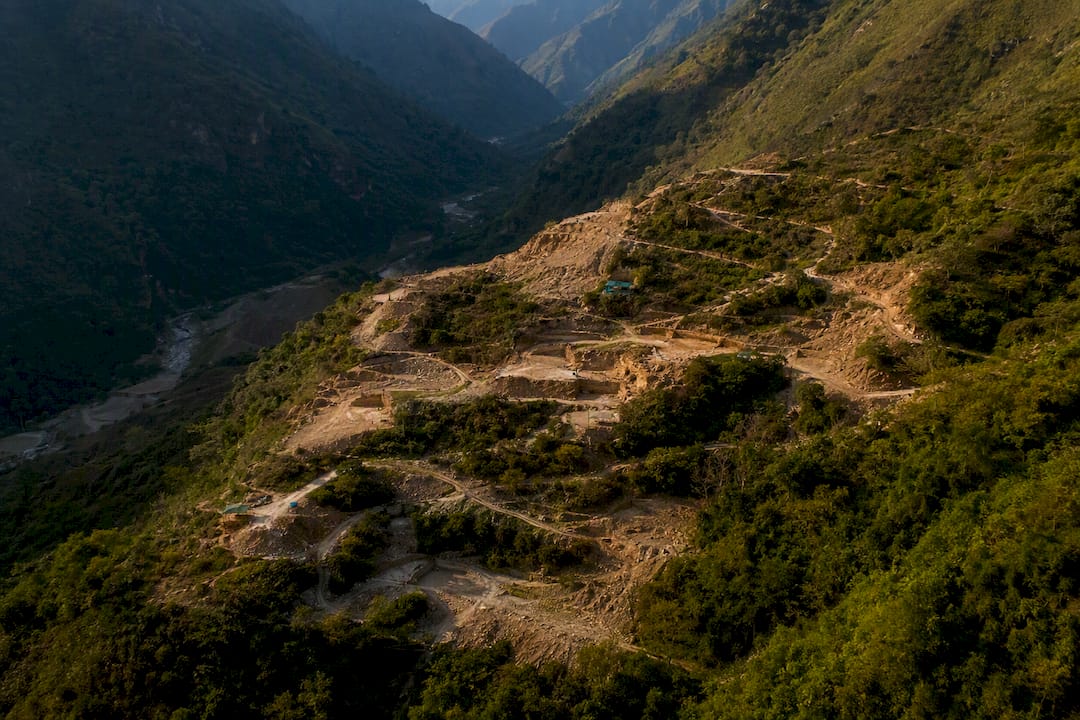
Guaqueros, the informal miners who work leftover material outside formal leases, occupy a legal gray zone. Many work land that’s technically licensed to a company but practically abandoned or under-monitored, and displacing them outright risks the kind of social conflict that fueled the Green Wars in the first place. Formal operators generally prefer coexistence agreements over confrontation, since the historical cost of confrontation was measured in lives, not just lost material.
Smuggling adds another layer. Rough emeralds are small, valuable, and easy to move without documentation, which makes it straightforward for illegally mined stones to enter the same trade channels as legally extracted ones before reaching a cutting house. Once a rough stone is cut and polished, tracing its exact mine of origin becomes far harder without the kind of fluid-inclusion and trace-element testing GIA and other labs perform, and that testing isn’t standard practice at every point in the supply chain. Combating this requires more than policing; it requires building an economic case for going legal that beats the flexibility of staying informal.
What New Technology Is Changing Colombian Emerald Mining?
The most consequential shift in Colombian emerald mining over the past two decades has been mechanization itself, moving from open-pit terracing worked by hand to underground shafts supported by modern engineering. That change alone has improved worker safety and reduced surface land disturbance, according to NPR’s reporting on Muzo Companies.
Beyond mechanized extraction, larger operators have adopted structural and environmental monitoring systems that track everything from tunnel stability to water discharge, a departure from the largely unregulated dumping that characterized earlier decades. Reclamation programs targeting deforested and silted areas near Muzo represent an attempt to address the environmental legacy that The Guardian’s 2025 reporting found still affects local water access.
On the verification side, gemological science itself keeps improving. Advances in trace-element analysis and fluid-inclusion study give labs sharper tools for confirming a stone’s district of origin, closing gaps that once let mislabeled material slip through. That scientific progress matters as much to sustainability as any change happening underground, because a supply chain that can prove where a stone came from is one that buyers, and regulators, can actually hold accountable.
The Real Story Behind Colombia’s Green Gemstones
The conventional narrative around Colombian emeralds tends to romanticize the geology and gloss over everything that came after the stone left the ground. That’s backwards. The hydrothermal-sedimentary formation is genuinely remarkable, and it does explain the color buyers chase, but the more useful story for anyone actually buying a stone today is what happened to it after extraction.
Provenance documentation and treatment disclosure separate a responsibly sourced emerald from a mystery stone with a good story attached. Too many buyers focus entirely on carat weight and color grade while skipping the question that matters more long term: can the seller actually show where this stone came from? The mechanization NPR documented at Muzo isn’t just an operational footnote, it’s the difference between a supply chain that can answer that question and one that can’t.
Prioritize the paper trail before the sparkle. A gorgeous stone with no origin documentation is a gamble; a merely good stone with a verified Colombian pedigree and disclosed treatment is the safer long-term purchase, both financially and ethically.
— Antonio
Shop Colombian Emeralds With Confidence
Antonio Guzzo Fine Jewelry sources natural Colombian emeralds through channels that document origin and disclose every treatment, which matters more than most buyers realize once they understand how easily unverified stones move through the wider trade.
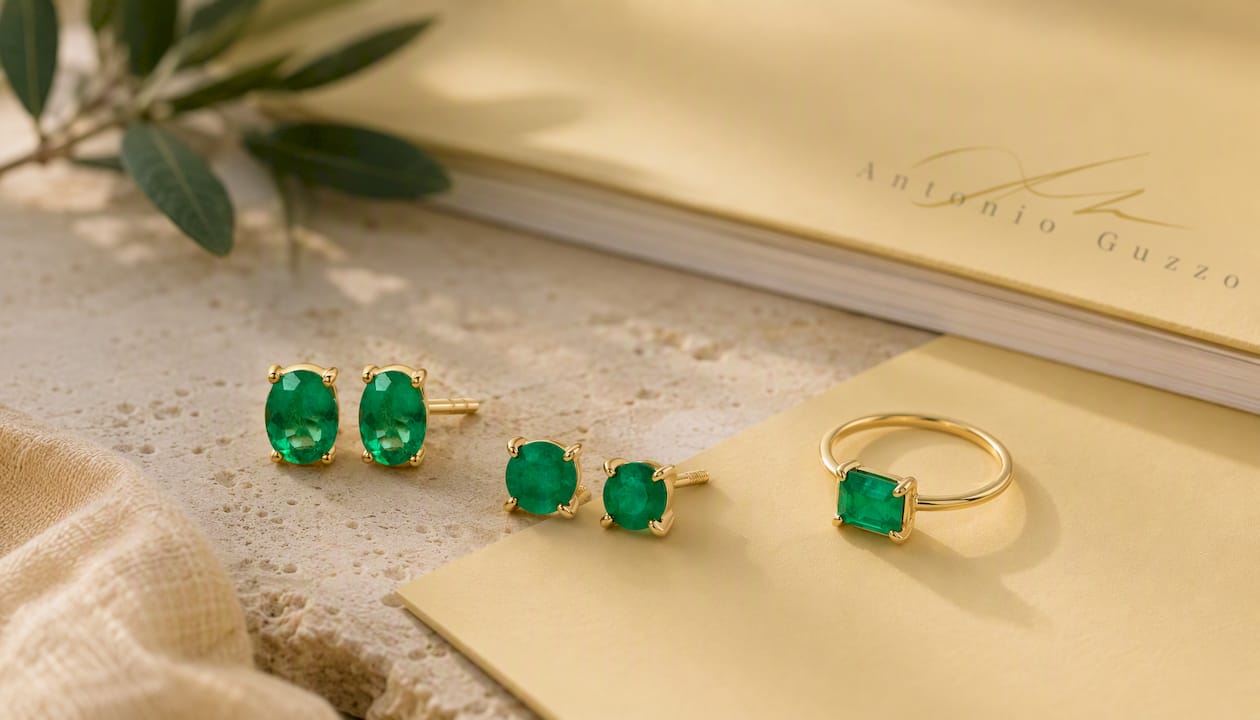
Three pieces make a solid starting point if you’re shopping for real Colombian emerald jewelry rather than a look alike. The 18K Yellow Gold Colombian Emerald Stud Earrings pair vivid green stones with solid gold settings built to last generations. The Classic Colombian Emerald Stud Earrings in 18K Gold offer a slightly different cut and setting for buyers who want understated elegance. The Classic Colombian Emerald Ring in 18K Gold works well as an heirloom piece or a statement ring for a special occasion.
Before buying any Colombian emerald, run through a short checklist: ask for origin documentation, confirm any oiling or resin treatment is disclosed in writing, check the seller’s return policy, and confirm a warranty covers the setting and stone. Antonio Guzzo Fine Jewelry includes free shipping on every order, so browsing the full ring collection costs nothing but a few minutes. Find the piece that fits your story, then check out with the documentation already in hand.
Sources
- Colombian Emerald Mining: Will the Giant Awaken? — GIA
- Inside the emerald mines that make Colombia a global giant of the green gem — NPR (2023)
- Colombian emeralds — Wikipedia
- Petrochronology of monazite and xenotime from emerald deposits in the Eastern Cordillera of Colombia — Mineralium Deposita (2026)
- Losing its sparkle: Colombia’s emerald capital weighs the cost of its precious stones — The Guardian (2025)
FAQ
Where in Colombia Are Emeralds Mined?
Colombian emeralds come from two Andean belts in Boyacá and Cundinamarca departments. The Western Belt includes Muzo, Coscuez, and Peñas Blancas, while the Eastern Belt centers on Chivor, Gachalá, and Somondoco.
How Much Is a 1 Carat Colombian Emerald Worth?
Price depends heavily on color saturation, clarity, and treatment disclosure rather than carat weight alone, so a fine-quality 1 carat Colombian emerald can vary widely in value. Origin verification through fluid-inclusion and trace-element testing tends to command a premium over unverified stones of similar size.
Are Colombian Emeralds Worth Anything?
Yes. Colombia produces the majority of the world’s fine emeralds, and their distinctive hydrothermal-sedimentary formation gives them a color and clarity profile that consistently commands premium pricing over emeralds from other origins.
Which Country Has the Best Emerald in the World?
Colombia is widely regarded as the source of the world’s finest emeralds, with Muzo recognized as the single most significant producing mine. That reputation comes from the unique chromium and vanadium chemistry that gives Colombian stones their saturated green color.
What Should I Check Before Buying a Colombian Emerald?
Ask for a lab certificate confirming origin, written disclosure of any oiling or resin treatment, and a clear return and warranty policy. Some jewelers provide documented, ethically sourced Colombian emeralds across their ring, earring, and necklace collections.