

Skip 6–18 Month Prong Checks? Bezel vs Prong Setting for Active Buyers
Choose a bezel setting for maximum security and low snagging; choose a prong setting if maximum sparkle and a classic, open silhouette matter more to you. Bezels wrap protective metal around the stone’s edge, while prongs expose more of the gem to light. Your daily routine, the stone’s shape, and how much upkeep you’re willing to do settle which one wins for you.
TL;DR:
- Bezel settings offer superior protection by encircling the gemstone, making them ideal for active lifestyles and daily wear.
- Prong settings provide maximum brilliance and light exposure, especially for showy engagement rings, but require regular inspections to prevent loosening.
- The cost for bezel settings is generally higher due to increased metal use and more precise craftsmanship needed.
- Stone shape and profile height influence the best setting choice, with emerald and baguette cuts favoring bezels and round cuts excelling with prongs.
- Regular maintenance is key, with prongs needing checks every 6 to 18 months and bezels more focused on rim wear inspection.
Table of Contents
- Bezel vs Prong Setting: What Is a Bezel and How Does It Work?
- What Is a Prong Setting and How Does It Differ?
- Bezel vs Prong Comparison: Which Wins on Security, Sparkle, and Cost?
- How Do Setting Styles Match Different Stone Shapes?
- What Should You Ask a Jeweler Before Choosing a Setting?
- Antonio’s Take: Choosing Between Bezel and Prong in the Studio
- Antonio Guzzo Fine Jewelry Pieces That Show These Trade-Offs
- Sources
- FAQ
Bezel vs Prong Setting: What Is a Bezel and How Does It Work?
A bezel setting encircles the gemstone’s girdle with a continuous ring of metal, holding it in place through pressure rather than individual claws. That rim provides superior edge protection and minimal snagging compared with prong-held stones, which is why bezels show up so often on rings meant for daily wear rather than special occasions only.
There are a few construction variants worth knowing:
- Full bezel: metal wraps the entire perimeter of the stone, offering the most coverage and protection.
- Half bezel: metal covers roughly half the stone’s edge, usually the sides, leaving the top and bottom exposed for a bit more light.
- Low-profile bezel: sits closer to the finger, reducing height and snag points even further, popular for stacking rings and work settings.
The trade-offs are real on both sides. Bezels protect the girdle from chips and reduce catching on sweaters, gloves, and hair, but that same metal rim blocks some side light, which can mute brilliance slightly. Resizing also gets more complicated, since the jeweler has to work around a soldered rim rather than simple prong tips. Nurses, teachers, gardeners, and anyone who works with their hands tend to gravitate toward bezels for exactly these reasons.
Pro Tip: If you love the security of a bezel but want a bit more visible fire, ask your jeweler for a thin, precision-cut rim rather than a thick one. The metal-to-stone ratio changes the light performance more than most buyers realize.
What Is a Prong Setting and How Does It Differ?
A prong setting uses individual metal claws, usually three to eight of them, most commonly four or six, to grip the stone at select points while leaving the rest exposed to light. That openness is the whole appeal: more surface area catches light from every angle, which is why prongs remain the default for engagement rings built around maximum brilliance.
Prong shape matters as much as prong count:
- V-prongs protect vulnerable corners on pointed shapes like marquise and pear cuts.
- Tapered prongs narrow toward the tip for a lower profile and less visual bulk.
- Flat prongs offer broader contact with the stone, useful for softer gemstones prone to chipping.
The upside is undeniable brilliance and a timeless, classic look that photographs well and reads as traditional. The downside is that exposed metal claws can bend, thin, or catch on fabric over years of wear. Because prongs take the brunt of daily knocks, periodic inspection matters: most jewelers recommend a checkup every 6 to 18 months to catch wear before a stone works loose.
Pro Tip: Run your fingernail gently across each prong tip once a month. If one feels flatter or sharper than the others, that’s often the first sign of wear worth having a jeweler look at.
Bezel vs Prong Comparison: Which Wins on Security, Sparkle, and Cost?
Neither setting wins across the board. Bezel settings maximize security and reduce snagging, while prong settings maximize light entry and sparkle, so the right pick depends on which trade-off you can live with.
| Category | Bezel Setting | Prong Setting |
|---|---|---|
| Security/protection | Highest; girdle fully or partially shielded | Lower; stone edges exposed to impact |
| Sparkle/light performance | Slightly reduced side-light entry | Maximum brilliance from all angles |
| Maintenance/inspection | Less frequent; watch for rim wear | Every 6 to 18 months recommended |
| Appearance/perceived size | Metal rim can make the stone look smaller or bolder, depending on rim width | Open claws let the full stone read at actual size |
| Cost/craftsmanship | Usually higher, more metal and labor | Generally lower, simpler repairs |
A well-made bezel can reduce visible brilliance by roughly 10% to 20% compared with open prong designs, though the gap often shrinks with a well-cut stone and a thin rim.
That 10 to 20 percent figure sounds larger on paper than it looks on a finger. Light enters a diamond primarily through the table, not the sides, so a well-cut stone in a thin, precise bezel still performs beautifully. The bigger difference shows up in perceived size: a full bezel’s rim can visually shrink a small stone, while the same rim on a larger stone often reads as bold and architectural rather than diminished.
Durability failure modes differ too. Prongs fail by bending outward or thinning until a stone loosens, a slow process you can catch with regular checks. Bezels fail by rim deformation from a hard impact, a rarer event but one that’s harder to self-diagnose without a jeweler’s loupe.
On cost, bezel settings usually require more metal and finer fitting, which increases labor and complicates resizing compared with prong settings, where a resize is often a straightforward band adjustment.
For lifestyle: choose a bezel if you work with your hands, play sports, or want a ring you never think about. Choose prongs if you want maximum fire on a special-occasion piece and don’t mind the periodic checkup.
How Do Setting Styles Match Different Stone Shapes?
Not every stone shape wears every setting equally well. A half bezel or hybrid bezel-prong design is often the recommended middle ground for buyers who want both protection and light performance, and matching the variant to the stone shape makes a real difference in how the ring wears.
- Emerald and baguette cuts: benefit from full or half bezels since their exposed corners are the most chip-prone part of any stone.
- Round and cushion cuts: pair well with either 4-prong or 6-prong heads, or a low-profile full bezel for daily wear.
- Pear and marquise cuts: need V-prongs at the points if going the prong route, since those tips are the most vulnerable spot on the stone.
- Princess cuts: often use a half bezel or corner-protecting prongs, since sharp 90-degree corners chip easily without reinforcement.
Profile height matters as much as shape. A high-profile prong setting shows off more of the stone but catches on gloves and pockets; a low-profile bezel sits flush and snags less but reads visually quieter. If you love a particular stone shape but worry about durability, ask about a micro-bezel accent or tapered prongs rather than defaulting to a fully open or fully enclosed design. Design trends have also shifted toward these hybrid demi-fine styles that blend classic prong openness with bezel-style edge reinforcement.
What Should You Ask a Jeweler Before Choosing a Setting?
A good decision checklist starts with your daily routine, not the setting itself. Ask yourself: how active are your hands during a normal week, do you prefer a low profile or a stone that sits up proudly, what shape is your stone, and how much annual maintenance are you realistically going to keep up with?
At the bench, the technical questions matter just as much:
- How thick are the prongs, and are they tapered or flat at the tip?
- How wide is the bezel wall, and is the seat cut precisely to the stone’s exact dimensions?
- Where are the solder points, and how will resizing affect them?
- What’s the finish on the rim or prong tips, polished or brushed, and will it show wear differently?
Red flags worth walking away from include visibly thin or uneven prongs, a stone that rocks slightly in its seat, or a bezel rim with visible gaps or inconsistent thickness around the perimeter. Any of those suggest rushed craftsmanship rather than careful fitting.
On inspection scheduling: plan on prong checks every 6 to 18 months, since minor retipping is a normal ownership cost rather than a sign something went wrong. Bezels need attention less often, but keep an eye on rim wear near the high-contact areas of the ring. Regular gentle cleaning between checkups helps a jeweler spot problems before they become expensive ones.
Pro Tip: Bring your ring in under bright, direct light when you ask a jeweler to inspect it. Loose seats and thinning prongs are far easier to spot with strong light than under a dim shop lamp.
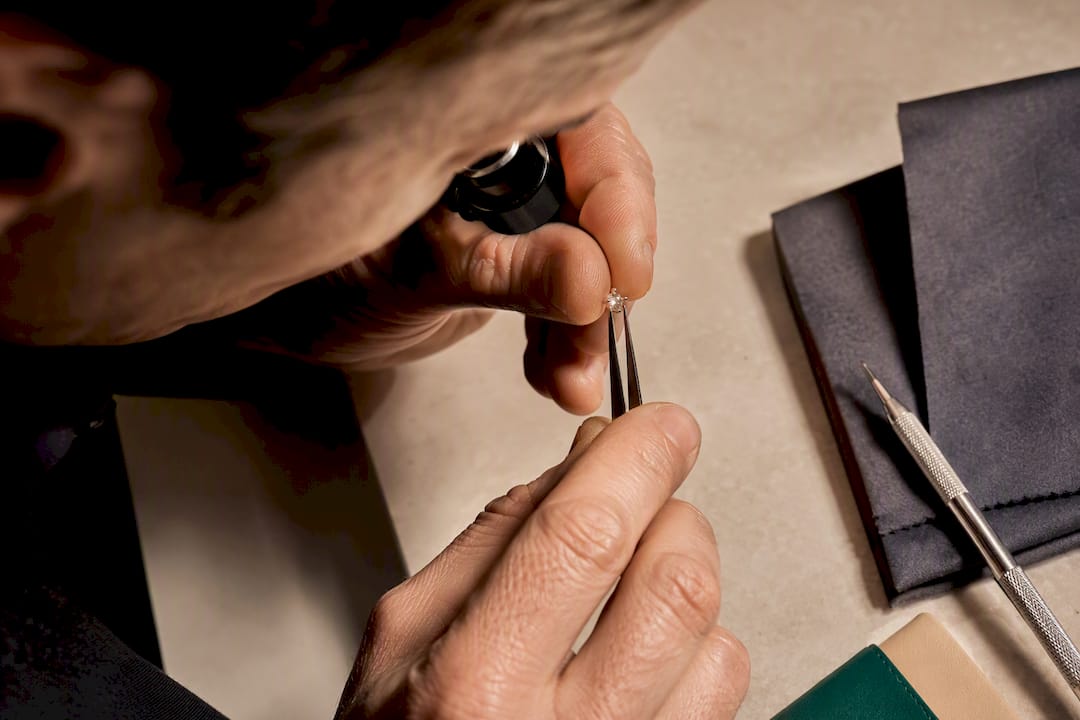
Antonio’s Take: Choosing Between Bezel and Prong in the Studio
Most clients arrive with a strong opinion about which they want, and about half the time that opinion changes once we talk through their actual week. A surgeon wants sparkle but ends up choosing a bezel once we discuss glove use. A client planning an anniversary piece often goes the other way, choosing prongs because the ring won’t see daily wear and hand.
Antonio Guzzo Fine Jewelry builds every piece around ethically sourced Colombian emeralds and Italian-trained bench work, so setting choice always starts with the stone’s own character, not a default template. Emeralds in particular reward careful setting decisions, since they’re softer than diamonds and chip more easily at exposed corners. We routinely adjust rim thickness or prong taper mid-commission once a client describes how they actually live in their ring.
— Antonio
Antonio Guzzo Fine Jewelry Pieces That Show These Trade-Offs
A Signature Collection puts these setting principles into practice across three trilogy designs, each built to suit a different wearer profile. The Exquisite 18K Trilogy Emerald Ring pairs protective framing with a classic three-stone silhouette, well suited to someone who wants heirloom durability without sacrificing presence on the hand.
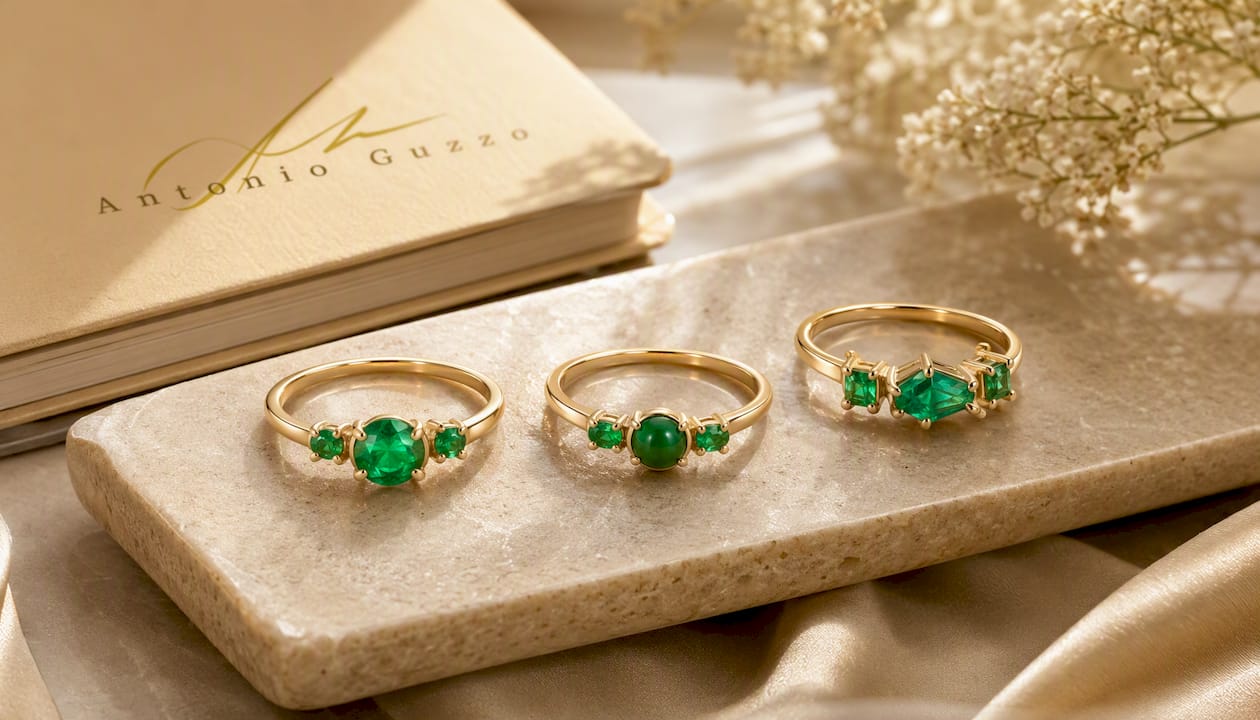
The Emerald Trilogy Ring in 18K Gold leans into the warmth of 18K gold against natural Colombian emeralds, a strong option for buyers who want visible stone presence balanced against everyday wearability. The 18K Yellow Gold Natural Emerald Trilogy Ring rounds out the collection for those drawn to a more traditional, prong-forward trilogy look with maximum light exposure across all three stones.
Every commission at Antonio Guzzo Fine Jewelry starts with a conversation about how you actually live, not just how the ring looks in a photo. If you’re weighing bezel security against prong sparkle for your own piece, browse the Signature Collection or reach out to start a personalized consultation on setting and stone. Every order ships free, and every piece is built to be adjusted around your answers, not the other way around.
Sources
FAQ
Is a Bezel Setting More Secure Than Prongs?
Yes. A continuous metal rim protects the stone’s girdle from impact and snagging far more effectively than exposed prong tips, which is why bezels are often recommended for active lifestyles.
Which Setting Is Better for Earrings, Prong or Bezel?
Bezels tend to work better for everyday earrings since they resist snagging on hair, scarves, and clothing, while prong earrings suit occasions where maximum sparkle matters more than daily durability.
Is a Bezel Setting More Expensive?
Usually, yes. Bezels require more metal and finer fitting at the bench, which raises labor costs and makes future resizing more complex than with a typical prong setting.
Is a Bezel Setting Timeless?
Bezel settings have a long design history and remain a classic choice, especially in vintage-inspired and Art Deco styles, though prong settings still dominate traditional engagement ring imagery.