

4 verificações rápidas para identificar uma esmeralda falsa antes de comprar
Você pode identificar falsificações óbvias em minutos: procure por jardin, cor irregular e bordas ásperas usando uma lupa. Bolhas redondas ou uma clareza impecável indicam vidro ou um simulante. Esmeraldas criadas em laboratório são quimicamente genuínas, mas não são naturais e têm preços adequados. Para qualquer peça que custe mais do que o dinheiro no bolso, o relatório de um laboratório independente é a maneira mais confiável de confirmar a autenticidade e a origem.
Resumo:
- A maioria das esmeraldas naturais é tratada com óleos ou resinas, o que significa que uma pedra límpida e não tratada é extremamente rara e deve ser verificada com documentação.
- Falsificações óbvias muitas vezes podem ser identificadas rapidamente por uma cor verde-neon uniforme, bolhas redondas ou clareza perfeita, especialmente sem um certificado ou informação sobre tratamento.
- Sob ampliação, as esmeraldas naturais geralmente apresentam inclusões jardin, enquanto as pedras sintéticas mostram resíduos de fluxo e os simulantes possuem bolhas de ar redondas.
- Para pedras acima de US$ 500 ou maiores que meio quilate, recomenda-se fortemente obter um relatório de laboratório independente que confirme a identidade e o tratamento antes da compra.
- Uma esmeralda natural bem engastada para uso diário pode ser uma pedra natural ou sintética de alta qualidade, mas colecionadores devem exigir certificação e informações detalhadas.
Índice
- Esmeralda Genuína vs. Falsa: O Checklist de 60 Segundos para Compradores
- Testes Passo a Passo que Você Pode Realizar Antes de Comprar
- Natural, Criada em Laboratório ou Simulante: O que Realmente Muda
- Por Que Quase Todas as Esmeraldas Naturais Foram Tratadas
- Quando Você Deve Exigir um Relatório de Laboratório
- A Abordagem de Antonio para Esmeraldas Verificadas
- Combine Seu Teste de Esmeralda com Seu Objetivo de Compra
- Compre com Confiança: O que a Joalheria Antonio Guzzo Oferece
- Onde Aprofundar-se na Identificação de Esmeraldas
- Fontes
- Perguntas Frequentes
Esmeralda Genuína vs. Falsa: O Checklist de 60 Segundos para Compradores
Antes de gastar um centavo, faça esta triagem rápida. Ela não substitui um laboratório gemológico, mas identifica rapidamente as falsificações óbvias, esteja você em um balcão de joalheria ou rolando uma publicação à meia-noite.
- Cor: Esmeraldas naturais apresentam profundidade e leves zonas. Um verde neon uniformemente saturado, sem qualquer variação, é uma característica comum do quartzo tingido ou do vidro, de acordo com o Rockhounding.
- Ampliação: Procure por jardin, a rede de inclusões semelhante a um jardim que as esmeraldas naturais possuem. Bolhas perfeitamente redondas ou um brilho plano e cintilante sob a luz geralmente indicam vidro ou uma fratura preenchida.
- Superfície e bordas: Facetas lascadas, cantos arredondados ou bordas de aparência macia geralmente indicam um simulante mais macio do que uma esmeralda genuína, que possui dureza de 7,5 a 8 na escala Mohs.
- Sinais de alerta em anúncios: Ausência de certificado, nenhuma menção a tratamento ou um preço que pareça bom demais em comparação com pedras semelhantes devem fazer você desistir antes de finalizar a compra.
Se algum desses pontos levantar uma dúvida, peça ao vendedor fotos macro tiradas sob ampliação ou solicite um relatório de laboratório antes de pagar. Um vendedor de boa reputação não hesitará.
Testes Passo a Passo que Você Pode Realizar Antes de Comprar
Uma lupa de joalheiro, uma lanterna e um pouco de paciência revelarão mais do que a maioria das pessoas espera. Esta é a ordem que realmente funciona e onde parar para não danificar nada.
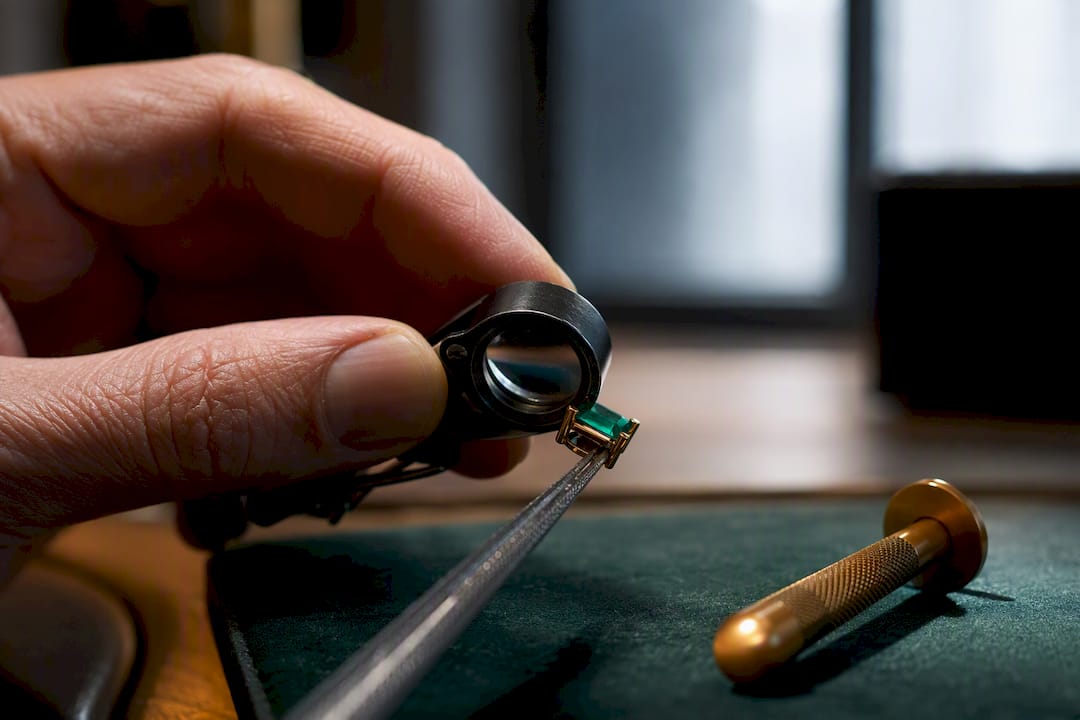
- Comece com uma lupa de 10×. Esmeraldas naturais quase sempre apresentam jardin, aquela rede emaranhada de minúsculas fraturas, cristais minerais e linhas de crescimento que dá caráter à pedra. As fotomicrografias da GIA mostram isso claramente ao lado de padrões de crescimento sintético e resíduos de fluxo, que se parecem mais com ondulações congeladas do que com um jardim. Se você vir fileiras de bolhas perfeitamente redondas em vez disso, provavelmente está olhando para vidro.
- Procure por brilho sob a lupa. Incline a pedra lentamente. Um brilho com bordas coloridas ou uma área achatada e vítrea dentro de uma fratura geralmente indica preenchimento com resina ou óleo, não uma falha na própria pedra.
- Passe para a luz do dia e, depois, para uma lanterna. Esmeraldas naturais tendem a mostrar profundidade em camadas na luz do dia, com uma cor que muda sutilmente à medida que você gira a pedra. Sob uma lanterna de mão, um brilho uniforme e monocromático, sem qualquer variação, muitas vezes indica um simulante tingido ou sintético.
- Tente usar um dicroscópio ou filtro Chelsea, se tiver um. Essas ferramentas podem indicar pleocroísmo ou resposta de cor relacionada ao cromo, mas é fácil interpretá-las incorretamente sem treinamento. Considere os resultados como uma pista, não como um veredito, pois a Gem Society geralmente observa que instrumentos domésticos não são conclusivos.
- Pule completamente o teste do risco. A esmeralda possui dureza de 7,5 a 8 na escala Mohs, o suficiente para que um teste de risco em uma peça engastada corra o risco de danificar o engaste ou a própria pedra sem lhe dizer nada definitivo. Reserve qualquer teste físico para pedras soltas examinadas por um profissional.
- Para compras online, peça três coisas antes de pagar: fotos macro sob ampliação, qualquer documentação de laboratório que o vendedor possua e uma política de devolução clara por escrito.
Dica de Ouro: Fotografe as inclusões que encontrar sob sua lupa usando o modo macro do seu celular e uma luz brilhante e inclinada. Ao lado de fotomicrografias de referência de uma fonte como a GIA, padrões que pareciam ambíguos pessoalmente muitas vezes se tornam óbvios.
Natural, Criada em Laboratório ou Simulante: O que Realmente Muda
A confusão que os compradores enfrentam quase sempre se deve à mistura de três categorias distintas. Entender isso muda o que você deve esperar pagar e o que um vendedor deve lhe fornecer em termos de informações.
- Esmeralda natural se forma no subsolo ao longo de milhões de anos. Sua fórmula química, silicato de berílio e alumínio (Be3Al2Si6O18), possui dureza de 7,5 a 8 na escala Mohs, a mesma de sua contraparte criada em laboratório.
- Esmeralda criada em laboratório (sintética) compartilha a mesma química, dureza e comportamento óptico. Ela cresce em semanas, em vez de eras, usando métodos de fusão com fluxo ou hidrotérmicos, e geralmente custa de 70 a 90 por cento menos do que uma pedra natural de tamanho e qualidade comparáveis.
- Simulantes não são esmeraldas. Vidro verde, quartzo tingido e espinélio verde imitam a cor, mas não possuem a mesma química, dureza ou estrutura de inclusões.
A pista visual geralmente se resume ao que há no interior. Pedras naturais possuem jardin; pedras criadas em laboratório mostram resíduos característicos de fluxo ou marcas de crescimento de solução nutritiva; simulantes frequentemente prendem bolhas de ar redondas que nunca ocorrem em esmeraldas genuínas. Uma pedra criada em laboratório que parece limpa a olho nu e custa uma fração de uma natural não é tanto um compromisso, mas sim uma troca deliberada entre raridade e aparência, algo que vale a pena avaliar honestamente em vez de tratar como uma escolha inferior.
Por Que Quase Todas as Esmeraldas Naturais Foram Tratadas
Aqui está algo que surpreende muitos compradores de primeira viagem: uma esmeralda natural não tratada e limpa a olho nu é uma das coisas mais raras no comércio de gemas. Mais de 90 por cento das esmeraldas naturais no mercado possuem algum tipo de realce de clareza, quase sempre preenchimento com óleo ou resina injetado em fraturas que atingem a superfície.
Em números: Mais de 9 em cada 10 esmeraldas naturais vendidas hoje foram tratadas para melhorar a clareza, de acordo com a GIA. Uma pedra sem qualquer informação deve levantar mais perguntas do que uma descrita abertamente como tendo tratamento de óleo “leve” ou “moderado”.
Sob uma lupa, fraturas preenchidas muitas vezes mostram um brilho plano e vítreo ou uma leve mudança de cor onde a resina encontra a pedra. Isso é normal para a grande maioria das esmeraldas naturais, não um defeito pelo qual se deve rejeitar a peça.
- Pergunte qual grau de realce a pedra recebeu: leve, moderado ou significativo.
- Evite limpezas ultrassônicas e a vapor, pois ambas podem danificar ou extrair os preenchedores com o tempo.
- Reserve um orçamento para o reoleamento ocasional como parte do cuidado de longo prazo, semelhante a como um piso de madeira precisa de um novo acabamento periodicamente.
- Exija que qualquer tratamento seja declarado por escrito, não apenas mencionado verbalmente no balcão.
Quando Você Deve Exigir um Relatório de Laboratório
Estabeleça uma regra pessoal e siga-a: qualquer esmeralda com preço de varejo acima de aproximadamente US$ 500 a US$ 1.000, ou maior que cerca de meio quilate, deve vir com documentação de laboratório independente antes de você pagar o preço total.
Laboratórios como GIA, AGL e IGI emitem relatórios que confirmam a identificação, revelam o nível de tratamento e, às vezes, oferecem uma opinião sobre a origem (colombiana, zambiana, brasileira, etc.). Declarações de origem têm peso real no mercado, mas até mesmo os melhores laboratórios as descrevem como uma opinião baseada em evidências de inclusões, não como uma certeza absoluta. Os próprios relatórios da GIA refletem essa mesma linguagem cuidadosa.
- Confirme que o relatório lista tanto a identificação quanto o status de tratamento, não apenas a identificação.
- Trate uma afirmação de origem como um julgamento informado, não como uma garantia.
- Se um vendedor se recusar a fornecer ou permitir um relatório, peça em vez disso um prazo de devolução documentado.
- Afaste-se de qualquer vendedor que se recuse a fazer qualquer um dos dois.
A Abordagem de Antonio para Esmeraldas Verificadas
Cada esmeralda colombiana natural é inspecionada sob uma lupa antes de ser engastada, e a documentação de laboratório é solicitada e compartilhada quando disponível. Os engastes são escolhidos pensando na durabilidade da pedra, protegendo áreas com fraturas preenchidas contra batidas do dia a dia, em vez de deixá-las expostas na borda de um garra.
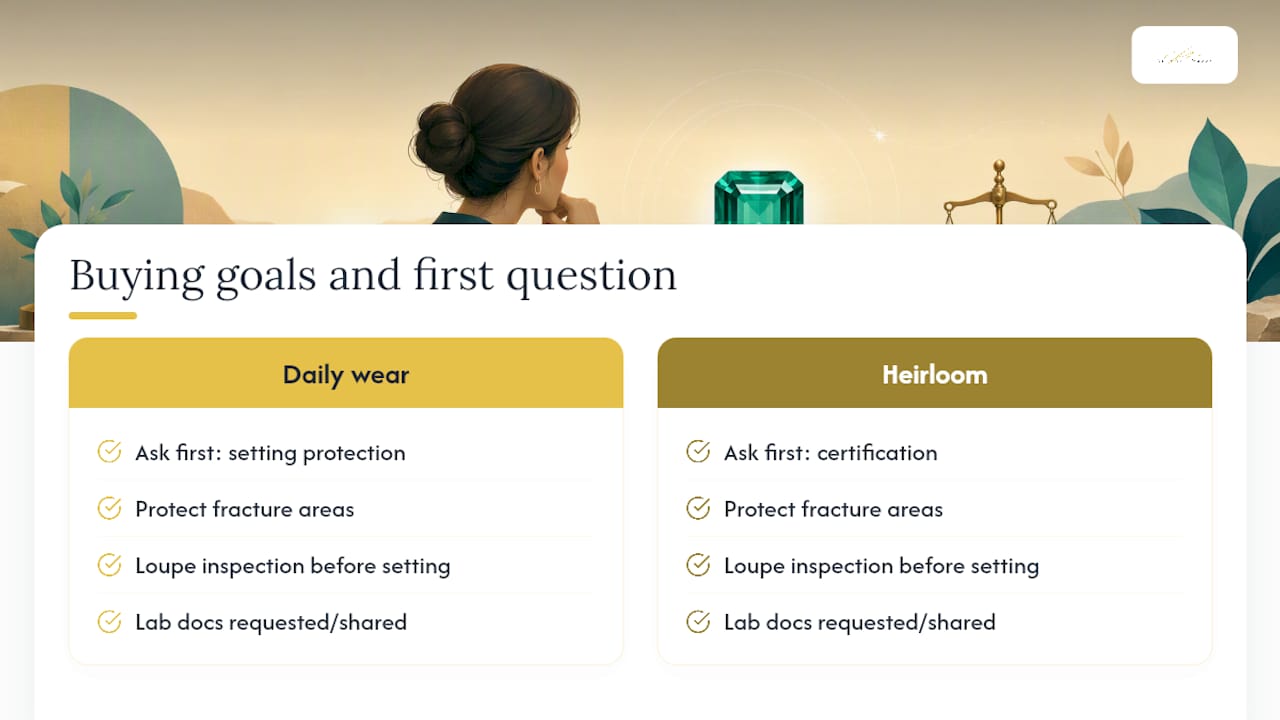
Se você está comprando para uso diário, pergunte primeiro sobre a proteção do engaste. Se está comprando para passar adiante, pergunte primeiro sobre a certificação. A coleção de colares de esmeralda natural mostra como essa divulgação funciona na prática, listando a procedência e os detalhes do engaste ao lado da própria pedra.
Combine Seu Teste de Esmeralda com Seu Objetivo de Compra
Nem toda compra precisa do mesmo rigor. Uma peça de uso diário exige durabilidade em primeiro lugar, então uma pedra sintética bem engastada ou uma natural levemente preenchida fazem sentido. Um presente deve ser bonito e vir com uma divulgação honesta, nada mais complicado. Uma peça de colecionador exige uma pedra natural e um certificado, ponto final.
Independentemente da categoria em que você se encontre, proteja a pedra com um engaste que guarde suas bordas e nunca compre uma peça significativa sem uma política de devolução documentada anexada. Essa única condição resolve mais disputas do que qualquer teste doméstico jamais resolverá.
— Antonio
Compre com Confiança: O que a Joalheria Antonio Guzzo Oferece
Esmeraldas colombianas naturais são adquiridas e as informações de origem e tratamento são divulgadas antes que as peças cheguem aos clientes, apoiando compradores que buscam transparência. Cada pedra é examinada sob ampliação antes do engaste, e as peças são projetadas com montagens protetoras que consideram os realces de clareza comuns em esmeraldas naturais.
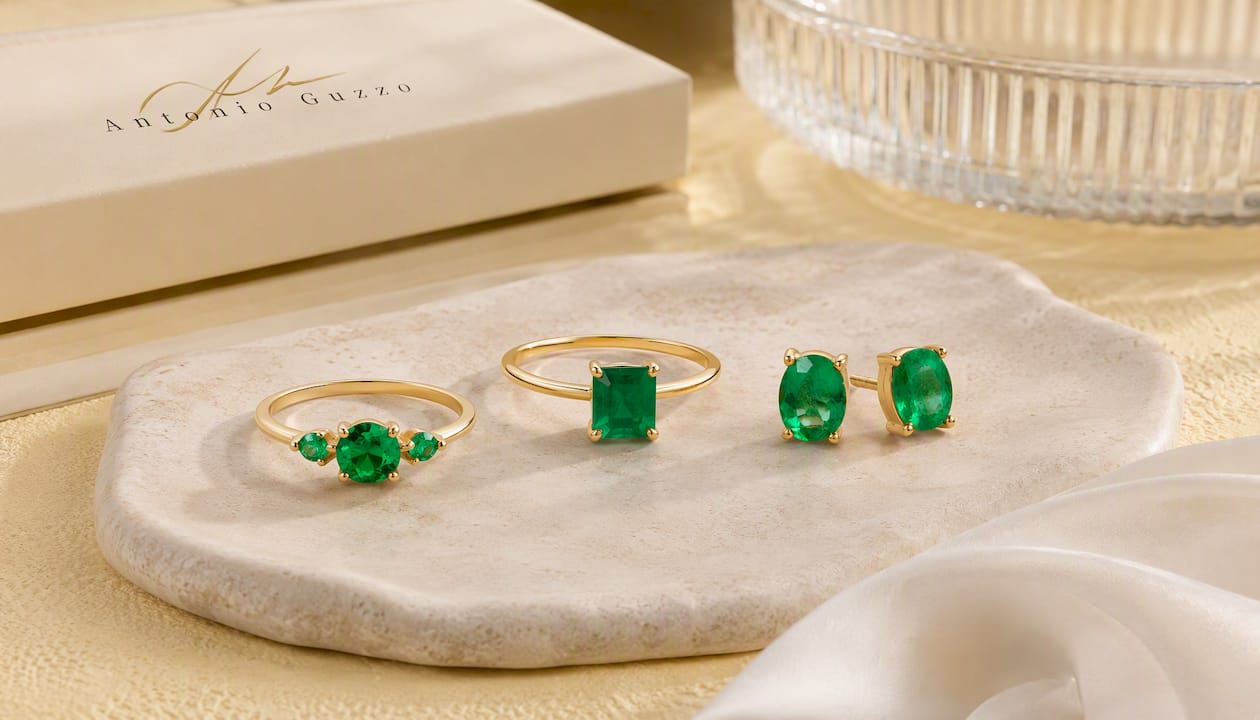
Duas peças cobrem os arquétipos de compradores que este guia apresenta. O Exquisito Anel de Esmeralda Tríade de 18K é ideal para qualquer pessoa que esteja comprando uma esmeralda natural para passar adiante. Os Brincos de Pino de Esmeralda Colombiana em Ouro Amarelo de 18K funcionam bem para quem prioriza o uso diário em vez da raridade.
Se você está avaliando uma peça específica, pergunte sobre a certificação, o grau de tratamento ou um engaste protetor personalizado antes de comprar. Entre em contato com a Joalheria Antonio Guzzo com suas perguntas ou navegue pelo anel tríade com esmeraldas colombianas naturais para ver como a divulgação e o artesanato se unem em uma única peça.
Onde Aprofundar-se na Identificação de Esmeraldas
Para leitores que desejam ir além de um checklist doméstico, algumas fontes cobrem o terreno técnico com mais profundidade.
- Guia de qualidade de esmeraldas da GIA explica os fatores de classificação, a prevalência de tratamentos e por que os relatórios de laboratório continuam sendo a palavra definitiva sobre a origem.
- Estudo de inclusões Gems & Gemology da GIA oferece fotomicrografias comparando jardin, características de crescimento sintético e evidências de preenchimento lado a lado.
- Guia de identificação da Gem Society apresenta instrumentos práticos e padrões de teste usados para separar simulantes de esmeraldas genuínas.
Fontes
- Fatores de qualidade de esmeraldas | GIA
- Inclusões em esmeraldas naturais, sintéticas e tratadas | GIA (Gems & Gemology)
- Como identificar simulantes e sintéticos de esmeralda | Gem Society
- Rockhounding
Perguntas Frequentes
Como sei se minha esmeralda é real?
Para ter certeza, especialmente acima de US$ 500 a US$ 1.000 em valor, solicite um relatório de laboratório independente da GIA, AGL ou IGI.
Como você pode identificar uma esmeralda falsa?
Bolhas perfeitamente redondas, clareza uniforme impecável e um verde neon artificialmente uniforme são os sinais mais claros de vidro ou de um simulante tingido, de acordo com o RockHounding.org. Esmeraldas genuínas quase sempre apresentam algum jardin e leve variação de cor.
Como testar esmeraldas em casa?
Esses testes ajudam a identificar falsificações óbvias, mas não podem confirmar a origem natural da mesma forma que um laudo laboratorial.
Como saber se uma esmeralda é verdadeira usando uma lanterna?
Ilumine a pedra com uma lanterna de mão e gire-a lentamente. Esmeraldas naturais geralmente apresentam profundidade em camadas e sutis variações de cor, enquanto simulantes de vidro ou tingidos costumam brilhar em um tom único e uniforme.
Esmeraldas criadas em laboratório são falsas?
Não. As esmeraldas criadas em laboratório possuem a mesma composição química, dureza e propriedades ópticas das naturais; diferem apenas na origem e geralmente custam de 70 a 90 por cento menos. São uma opção legítima para compradores que priorizam a aparência e o orçamento em vez da raridade.