

Emerald vs Tsavorite: Choose Heritage Color or Everyday Brilliance
For everyday wear, tsavorite generally beats emerald on durability and sparkle. For classic emerald color and heirloom weight, emerald wins, provided you accept its treatment and care requirements. The exception cuts both ways: a certified, well-cut tsavorite over a carat can rival emerald pricing, while a heavily treated emerald with no lab report is a risk regardless of how good the color looks under store lighting.
TL;DR:
- Tsavorite offers better daily durability and requires less maintenance than emerald, making it suitable for regular wear and active lifestyles.
- Emerald typically commands higher prices due to its provenance, especially Colombian stones, and often requires treatments like oiling that affect its longevity.
- Tsavorite’s vivid green color often appears more saturated under normal light, and its higher refractive index creates a livelier appearance compared to emerald.
- Buyers should always request independent lab reports and full treatment disclosures to avoid ungraded or heavily treated emeralds presenting risks.
- For engagement or heirloom pieces, emerald’s heritage and classic color may justify higher costs, but tsavorite provides an affordable, high-brilliance alternative for practical, everyday jewelry.
Table of Contents
- Emerald vs Tsavorite: Color, Brilliance, and How Each Gem Reads in Person
- Clarity, Treatments, and How Each Gem Actually Holds Up
- Is Tsavorite More Expensive Than Emerald? Rarity and Price Compared
- How Do You Choose Between Emerald and Tsavorite?
- When Antonio Guzzo Recommends Emerald, and When We Don’t
- Featured Emerald Rings for Buyers Who Choose Classic Color
- Sources
- FAQ
Emerald vs Tsavorite: Color, Brilliance, and How Each Gem Reads in Person
Color is where the two stones split hardest. Emerald gets its signature green from chromium and vanadium, which can pull the hue toward blue or push it toward a pure, grassy green depending on the deposit. Tsavorite, a variety of grossular garnet, tends toward a brighter, more yellowish-pure green that reads as more saturated under normal light, according to Gemfyi’s comparison of the two stones.
Brilliance follows a similar split, and it comes down to physics, not preference.
- Tsavorite’s refractive index runs roughly 1.73 to 1.76, versus emerald’s refractive index range, which means more light bends and bounces back to your eye.
- Emerald often shows pleochroism, a shift in color depending on the viewing angle, while tsavorite reads as one consistent color face-up.
- Emerald’s beryl structure is hexagonal; tsavorite’s garnet structure is cubic, a distinction confirmed through GemID’s diagnostic comparison using refractive index and optic character testing.
That RI gap is why a well-cut tsavorite can look livelier than an emerald of similar size, even in a simple prong setting. Cutters lean into this: tsavorite is often faceted aggressively to maximize sparkle, while emerald is typically cut in step patterns (the classic “emerald cut”) specifically to calm the pleochroism and protect the stone from its own internal stress.
Clarity, Treatments, and How Each Gem Actually Holds Up
Emerald’s inclusions, known in the trade as the “jardin” (garden), are so common that the GIA treats them as an expected part of the gem’s character rather than a flaw to avoid. Nearly every commercial emerald on the market has been oiled or resin filled to make those fractures less visible, a practice so widespread that an untreated, eye-clean emerald is a genuine rarity worth a premium.
Tsavorite tells a different story. It’s typically untreated straight out of the ground, and eye-clean material is common rather than exceptional, per GemPiece’s gemological profile of tsavorite.
Here’s how that plays out over years of wear:
- Emerald has a Mohs hardness somewhat higher than tsavorite, which ranges around 7 to 7.5, so on paper emerald scratches less easily.
- Toughness tells the real story: emerald’s natural fracturing can make it prone to chipping on impact, while tsavorite’s cleaner crystal habit and lack of cleavage plane make it noticeably more resistant to chips in daily use, based on GemID’s durability analysis.
- Oil and resin fillers can dry out, cloud, or leach from an emerald over time, which is why most jewelers warn against ultrasonic cleaners and steam machines for emerald jewelry.
- Tsavorite needs none of that caution. Warm water, mild soap, and a soft brush handle it fine.
Pro Tip: If you already own an emerald, skip the jewelry store’s ultrasonic cleaner entirely. Ask for a simple warm water and mild soap wipe instead, since heat and vibration can worsen existing fractures or draw out the oil filler.
This durability gap is exactly why emeralds usually sit in protective bezel or step-cut settings, while tsavorite can handle more exposed prong work without added risk.
Is Tsavorite More Expensive Than Emerald? Rarity and Price Compared
Tsavorite is not more expensive than emerald at comparable sizes, and it’s often the better value per dollar of visible color. Fine emerald, especially Colombian material with strong saturation and minimal visible treatment, carries a historical premium that has little to do with the mineral’s actual scarcity and everything to do with collector demand and provenance, a pattern the GIA links directly to color quality and origin.
Tsavorite is arguably rarer in the ground, especially past two carats, but the market hasn’t caught up to that scarcity the way it has with emerald. According to gemologist Richard Hughes’s writing on tsavorite, high-quality tsavorite can cost meaningfully less per carat than a comparable-color, comparable-clarity emerald, largely because emerald pricing carries decades of brand recognition that tsavorite hasn’t accumulated yet.
What that means for your budget:
- At 1 carat and above, expect emerald’s price per carat tends to increase faster than tsavorite’s for equivalent color and clarity.
- Prestige and provenance (specifically Colombian origin) push emerald prices higher independent of how the stone actually looks.
- If your priority is maximum visible color and brilliance for the money, tsavorite typically delivers more of both per dollar spent.
How Do You Choose Between Emerald and Tsavorite?
Start with three honest questions: how often will you wear this piece, how attached are you to emerald’s specific color, and how much maintenance are you willing to accept? Daily-wear rings favor tsavorite’s practical toughness. Occasion pieces, heirlooms, and buyers set on that classic bluish green favor emerald, treatment and all.
Before you buy either stone, request the following:
- An independent lab report (GIA or an equivalent recognized lab), not just a store certificate.
- Full treatment disclosure. For emerald, that means the type and extent of oiling or resin filling. Tsavorite disclosure matters less since treatment is rare, but a report should still confirm identity.
- Origin information if you’re paying a premium tied to a specific source, such as Colombian emerald.
- Close-up photos or video under magnification, so you know exactly what you’re buying before it ships.
A few red flags should stop you cold:
- No treatment disclosure offered voluntarily on an emerald.
- No independent report, only a seller’s internal grading.
- A return window shorter than 10 to 14 days or no warranty at all.
On settings: emeralds do best in bezel or step-cut mounts that shield the edges from impact. Tsavorite tolerates prong and halo designs that expose more of the stone, since there’s less structural risk in daily bumps and knocks.
When Antonio Guzzo Recommends Emerald, and When We Don’t
The brand builds around ethically sourced Colombian emeralds because that color, at its best, is genuinely irreplaceable. The Signature Collection targets buyers who want heritage weight in a piece meant to be passed down, not just worn hard for a decade. Emerald is recommended for engagement pieces tied to family story or classic color preference, with the note that this choice comes with maintenance, including gentle cleaning and avoiding ultrasonic devices.
When tsavorite’s brilliance and lower-maintenance durability is preferred, the emerald styling guide applies to considerations of setting design, protective mounts, and everyday practicality. Whichever gem you choose, ask for the lab report and treatment disclosure before you commit. That single request prevents most buyer’s remorse in this category.
— Antonio
Featured Emerald Rings for Buyers Who Choose Classic Color
If emerald’s heritage appeal wins out for you, Antonio Guzzo Fine Jewelry offers three handcrafted options built around natural Colombian stones.
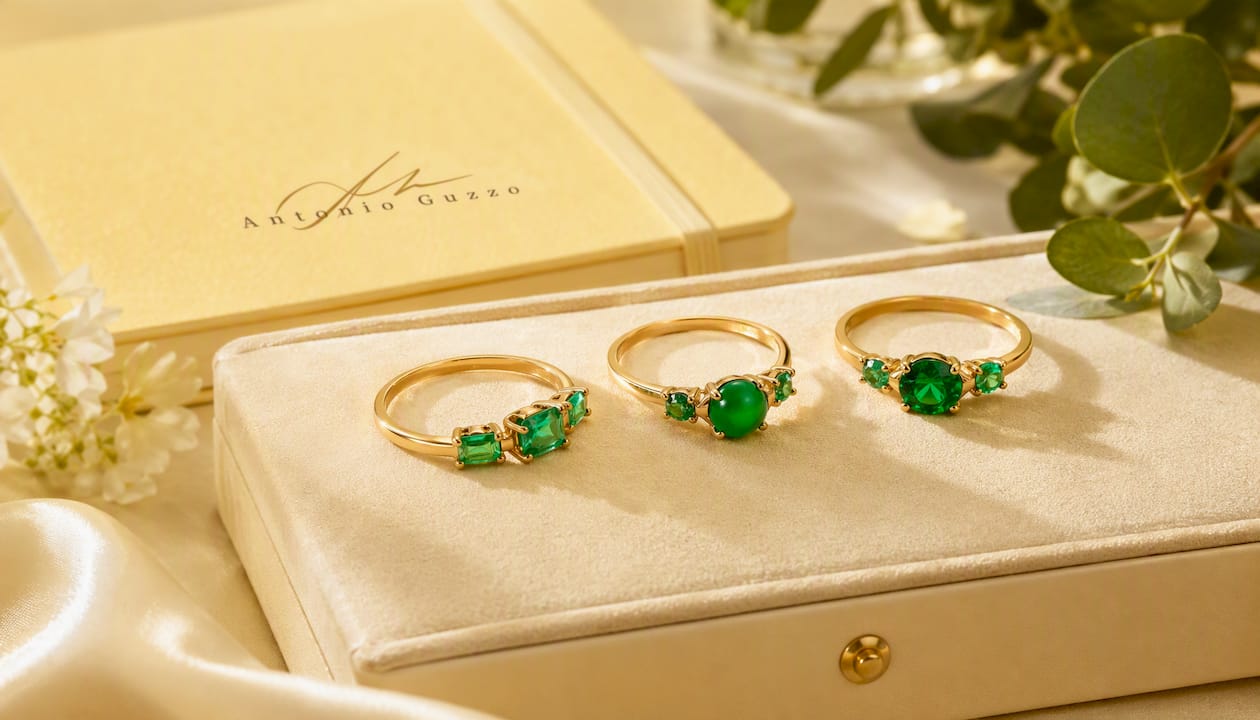
The 18K Yellow Gold Natural Emerald Trilogy Ring pairs three natural Colombian emeralds in a classic trilogy setting, a design language that reads as timeless rather than trend-driven. The Emerald Trilogy Ring in 18K Gold offers the same three-stone symbolism in a slightly different gold finish, suited to buyers who want Colombian emerald color without a bluish undertone. The Exquisite 18K Trilogy Emerald Ring leans into artisan Italian setting work, a good fit if handcraftsmanship matters as much as the stone itself.
Personalization is offered for buyers building an heirloom around a specific story. Browse the full ring collection or reach out to discuss a custom commission before you decide.
Sources
- Emerald quality factors | GIA
- Emerald vs Tsavorite: How to Tell Them Apart – GemID
- Emerald vs Tsavorite — Gemfyi
- Tsavorite garnet • GemPiece Gemopedia
FAQ
Is Tsavorite More Expensive Than Emerald?
Generally, no. At comparable size, color, and clarity, tsavorite often costs less per carat than fine emerald, largely because emerald carries a historical premium tied to provenance and brand recognition rather than actual scarcity.
Why Can’t You Wear Emeralds Every Day?
Emerald’s pervasive internal fracturing, combined with near-universal oil or resin treatment, makes it more prone to chipping and clouding under daily impact and cleaning stress, so most jewelers recommend saving emerald pieces for lighter, occasional wear.
Who Should Wear Tsavorite?
Tsavorite suits anyone who wants a green gemstone for daily-wear jewelry, since it’s typically untreated, often eye-clean, and more resistant to chipping than emerald thanks to its cleaner crystal structure.
What Are the Big 3 Precious Gems?
The traditional “big three” colored precious gemstones are ruby, sapphire, and emerald; tsavorite is a garnet variety and falls outside that historical grouping, though many gemologists argue its color and brilliance rival any of the three.
Is Tsavorite a Good Alternative to Emerald for an Engagement Ring?
Yes, for buyers prioritizing durability and brilliance over classic emerald color, tsavorite’s higher refractive index and untreated clarity make it a practical engagement stone, while emerald remains the choice for buyers set on traditional heritage color.