

Years 1–60: U.S. Anniversary Gemstones and Emerald Sourcing
This guide maps every wedding anniversary year to its widely accepted gemstone, from the 1st through the 60th, covering both traditional and modern lists. Core milestone stones include diamond, ruby, emerald, pearl, gold, and silver. Later sections cover certification, budget ranges, and care advice for higher-value stones like emerald and ruby.
TL;DR:
- For the 10th anniversary, a diamond or an upgraded jewelry piece is most appropriate, with lab-grown options becoming increasingly popular for cost savings.
- The 20th and 35th anniversaries both traditionally feature emeralds, making quality and treatment disclosures essential for lasting value.
- Durability considerations should guide the choice of gemstone, especially for rings, with softer stones like pearls or opals better suited for pendants or earrings.
- Certification from reputable labs like GIA or AGS is crucial for stones over a few hundred dollars to ensure authenticity and understand treatments.
- The anniversary list serves as a guideline, but personal taste, stone durability, and transparency about treatments are more important than strictly following traditional or modern assignments.
Table of Contents
- Anniversary Gemstones by Year: The Full Chart
- How to Choose and Buy Anniversary Gemstone Jewelry
- Milestone Years That Deserve Extra Attention
- An Insider’s Note on Emerald and Ethical Sourcing
- How to Tell a Real Gemstone From an Imitation
- How Anniversary Gemstone Trends Have Shifted
- What the Chart Gets Wrong (and What Actually Matters)
- Why an Emerald Trilogy Ring Fits an Anniversary Gift
- Sources
- FAQ
Anniversary Gemstones by Year: The Full Chart
No single organization owns the anniversary gemstone list. Jewelry trade groups and gemological institutions publish overlapping guides that agree closely on the first two decades and then split in different directions for the milestone years. That’s not a flaw in the system. It’s just a byproduct of how these lists were built: trade associations formalized the modern charts in the 20th century largely as a retail calendar, which is why certain stones like ruby, sapphire, and emerald show up more than once.
Here’s the year-by-year breakdown, with modern assignments first and traditional alternates noted where the lists genuinely diverge.
- 1st year: Gold jewelry (traditional) or peridot (modern). Gold is durable daily wear at a Mohs hardness of 2.5 to 3 when alloyed, though pure gold is soft, so 14K or 18K settings are standard.
- 2nd year: Garnet. Garnet is a durable stone suitable for rings worn frequently.
- 3rd year: Pearl. Pearls are relatively soft and delicate, requiring protective settings and careful wear to maintain their condition.
- 4th year: Blue topaz. Blue topaz is a hard and affordable stone, well suited for everyday rings.
- 5th year: Sapphire. Sapphire is a very hard and tough stone, suitable for constant wear.
- 6th year: Amethyst. Amethyst has good hardness for jewelry such as rings and pendants.
- 7th year: Onyx. Onyx has moderate hardness and is used in various jewelry designs including rings and statement pieces.
- 8th year: Tourmaline. Tourmaline varies in color and hardness suitable for diverse jewelry.
- 9th year: Lapis lazuli. Lapis lazuli is softer and generally better for earrings or pendants than daily wear rings.
- 10th year: Diamond. Diamond is the hardest natural material and highly resistant to scratching, making it ideal for long-lasting jewelry.
- 11th year: Turquoise. Turquoise is a softer, porous stone that requires protective settings to prevent damage.
- 12th year: Jade (some lists cite emerald as a modern alternate). Jade runs 6.5 to 7 and has been prized in Asian cultures for millennia; where emerald appears instead, treat it with the same care notes as the 20th year entry below.
- 13th year: Citrine. Citrine has good hardness and warm coloration, making it an affordable choice for rings.
- 14th year: Opal. Opal is a softer, delicate gem prone to damage, best suited for pendants or earrings rather than rings.
- 15th year: Ruby. Ruby is a hard and tough stone suitable for durable rings intended for long-term wear.
- 16th year: Peridot. Peridot is a moderately hard stone with appealing olive green color and affordability.
- 17th year: Watches, a traditional gift unique to this anniversary and distinct from gemstones.
- 18th year: Garnet (or sometimes cat’s eye), used again to mark this anniversary with durability in mind.
- 19th year: Aquamarine. Aquamarine offers appealing color and good durability for daily jewelry.
- 20th year: Emerald. This is one of the two anniversaries most strongly tied to emerald, and it’s widely recognized across trade lists, partly because emerald is also May’s birthstone. Emerald sits at 7.5 to 8 on Mohs, but natural inclusions mean it chips more easily than its hardness number suggests, so a protective setting matters here.
- 21st through 24th years: These years don’t carry a strongly standardized gemstone across major lists; brass, fire opal, and other regional stones appear depending on the source. Treat these as flexible personalization years.
- 25th year: Silver. This milestone is traditionally marked by silver jewelry or silver items; occasionally, sapphire is selected as a modern jewelry alternative.
Past the 25th year, the charts diverge more sharply, and later milestones lean more on symbolic metals than on individual gemstones.
- 30th year: Pearl, repeating the 3rd-year assignment in some traditions, or diamond jubilee jewelry reflecting enduring quality.
- 35th year: Emerald appears again as a recognized milestone stone.
- 40th year: Ruby, repeated to mark this important milestone anniversary.
- 45th year: Sapphire revisits the earlier 5th-year assignment as a symbol of fidelity.
- 50th year: Gold, the golden anniversary, widely recognized as a key milestone.
- 55th year: Some variation exists here with emerald or alexandrite assigned depending on source.
- 60th year: Diamond, often called the diamond jubilee, symbolizes the rarity and endurance of this milestone.
How to Choose and Buy Anniversary Gemstone Jewelry
Matching a year to a stone is the easy part. Choosing the right version of that stone, at the right price, in a setting that survives daily life, is where most buyers get stuck. Start with hardness, then work backward to budget and design.
- Match hardness to how the piece gets worn. A ring absorbs daily knocks, so anything below 7 on Mohs (opal, pearl, turquoise, laps) fares better as a pendant or earrings than a ring.
- Request grading paperwork on anything expensive. For emerald, ruby, or diamond purchases above a few hundred dollars, ask for a third-party grading report from GIA or AGS before you buy. This documents carat weight, clarity, and any treatments, which matters enormously for insurance and resale later.
- Ask about treatments up front. Emeralds are commonly oiled to fill surface fractures and improve clarity, a standard industry practice, but it needs to be disclosed. Rubies and sapphires are frequently heat treated to improve color. Neither is automatically a problem, but the price should reflect it.
- Set a budget band by stone, not by year. Garnet, amethyst, and citrine anniversary pieces often run under $200 for a nice setting. Sapphire, ruby, and emerald jewelry with real color saturation typically starts in the $500 to $2,000 range and climbs fast with size and origin, since a certified, untreated stone from a desirable source commands a real premium over a treated or lower-grade equivalent.
- Consider lab-grown for diamond years. Lab-grown diamonds are physically identical to mined ones and cost considerably less, though resale value differs, so disclosure matters if that’s part of the plan.
Pro Tip: If the anniversary stone is soft (pearl, opal, turquoise), skip the ring entirely and go with a pendant or stud earrings in a bezel setting. It sidesteps the durability problem without abandoning the tradition, and our jewelry occasion guide walks through matching styles to specific moments.
For softer or treated stones set in rings anyway, a bezel or halo setting distributes protection around the edges. Engraving inside the band or hiding a small birthstone under the setting are two personalization touches that cost little but add weight to the gift.
Milestone Years That Deserve Extra Attention
Some anniversaries carry more cultural weight than others, and the jewelry should match that. Here’s what to prioritize at each major milestone.
- 10th (diamond): The first big one. An eternity band or an upgrade to the original engagement ring are the two most common choices; lab-grown diamonds are a legitimate lower-cost option here if size matters more than provenance.
- 20th and 35th (emerald): Because emerald shows up twice, it’s worth investing once in a quality piece rather than buying twice at a lower grade. Insist on origin notes and treatment disclosure given how often emeralds are oiled.
- 25th (silver): This is a genuine either/or decision. Silver flatware or decor leans traditional; a colored gemstone piece (sapphire or tsavorite garnet are common substitutes) leans modern and doubles as jewelry that gets worn, not stored.
- 30th (pearl): A classic strand or pearl studs work well, but remind the recipient that pearls need to go on last and come off first, after makeup and perfume, not before.
- 40th (ruby) and 50th (gold): Both call for presentation over subtlety. A ruby cocktail ring or a substantial gold piece signals the scale of the occasion better than a delicate everyday item.
- 60th (diamond): Rare enough that a statement piece with full certification is the expected standard, not an option to skip.
An Insider’s Note on Emerald and Ethical Sourcing
Origin is the detail buyers skip most often when purchasing natural Colombian emeralds. Stones from Colombian sources like Muzo and Chivor carry a color and clarity reputation that Zambian or Pakistani material doesn’t always match, and that difference shows up in price and in how the stone photographs.
When we source emerald for the Signature Collection, we disclose oiling and treatment status on every piece, because that’s what a GIA report would flag anyway. Emerald jewelry should be cleaned with a soft cloth and lukewarm water, never an ultrasonic cleaner, which can worsen existing fractures. Every order ships free, and personalization options like engraving are available for anniversary pieces meant to become heirlooms.
How to Tell a Real Gemstone From an Imitation
The fastest test most buyers can do at home is temperature. Natural stones like emerald, sapphire, and ruby feel cool to the touch and warm slowly against skin; glass and plastic imitations warm up almost immediately. It’s not conclusive, but it’s a useful first filter.
Beyond that, look for inclusions. Natural emeralds almost always contain visible internal characteristics, sometimes called “jardin” because they resemble tiny gardens under magnification. A perfectly clean, flawless-looking green stone at a bargain price is far more likely to be glass or synthetic than a natural emerald. Synthetic stones (lab-created, not glass) are chemically identical to natural ones and legitimate, but they must be disclosed and priced accordingly.
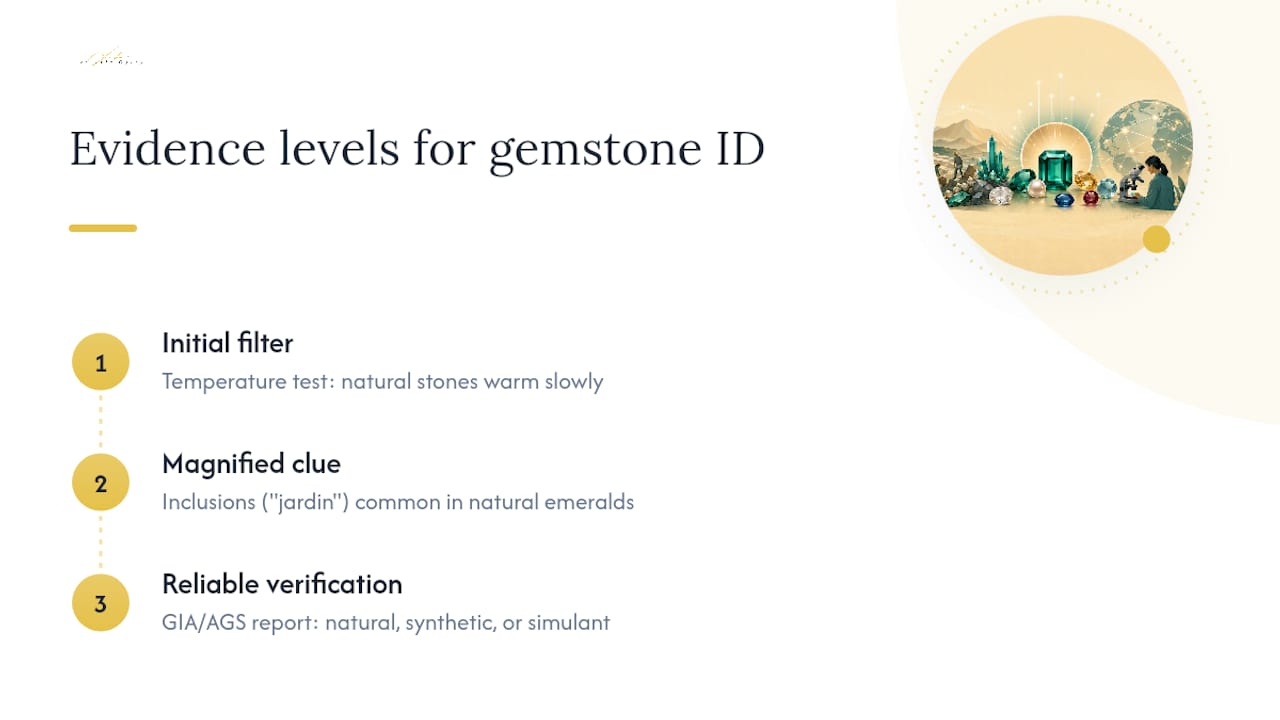
The most reliable method remains third-party grading. A GIA or AGS report identifies the stone, notes any treatments, and states whether it’s natural, synthetic, or simulant. For anything beyond a low-cost gift, that report is worth more than any at-home test. Buying from a jeweler willing to provide grading documentation, rather than a seller who resists the question, tells you almost everything you need to know before the purchase happens.
How Anniversary Gemstone Trends Have Shifted
The modern anniversary chart wasn’t handed down from tradition. It was largely built by jewelry trade groups in the 1900s as a marketing calendar, designed to give retailers a reason to promote gemstone gifts every year instead of just at the classic milestones.
That commercial origin explains a lot of what looks strange about the list today, like why ruby, sapphire, and emerald each show up more than once. Over the past two decades, a few real shifts have emerged. Lab-grown diamonds have moved from a fringe curiosity to a mainstream choice for the 10th and 60th anniversaries, driven by cost and by growing comfort with lab-created stones among younger couples. Colored gemstones, especially emerald and sapphire, have gained ground against diamond as an “upgrade” gift, partly because they photograph distinctively on social media and partly because buyers increasingly want a piece that doesn’t look identical to an engagement ring.
Personalization has also outpaced strict adherence to the chart. Buyers increasingly treat the year-by-year list as a starting point rather than a rule, substituting a birthstone or a stone with personal meaning over the “official” assignment, particularly for years like the 21st through 24th where no dominant standard ever really took hold.
What the Chart Gets Wrong (and What Actually Matters)
The conventional advice treats the anniversary chart like scripture. It isn’t. These lists were built by trade groups to sell jewelry on a predictable schedule, and knowing that changes how you should use them.
My honest read: the chart is a starting point for conversation, not a rulebook. Where it earns real trust is at the big, culturally reinforced milestones, the 10th, 25th, 50th, and 60th, where expectations run deep enough that skipping the traditional stone actually reads as an oversight. Everywhere else, durability and the recipient’s taste should outrank the “correct” gem every time.
If I had to rank priorities for a reader working through this guide, certification comes first for anything over a couple hundred dollars, hardness comes second because a soft stone in the wrong setting won’t survive five years let alone twenty five, and the “official” year assignment comes a distant third. Amber jewelry earns its double milestone honestly. It has the color depth to justify real investment, but only when the buyer insists on disclosure and origin notes rather than taking a seller’s word for it.
— Antonio
Why an Emerald Trilogy Ring Fits an Anniversary Gift
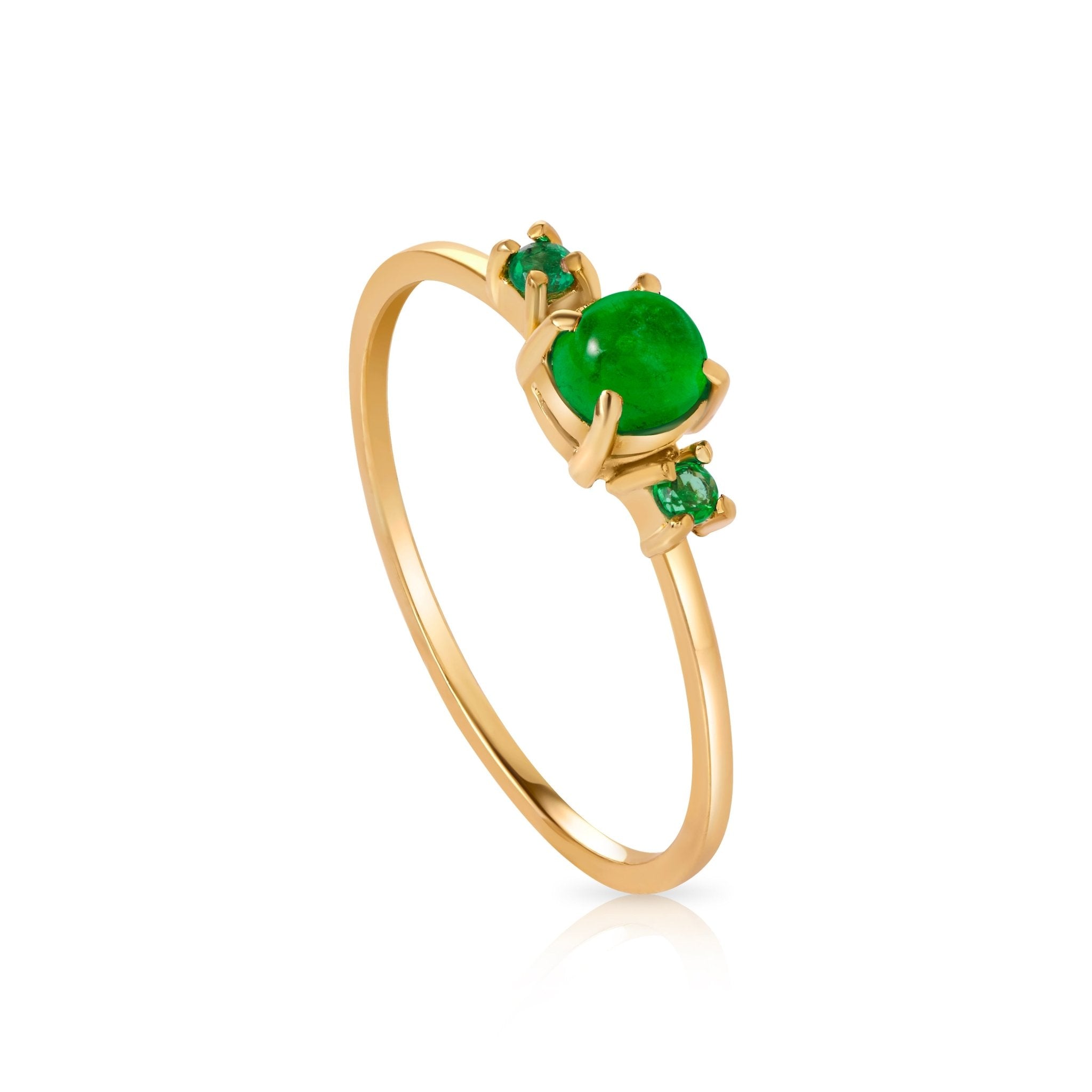
An emerald trilogy ring works especially well for the 20th and 35th anniversaries, where emerald is the recognized stone, and for any milestone where a piece is meant to last as an heirloom rather than a trend. Settings are built from solid gold with ethically sourced Colombian emeralds to ensure durability and provenance suitable for milestone gifts.
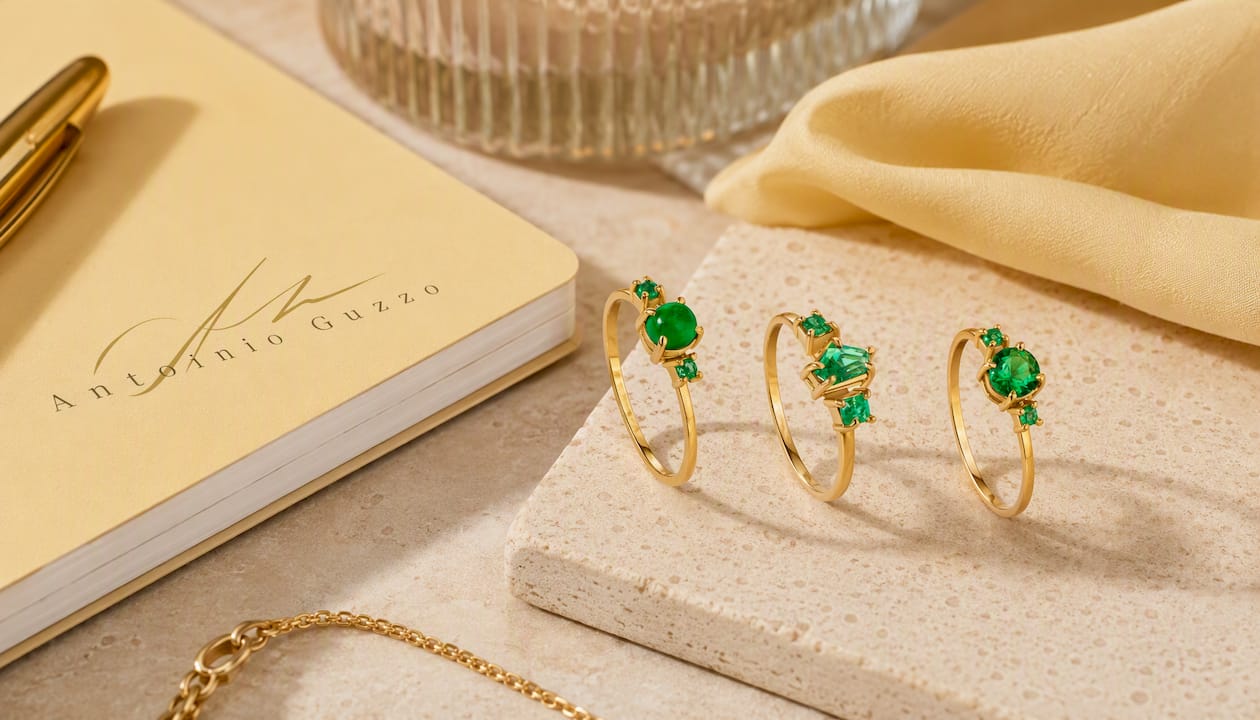
Three options currently stand out for anniversary gifting. The Emerald Trilogy Ring in 18K Gold pairs three natural Colombian emeralds in a classic three-stone layout that reads as timeless rather than trend-driven. The 18K Yellow Gold Natural Emerald Trilogy Ring offers the same heirloom-quality construction with a warmer gold tone suited to vintage-inspired tastes. The Exquisite 18K Trilogy Emerald Ring rounds out the collection for buyers who want a slightly different stone cut and proportion.
Shipping and engraving options such as anniversary dates or private messages inside the band may be available. Browse trilogy ring options directly to compare settings before deciding.
Sources
- Anniversary Gifts By Year | International Gem Society
- Wedding Anniversary Gemstone List: Years One through 10 | GIA blog
FAQ
What gemstone is assigned to each anniversary year?
Modern lists run gold (1st), garnet (2nd), pearl (3rd), diamond (10th), emerald (20th and 35th), and gold or diamond again for the 50th and 60th. The full year-by-year chart above covers all 25 early years plus every milestone through 60.
What is the anniversary gift schedule?
It’s a year-by-year list pairing each wedding anniversary with a traditional or modern material, ranging from gold at year one to diamond at year 60. Trade groups formalized the modern version of this schedule in the 20th century as a retail calendar, which is why some stones repeat.
What stone represents 12 years of marriage?
Jade is the most common assignment for the 12th anniversary, though some modern lists cite emerald as an alternate. Jade sits at 6.5 to 7 on the Mohs scale, making it durable enough for regular wear.
What stone is used for a 20-year anniversary?
Emerald is the recognized stone for the 20th anniversary, appearing consistently across trade and gemological guides. Because natural emeralds often contain inclusions and are commonly oiled, a protective setting and treatment disclosure matter more here than with harder stones like sapphire or diamond.
Should I follow the traditional list or the modern one?
Neither list is officially binding, and the two only diverge meaningfully after the 20th anniversary. Choosing based on the recipient’s taste and the stone’s durability for how it will be worn generally produces a more meaningful gift than strict adherence to either chart.