

12–24 Month Replating: Rhodium Plating on White Gold for Real Wear
Rhodium plating is a very thin electroplated layer that gives white gold its bright, platinum-like finish and adds real surface hardness. The trade-off is durability with a maintenance calendar attached: most rings need re-plating every 12 to 24 months, earrings and pendants often stretch to two to four years. Whether that’s worth it comes down to how much you value a mirror-white look versus how often you’re willing to visit a jeweler.
TL;DR:
- Re-plating white gold rings every 12 to 24 months is recommended, while earrings and pendants usually last 2 to 4 years before needing reapplication.
- The thickness of rhodium coating, typically between 0.05 and 0.5 microns, significantly affects wear resistance and durability.
- Exposure to friction, chemicals like chlorine, and skin acidity accelerates rhodium wearing through, causing yellowing and micro-scratches.
- Thicker rhodium layers over 2 microns risk cracking due to brittleness, so asking about plating thickness is crucial before choosing a service.
- Platinum or unplated palladium-white-gold alloys are alternatives for those seeking less maintenance, but each has different cost and appearance trade-offs.
Table of Contents
- How Rhodium Plating on White Gold Actually Works
- Why Is White Gold Plated With Rhodium?
- Where Rhodium Plating Falls Short
- How Long Does Rhodium Plating Last?
- What Does Rhodium Plating Cost?
- How Antonio Guzzo Fine Jewelry Approaches Rhodium Plating
- Is Rhodium Plating Safe for People and the Environment?
- What This Guide Gets Right That Most Advice Misses
- Get a Finish Built for How You’ll Actually Wear It
- Sources
- FAQ
How Rhodium Plating on White Gold Actually Works
Rhodium electroplating is a chemistry process, not a paint job. The piece has to be mechanically and chemically clean before a single atom of rhodium touches it, or the coating fails early.
A typical shop follows this sequence:
- Polish the piece to remove scratches and pits, since rhodium will highlight surface flaws rather than hide them
- Ultrasonic degrease to strip oils, polishing compound, and skin residue
- Rinse in distilled water to eliminate mineral spotting before plating
- Apply a strike layer (often nickel or a rhodium strike) on some alloys to help the rhodium bond evenly
- Submerge in a rhodium electroplating bath and run a low electrical current, which deposits rhodium ions onto the metal surface
- Rinse and dry, then buff lightly to bring out the finish
The current density and immersion time determine the plating’s thickness, and that number matters more than most buyers realize. Decorative rhodium on jewelry typically runs 0.05 to 0.5 microns thick, a fraction of the width of a human hair. Thin coatings inside that range still deliver hardness in the 400 to 550 Vickers range, which is what makes rhodium so scratch resistant compared to bare white-gold alloy.
Quality shops check the finish visually for streaking or dull patches, and some verify thickness with a handheld X-ray fluorescence meter. Turnaround for a standard ring runs anywhere from same-day service to a few business days, depending on whether stones need masking or the piece needs repair work first.
Pro Tip: Ask whether your plater uses a rhodium strike layer before the final coat. It’s a small step that measurably improves how evenly the finish wears over time.
Why Is White Gold Plated With Rhodium?
White gold isn’t naturally bright white. It’s a yellow gold alloy mixed with white metals like palladium or nickel, and on its own it carries a faint gray or champagne tone. The icy, showroom-white look you associate with white gold comes almost entirely from the rhodium layer sitting on top of it, not from the alloy itself.
Three practical benefits explain why this has become standard practice:
- Brighter, more reflective finish that mimics platinum without platinum’s price
- Sharper contrast against diamonds and colored gems, since rhodium’s reflectivity makes stones read whiter and more brilliant
- A physical barrier over nickel-containing alloys, which lowers the chance of skin irritation for people with mild metal sensitivity
Rhodium’s hardness is the other half of the equation. A finish rated around 400 to 550 Vickers resists the fine surface scratches that dull bare gold alloy within weeks of daily wear. Compare that to platinum, which is naturally white and never needs replating, but costs significantly more per gram and develops its own soft patina over time rather than staying mirror bright. Rhodium plating essentially borrows platinum’s look and hardness advantage and grafts it onto a less expensive base metal, at the cost of that layer eventually wearing through.
Where Rhodium Plating Falls Short
No coating lasts forever, and rhodium’s failure points are predictable once you understand what causes them.
- Friction wears it down first. Ring shanks, the parts that touch other fingers, doorknobs, and steering wheels constantly, thin out faster than earring posts or pendant bails.
- Chemicals accelerate the damage. Chlorine from pools and hot tubs, along with harsh household cleaners, degrades rhodium noticeably faster than plain water exposure.
- Yellowing signals the alloy underneath. As the plating thins, the warm tone of the base white-gold alloy starts showing through, usually at contact points first.
- Over-thick plating can crack. Coatings pushed past roughly 2 microns risk brittleness, since rhodium doesn’t flex well in thick layers.
Rhodium is also a rare platinum-group metal, which raises fair questions about sourcing and long-term resource use, especially for buyers who care about a piece’s full lifecycle. If you’d rather skip the maintenance cycle entirely, platinum or a palladium-white-gold alloy left unplated are both reasonable alternatives, though each comes with its own compromise on cost or brightness.
Pro Tip: If a jeweler pitches an unusually thick rhodium coat as a “longer lasting” upgrade, ask about brittleness risk first. Thicker isn’t automatically better.
How Long Does Rhodium Plating Last?
Lifespan depends more on habits than on the piece itself. A ring worn daily for manual work wears differently than an earring that only comes out for dinner.
- Rings: typically 12 to 24 months before re-plating is needed
- Earrings and pendants: often 2 to 4 years, since they see far less friction
- Skin chemistry matters: more acidic skin oils break down plating faster in some wearers
- Chemical exposure shortens lifespan: chlorine, cleaning products, and lotions all speed up wear
- Gentle care extends it: cleaning jewelry properly with mild soap and a soft cloth, rather than ultrasonic cleaners at home, protects the finish longer
| Signal | What it means |
|---|---|
| Yellow tint at edges | Plating has thinned to the alloy underneath |
| Dull, hazy surface | Micro-scratches accumulating, still plated |
| Loss of sparkle near stones | Reflectivity dropping, replating recommended |
What Does Rhodium Plating Cost?
Pricing runs on a few variables: piece size, whether stones need masking during the bath, and whether polishing or repair work happens first. A single ring typically costs less than a full set of earrings or a heavily detailed piece with prongs and filigree that all need careful masking.
Before booking, ask a jeweler these questions:
- What plating thickness in microns do you apply, and can you tell me the range?
- Is polishing or minor repair included in the quoted price, or billed separately?
- Do you offer any warranty or free touch-up if the finish fails early?
- Do you verify thickness after plating, or rely on visual inspection only?
A studio jeweler who can answer the thickness question specifically is usually a better sign than a mass-retailer counter service that treats plating as a five-minute add-on. Note too that plating status affects resale: a piece advertised as solid white gold with rhodium plating should be labeled that way, not confused with a base-metal item that’s simply plated to look like white gold.
How Antonio Guzzo Fine Jewelry Approaches Rhodium Plating
Antonio Guzzo Fine Jewelry builds each piece in solid 14K or 18K gold, and the studio treats rhodium plating as a finishing choice rather than a default. Some designs, especially settings meant to showcase natural Colombian emeralds, benefit from rhodium’s brightness and added contrast. Others, particularly warmer Italian-inspired designs in the Signature Collection, are left in their natural gold tone because that warmth is part of the story the piece tells.
What guides that decision:
- Whether the design calls for maximum brightness or a warmer, heirloom character
- The wearer’s intended use, since daily-wear rings need different plating decisions than occasional-wear pieces
- Ethical sourcing standards that apply across every material choice, plating included
A piece built to be handed down works better when its finish decisions are made for the long term, not just for how it photographs on day one.
For customers who choose a plated finish, the studio recommends re-plating on the same 12 to 24 month cycle most jewelers follow for rings, with gentler intervals for earrings and pendants.
Is Rhodium Plating Safe for People and the Environment?
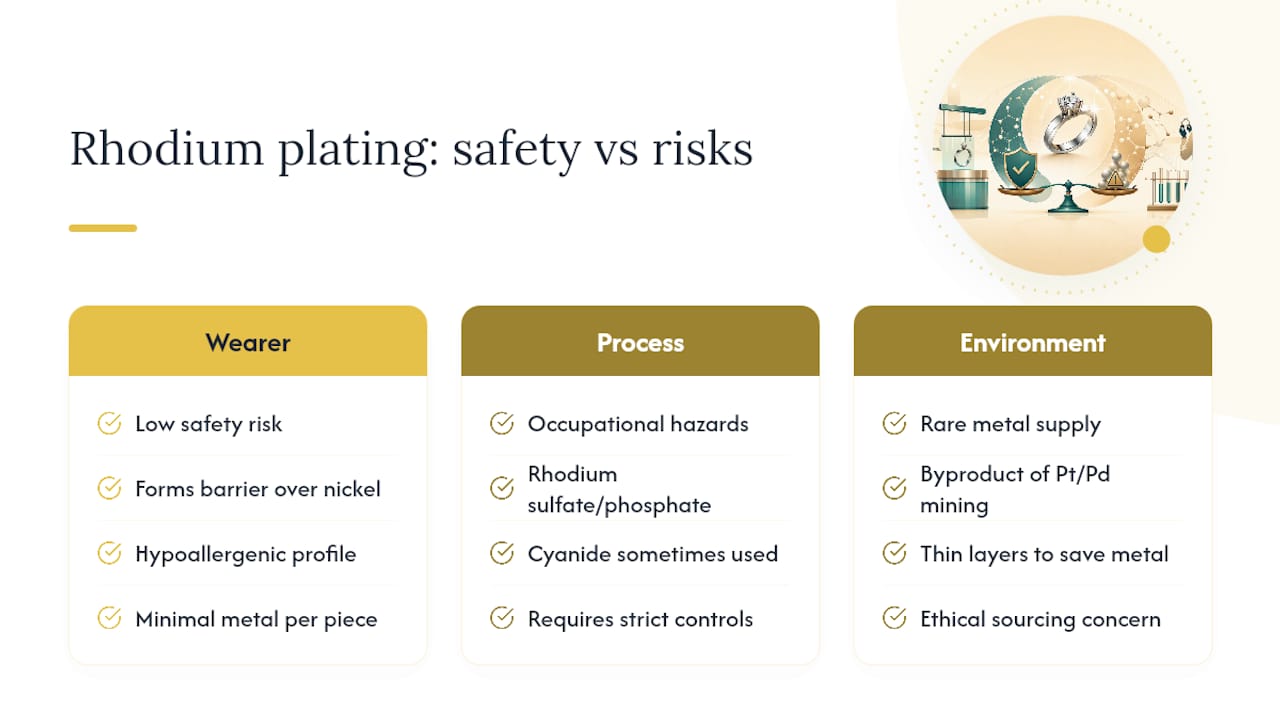
Rhodium itself is chemically inert once deposited on jewelry, and it’s the low-allergenic profile that makes it valuable for people with sensitive skin, since it forms a barrier over nickel-containing alloys that otherwise trigger contact irritation. Worn rhodium-plated jewelry poses no meaningful safety risk to the wearer.
The plating process itself is a different story. Rhodium electroplating baths often use rhodium sulfate or rhodium phosphate solutions, and older processes sometimes relied on cyanide-based chemistries that require careful handling and disposal. Reputable platers follow wastewater treatment protocols to keep plating solution byproducts out of drains, and professional certification or membership in a recognized trade association is a reasonable proxy for a shop that takes this seriously.
On the environmental side, rhodium is one of the rarest metals mined, extracted mostly as a byproduct of platinum and palladium mining in a handful of countries. That scarcity is part of why rhodium plating uses such thin layers to begin with: the process is engineered around using as little of the metal as possible while still achieving durable coverage. It also means the ethical sourcing conversation that applies to gold and gemstones extends to rhodium too, even though the quantities per piece are tiny. Buyers who care about full-lifecycle sourcing should ask plating vendors where their rhodium originates, the same way they’d ask a jeweler about gemstone provenance.
What This Guide Gets Right That Most Advice Misses
Most articles on rhodium plating treat it as a universal upgrade, something every white-gold piece should get without question. That’s incomplete advice. Rhodium plating is a finishing decision with a real maintenance cost attached, and the right call depends on how the piece will actually be worn, not just how bright it looks under store lighting.
The conventional wisdom undersells the thickness variable. Buyers fixate on whether plating exists at all, when the more useful question is how many microns were applied and whether that number sits in the range that resists wear without risking brittleness. A jeweler who can’t answer that question specifically is guessing, not engineering.
What you should prioritize first is matching the finish to the piece’s real life: daily-wear rings need a plan for replating from day one, while occasional pieces can go years without a second thought. Ask about thickness before you ask about price. The rest follows from there.
— Antonio
Get a Finish Built for How You’ll Actually Wear It
Antonio Guzzo Fine Jewelry crafts each piece in solid 14K or 18K gold rather than plating over a base metal, so you know exactly what’s under the finish and what to expect as it wears. Every design decision, including whether a piece gets a rhodium finish or keeps its natural gold warmth, is made with ethically sourced materials and handcrafted Italian construction, not mass production shortcuts.
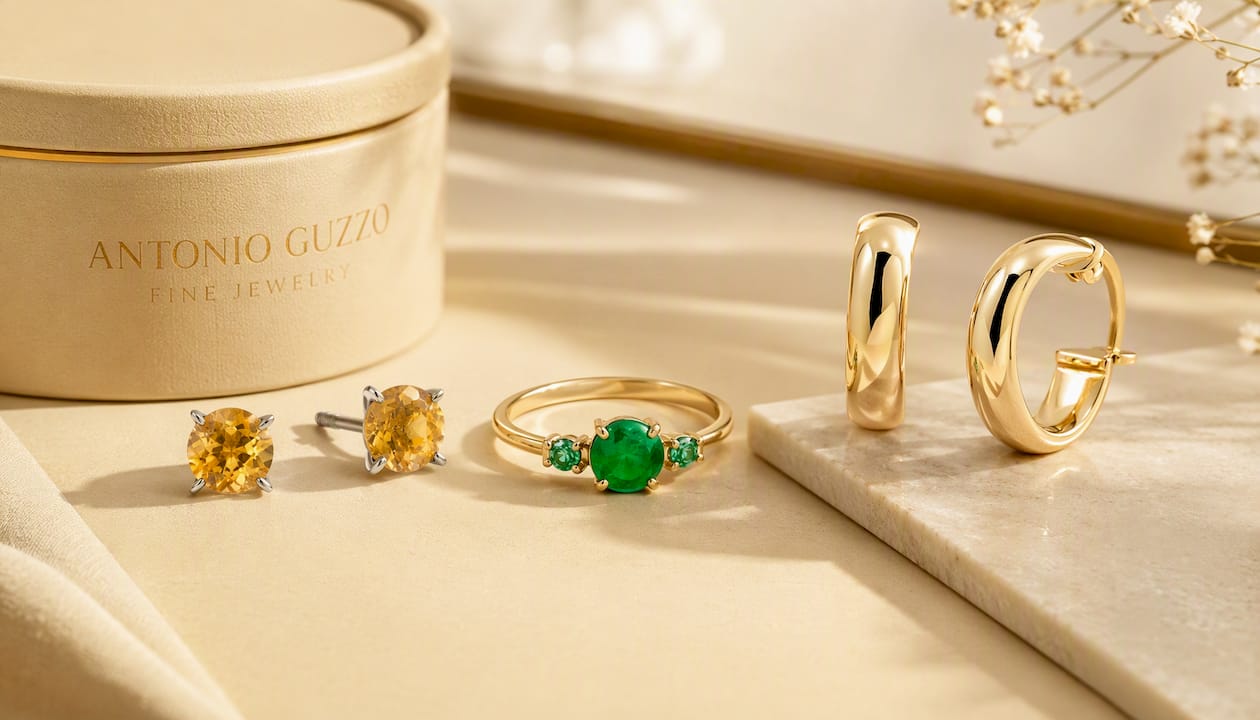
If you’re drawn to a bright, high-contrast setting for natural Colombian emeralds, the Emerald Trilogy Ring in 18K Gold shows how the studio balances brilliance with warmth. For everyday pieces built to hold up under regular wear, the Classic Gold Huggie Hoop Earrings in 18K Gold demonstrate the same solid-gold construction. And if you want a statement piece with a bright white-gold setting, the Orange Citrine Stud Earrings in 18K White Gold pair citrine’s warmth against a crisp white-gold frame. Browse the Signature Collection and every order ships free, so start by picking the piece whose story you want to wear.
Sources
- FAQ: Rhodium Plating • Artisan Plating
- What are the primary benefits of using rhodium as an electroplating material? • ProPlate
- What Is White Gold? The Complete Guide (2026) • HonHo Jewelry
- The Ultimate Guide To Rhodium Plating: Benefits, Process, And Applications • SinteredFilter
- Does White Gold Plating Use White Gold? Rhodium Facts • GoldConsul
FAQ
Is Rhodium Plating Good for White Gold?
Yes, for most wearers. It brightens the finish, sharpens contrast against gemstones, and adds a hard, scratch-resistant layer rated around 400 to 550 Vickers, though it does require periodic re-plating.
What Are the Downsides of Rhodium Plating?
The main downsides are wear over time, visible yellowing as the coating thins at contact points, and a small risk of brittleness if the layer is applied too thick. It also adds an ongoing maintenance cost most buyers don’t expect upfront.
How Much Does It Cost to Rhodium Plate White Gold?
Cost varies by piece size, stone masking requirements, and whether polishing or repair work is included, so pricing differs jeweler to jeweler. Ask for a quote that specifies plating thickness in microns rather than a flat “plating fee.”
How Long Does Rhodium Plating on White Gold Last?
Rings typically need re-plating every 12 to 24 months, while earrings and pendants often last 2 to 4 years due to less daily friction. Skin chemistry and chemical exposure, like chlorine or harsh cleaners, can shorten that window.