

$50–$150: U.S. Jewelry Appraisal Costs, Credentials & Red Flags
Most jewelry appraisals run $50 to $150 per item or per hour, with straightforward pieces landing at the low end and complex, gem-heavy, or antique jewelry pushing well past it. Appraisers typically bill either by a flat fee per piece, an hourly rate, or offer discounted rates for multiple items. Expect higher fees when a piece needs lab testing, has an unusual gemstone, or carries historical value that requires research.
TL;DR:
- Jewelry appraisal fees generally range from $50 to $150 per item, with higher costs for complex, antique, or gem-heavy pieces requiring more research or lab testing.
- Appraisal costs increase significantly when valuing high-value estate items, pieces with unidentified origin, or when specialized equipment is needed to grade colored gemstones or verify authenticity.
- Credentialed appraisers with recognized certifications, clear methodology, and proper documentation produce more reliable reports that hold up in legal or insurance settings.
- Preparing jewelry properly and providing existing paperwork can reduce appraisal time and costs, especially when a resale or insurance update is needed.
- Pricing varies by location, with metropolitan areas on the coasts typically charging more, and remote or rural areas often offering lower rates, especially for credentialed professionals.
Table of Contents
- Jewelry Appraisal Cost by Item Type and Fee Structure
- What’s Inside a Professional Appraisal Report
- What Drives Jewelry Appraisal Fees Up or Down
- Where to Find a Credentialed Appraiser
- Update Schedules, Turnaround Times, and Ways to Save
- Why Credentials and Documented Methodology Actually Matter
- Does Your Location Change What You Pay?
- How to Prepare Your Jewelry Before an Appraisal Appointment
- Founder Perspective: Protecting the Pieces That Matter
- How a fine jewelry retailer supports your appraisal needs
- Sources
- FAQ
Jewelry Appraisal Cost by Item Type and Fee Structure
A basic ring or pair of stud earrings with a single small diamond usually falls at the bottom of the typical $50 to $150 per-item or per-hour range. An engagement ring with a center stone over one carat, complicated pave work, or a halo setting takes more time to measure and grade, so fees climb toward the middle or top of that band. Colored gemstones like emeralds, sapphires, and rubies often cost more to appraise than diamonds because grading them lacks the standardized shorthand of the diamond 4Cs, and distinguishing natural from treated or synthetic stones sometimes requires specialized equipment.
High-value pieces, estate jewelry, and anything with uncertain origin sit at the top of the cost scale. A single antique brooch with unmarked metal and an unidentified center stone can take an appraiser two or three times longer than a simple gold band, and that time gets billed accordingly. Investopedia’s guidance on inherited jewelry points to the same $50 to $150 range as a baseline, noting that complexity, not just carat weight, drives the final number.
Here is how the common fee models typically break down:
- Flat fee per item: A set price for a standard piece, often disclosed upfront so there are no surprises after the work is done.
- Hourly rate: Common for estates, collections, or pieces requiring research, usually billed in 15 or 30 minute increments.
- Per-piece package discount: If you bring in five or six pieces at once, many appraisers drop the per-item rate since setup time is shared across the batch.
- Rush fees: Some appraisers charge extra for same-day or 48-hour turnaround on reports needed quickly for insurance binding.
Additional charges can stack on top of the base appraisal fee. Independent gemological lab testing, such as sending a stone out for origin verification, adds a separate cost that the appraiser will usually quote before proceeding. Photography and diagram work for the report, along with shipping if a piece needs to travel to a lab, are smaller add-ons that most reputable appraisers disclose before starting. A thorough appraisal is labor-intensive work involving identification, grading, and market research, and that labor is what you are actually paying for, not a percentage of your jewelry’s worth.
What’s Inside a Professional Appraisal Report
A complete appraisal report is not a one-line estimate scrawled on a receipt. It is a documented record that should hold up to scrutiny from an insurance adjuster, an estate attorney, or a future buyer. Here is what a legitimate report typically includes:
- Full identification of the piece: metal type and purity (verified through testing, not guesswork), total weight, and a written description of the design.
- Measurements and photographs: precise dimensions of stones and settings, along with clear photos and sometimes diagrams showing mounting details.
- Gemstone grading: an assessment of the 4Cs (cut, color, clarity, carat weight) for diamonds, or equivalent grading criteria for colored stones, including any treatment disclosure.
- A stated value with methodology: the report should explicitly name the valuation approach used and explain how that figure was reached.
- Appraiser credentials and signature: the report should identify who performed the work and what qualifies them to do so.
That last point connects directly to why purpose matters before price. The value assigned to a piece changes depending on why it’s being appraised: insurance replacement value reflects what it would cost to replace the item at retail today, while resale or fair market value reflects what a buyer would actually pay for it secondhand, which is often significantly lower. Estate and tax appraisals follow yet another standard, since the IRS and probate courts define value differently than an insurance carrier does. Telling your appraiser the purpose upfront, before they start the clock, keeps you from paying for the wrong kind of report. Insurance carriers like Progressive typically expect detailed photos and a clear replacement-value statement as standard documentation before they’ll bind coverage on a piece.
What Drives Jewelry Appraisal Fees Up or Down
Complexity is the single biggest cost driver. A piece with multiple stones, an antique or hand-fabricated setting, or unfamiliar materials takes longer to examine properly, and time is what you’re billed for. A modern solitaire ring might take fifteen minutes to grade and document. A Victorian-era brooch with unmarked gold, foil-backed stones, and no maker’s mark can take an hour or more, since the appraiser has to research construction techniques and materials that predate modern hallmarking standards.
Credentials matter just as much as complexity, and they explain a meaningful chunk of the price spread between appraisers. There are no federal or state licensing requirements for jewelry appraisers in the United States, which means anyone can technically call themselves one. That makes voluntary credentials the real signal of competence. Look for a GIA Graduate Gemologist, membership in the American Gem Society or the National Association of Jewelry Appraisers, and adherence to the Uniform Standards of Professional Appraisal Practice, better known as USPAP. Appraisers who carry these credentials, and who often carry professional liability insurance to back their work, tend to charge more than an uncredentialed jeweler doing a quick verbal estimate. That premium buys you a report that will actually hold up under insurance or legal scrutiny.
Watch for these red flags before you pay anyone:
- A fee calculated as a percentage of your jewelry’s appraised value, which creates an obvious incentive to inflate the number.
- A report with no stated methodology or purpose, just a dollar figure.
- Reluctance to explain how they tested the metal or graded the stone.
- No sample report available for you to review before booking.
Pro Tip: Ask every appraiser one direct question before you book: “What’s your fee structure, and can I see a sample report?” A percentage-of-value fee is widely flagged as an ethical red flag by consumer protection guidance, and any appraiser worth hiring will have a redacted sample ready to show you without hesitation.
Where to Find a Credentialed Appraiser
Finding the right appraiser is less about proximity and more about verification. Start with these steps:
- Search recognized directories first. The American Gem Society and the National Association of Jewelry Appraisers both maintain searchable member directories, and GIA offers a similar finder tool for Graduate Gemologists. These are a faster path to a credentialed professional than a general web search.
- Ask your insurance carrier for a referral. Many insurers, including specialty jewelry insurers, keep a list of appraisers whose reports they routinely accept without pushback, which can save you a second appraisal down the line.
- Call ahead with specific questions. Ask about purpose (insurance, resale, estate), fee structure, turnaround time, whether they carry liability insurance, and whether they can send a sample report.
- Gather your paperwork before the appointment. Bring original receipts, any prior appraisal reports, grading certificates from labs like GIA or AGS, and provenance documents for antique or inherited pieces.
Showing up with existing documentation genuinely speeds things up. If a stone already has a GIA grading report, the appraiser doesn’t need to re-verify the 4Cs from scratch, which can shave real time, and real dollars, off the final bill.
Update Schedules, Turnaround Times, and Ways to Save
Insurance replacement values shift with the market, particularly for gold and colored gemstones, so most guidance recommends refreshing an appraisal every two to five years or sooner after a major purchase, inheritance, or noticeable jump in precious metal prices. A simple item can often be appraised and documented in under an hour. A full lab-backed report on a complex or high-value piece can take several days to a couple of weeks, especially if a stone needs outside testing.
A few legitimate ways to trim the cost without cutting corners on quality:
- Bundle multiple pieces into one visit to take advantage of per-piece package pricing.
- Bring every existing document you have, since prior certificates and receipts reduce the appraiser’s research time.
- State the purpose clearly upfront so you’re not paying for a broader report than you actually need.
Pro Tip: If you only need an insurance update rather than a full new appraisal, ask if the appraiser offers a lower-cost “value update” service based on your existing report. Many do, and it’s considerably cheaper than starting from zero.
Why Credentials and Documented Methodology Actually Matter
The appraisal industry has no licensing backstop, which puts the burden of quality control entirely on the credentials an appraiser chooses to earn. A GIA Graduate Gemologist has completed structured coursework in stone identification and grading. AGS and NAJA membership signals ongoing education and adherence to a professional code. USPAP compliance means the appraiser follows a documented, defensible methodology rather than an informal guess.
A credible appraisal report should explicitly state the appraisal’s purpose, the methodology used, whether it targets replacement or fair market value, and any third-party lab tests the appraiser relied on. Those details are what separate a defensible document from a number on a receipt.
When preparing valuation materials, a workshop-level appraisal process typically documents metal identification, full 4C grading on any gemstones, clear photography, and a written explanation of how the replacement value was calculated. That paper trail is what an insurance adjuster or a future appraiser will actually rely on. For readers who want to go deeper on how fine jewelry is constructed and evaluated, our guide to choosing jewelry for any occasion covers the same identification and grading concepts from a buyer’s perspective.
Does Your Location Change What You Pay?
Geography plays a real role in appraisal pricing, mostly because it tracks local cost of living and appraiser density. Major metro areas on the coasts, where overhead and demand both run higher, tend to see appraisal fees at the upper end of the typical range. Smaller cities and rural areas often see lower per-hour or per-item rates simply because there’s less competition for appraiser time and lower business costs to cover.
Access to credentialed appraisers also varies by region. Dense urban markets usually have several AGS or NAJA members within a short drive, giving you room to compare quotes and sample reports. In more rural areas, you may need to travel to the nearest city with a qualified appraiser, or mail a piece to one, which adds shipping and insurance costs on top of the appraisal fee itself. That travel or shipping cost is worth factoring into your total budget, especially for high-value pieces where you’ll want insured shipping.
One workaround worth considering: some credentialed appraisers now offer remote consultations for the paperwork and valuation research, paired with a single in-person visit for the physical examination and measurements. That hybrid approach can reduce the number of trips needed if you live far from a major jewelry market, though the physical inspection itself still has to happen face to face for any report used in an insurance claim.
How to Prepare Your Jewelry Before an Appraisal Appointment
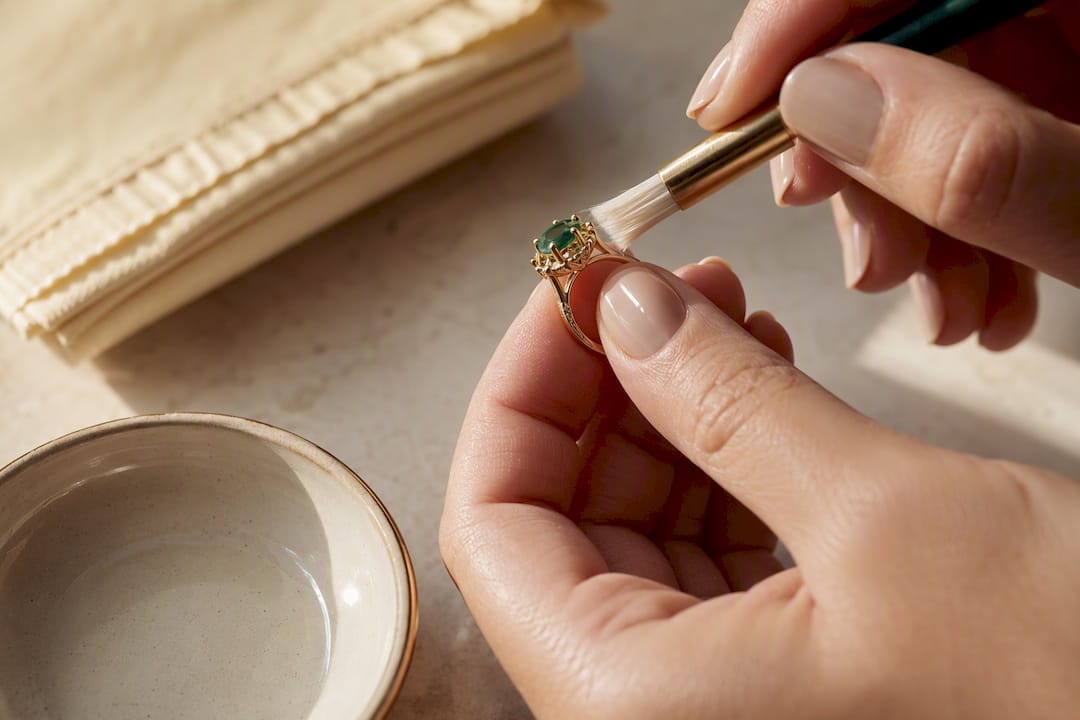
A little preparation on your end can shorten the appraiser’s clock and, in turn, your bill. Clean jewelry is easier to examine accurately, since dirt and tarnish can obscure hallmarks, prong wear, and even the true color of a gemstone. If you’re comfortable doing it yourself, our guide to cleaning gold and silver jewelry with real stones walks through safe methods that won’t loosen settings or damage soft stones. When in doubt about a delicate antique piece, skip the cleaning and let the appraiser handle it.
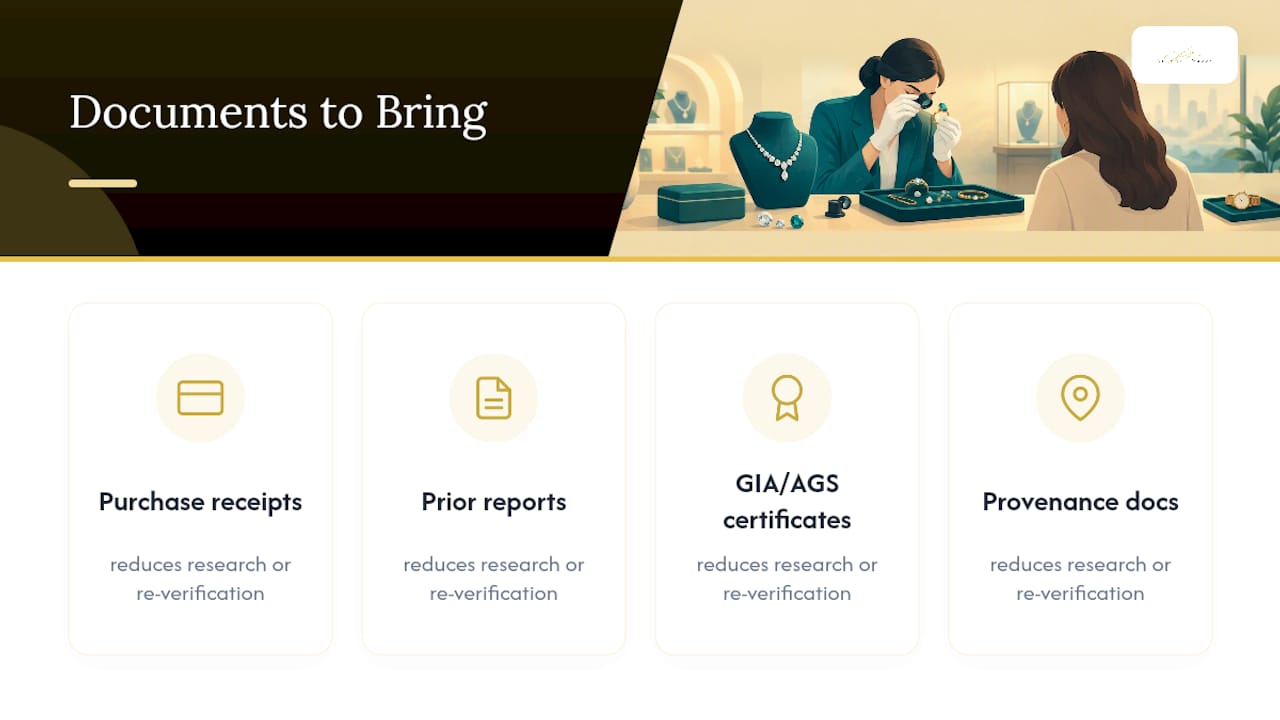
Gather every piece of paperwork you have before your appointment: original purchase receipts, prior appraisal reports, GIA or AGS grading certificates, and any provenance documents for inherited or antique jewelry. Each document you bring is one less thing the appraiser has to research or re-verify from scratch.
Separate your pieces by purpose if you’re bringing in more than one. If half your jewelry needs an insurance update and the other half needs a resale valuation, saying so upfront prevents the appraiser from defaulting to the more time-consuming report type for everything. And if a piece has removable stones or interchangeable settings, mention that too. It can change how the appraiser approaches measurement and documentation, and knowing upfront saves everyone time.
Founder Perspective: Protecting the Pieces That Matter
Most people don’t think about appraisal and insurance until after a piece is lost or damaged, and by then it’s too late to fix an outdated valuation. My honest advice: document a piece the same year you acquire it, insure it immediately, and update the appraisal every few years or after any major life event, an engagement, an inheritance, a move. The owners who avoid heartbreak are the ones who treat documentation as part of ownership, not an afterthought reserved for “someday.”
— Antonio
How a fine jewelry retailer supports your appraisal needs
Purchasing fine jewelry from an established retailer often includes documented origin stories for each piece, which can make future appraisals faster and more accurate. Buyers typically receive purchase documentation, metal specifications, and gemstone details that appraisers need, reducing guesswork and research time during insurance valuation.

If you’re shopping for a piece that will need a solid replacement-value reference down the line, our 18K Gold Emerald Pendant Necklace and the broader Signature Collection both come with clear documentation of materials and natural Colombian emerald sourcing built in. We also welcome questions about proper cleaning and storage before you send anything out for appraisal, since a well-cared-for piece appraises more accurately. Browse the collection and reach out with any questions about a piece you already own or one you’re considering adding to your collection.
Sources
- How Much Should a Jewelry Appraisal for Insurance Cost? — Jewelers Mutual
- Jewelry and diamond appraisals — American Gem Society
- Appraisals — Jewelers of America
- Jewelry industry guidance — FTC
- How to get jewelry appraised for insurance — Progressive
FAQ
Will jewelers appraise jewelry for free?
Some jewelers offer a quick, informal verbal estimate at no charge, but that’s not the same as a written appraisal report. A documented report with photos, grading, and a stated methodology almost always carries a fee, typically in the $50 to $150 range per item or hour.
How much does a jeweler charge to appraise jewelry?
Most jewelers and independent appraisers charge $50 to $150 per item or per hour, with complex, high-value, or antique pieces running higher due to added research and lab work. Fee structures usually come as a flat rate, an hourly rate, or a discounted per-piece rate when you bring in several items at once.
Are jewelry appraisals worth the cost?
For insurance purposes, yes. Insurers typically require a documented appraisal with photos and a replacement-value statement before they’ll bind coverage on a piece, and an outdated or missing appraisal can leave you underinsured after a loss. For pieces you’re simply curious about, a resale-focused appraisal helps you understand fair market value if you’re considering selling.
What shouldn’t you say to a jewelry appraiser?
Avoid stating what you hope the piece is worth or what you paid for it before the appraiser forms an independent opinion, since that can bias the process. It’s fine to share the purpose of the appraisal, insurance, resale, or estate, since that legitimately affects methodology, but let the appraiser reach the value independently.